

Turtle tanks need more than strong suction; dependable filtration, accessible media, and manageable upkeep matter between routine cleanings. The filters here cover everything from compact tanks to larger enclosures, including a water-purification system for sensitive aquatic setups. You’ll find quiet canister options, a wet-dry filter, and a compact U-V unit, each suited to different tank sizes and care routines.
The Shortlist At A Glance

Premier Water Systems 5-Stage RODI Water Filter 100 GPD

NIUZYRO 3-Tier Wet-Dry Trickle Filter 476 GPH

OASE BioMaster 2 Thermo 350 Canister Filter

OASE BioMaster 2 Thermo 600 Canister Filter
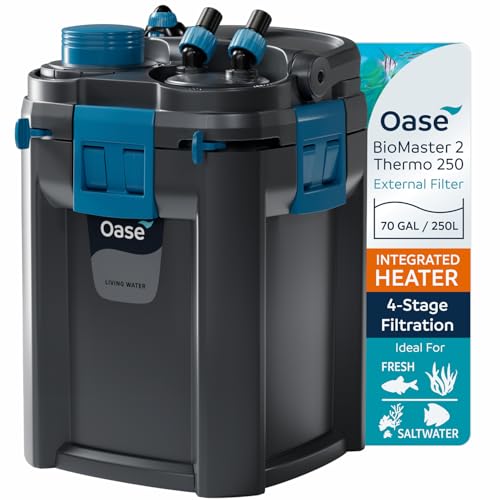
OASE BioMaster 2 Thermo 250 Canister Filter

TARARIUM U-V Aquarium Filter 20-75 Gal
The Picks, Examined More Closely
This is an incoming-water purifier rather than a filter mounted beside a turtle tank. Reverse osmosis removes dissolved material by forcing water through a membrane, while deionization exchanges remaining ions; the combination suits reef aquariums, aquatic habitats, and laboratory work where ordinary tap-water minerals may be undesirable.
The 100 GPD rating describes its daily production capacity under suitable supply conditions, not the amount stored for immediate use. For a large turtle habitat, actual output may support gradual water changes, so a storage container and dedicated feed line become important parts of the setup. Compared with the other choices, its role is preparation rather than continuous circulation.
Real-World Strengths
- The five-stage RO/DI sequence supports sensitive aquatic environments.
- At 100 GPD, it offers useful capacity for routine aquarium water changes.
- Preassembled construction simplifies setup compared with component-built purification systems.
Things To Consider
- This does not filter the turtle tank continuously, so separate mechanical and biological filtration remains necessary.
- Owners need a suitable storage vessel and feed-water connection for practical use.
Feature Snapshot
Who It Suits Best
You’ll benefit most from this system when maintaining a reef aquarium or another setup that uses purified incoming water.
Where Another Pick Suits Better
The OASE BioMaster 2 Thermo 350 handles continuous tank circulation for freshwater or saltwater habitats up to 90 gallons.
A turtle tank produces plenty of suspended debris, and this wet-dry design gives that material somewhere else to go. Water passes through successive tiers, with solid waste retained away from the media where it could break down and cloud the habitat. That separation makes the layout attractive for freshwater and saltwater tanks between 20 and 80 gallons.
The 476 GPH pump specification indicates a high flow rating, though actual circulation depends on tubing, lift height, and media resistance. The adjustable bracket should simplify placement near most tank stands, while the integrated three-function box reduces separate equipment. For a moderate habitat, that balance of flow and accessible media may matter more than the more compact approach used by TARARIUM.
Strong Points
- Wet-dry media separation helps keep turtle waste from circulating through the habitat.
- The 476 GPH pump suits tanks needing substantial water movement.
- Tiered construction creates separate stages for mechanical and biological media.
- An adjustable bracket offers placement flexibility around a stand.
Trade Offs
- Multiple tiers require more cleaning attention than a compact sponge filter.
- The high flow rating may create more surface movement in a shallow or small enclosure.
Quick Technical Notes
Made For
This filter fits medium turtle tanks where strong circulation and separated waste storage are priorities.
Consider Something Else When
The TARARIUM U-V filter is easier to consider for a smaller habitat where compact equipment matters more than maximum flow.
A turtle habitat in a living room often runs day and night, making quiet equipment a meaningful ownership benefit. The BioMaster 2 Thermo 350 combines external canister filtration with an integrated heater, reducing the need for a separate heating unit within its specified 90-gallon range. Curved inlet and outlet tubes help guide water from the canister, while adjustable flow control lets you tune circulation.
The EasyClean pre-filter is another practical detail. A removable intake area makes the coarse collection stage easier to access during routine service, which can reduce interruptions in a heavily stocked tank. Compared with the NIUZYRO’s 476 GPH wet-dry layout, this model is more compact and integrates temperature control, although the stated tank capacity is slightly higher.
Benefits That Matter
- The built-in heater reduces equipment around a turtle habitat.
- Quiet operation suits tanks placed in offices, bedrooms, or living areas.
- The accessible pre-filter supports routine cleaning.
- Adjustable flow accommodates different circulation needs.
Practical Considerations
- Canister hoses need enough clearance behind the stand, and the heater still requires a safe wet submersion.
- A powerful flow may need throttling around resting areas.
The Right Fit
This model suits freshwater or saltwater turtle tanks up to 90 gallons, particularly in shared living spaces.
A Better Fit Elsewhere
The OASE BioMaster 2 Thermo 600 offers more capacity for a large habitat with greater water volume.
The BioMaster 2 Thermo 600 scales the 350 model’s integrated design to aquariums up to 160 gallons. That larger scope makes it relevant to large turtle habitats, planted freshwater displays, and saltwater systems that need a more substantial external circulation unit. The built-in heater remains a space-saving feature, particularly where the stand offers limited room around the tank.
Curved tubing and adjustable flow control carry over from the smaller BioMaster 2 design, giving you a practical way to manage circulation after media begins adding resistance. The EasyClean pre-filter also supports access to collected debris. In view, however, a tank rated at this size can be expensive and busy, so a 600 model may feel excessive beside a straightforward 20-gallon habitat.
Real Benefits
- Supports turtle tanks and aquariums up to 160 gallons.
- Combines water circulation and heating in one canister.
- Adjustable flow helps balance filtration with habitat circulation.
- Quiet operation remains useful for continuously running systems.
Things That May Matter
- The larger model adds more equipment than a small tank needs.
- Hoses, intake, and output tubing require adequate rear clearance.
Important Details
Who Will Love This
You’ll appreciate this model in a large turtle habitat that needs combined heating, filtration, and adjustable circulation.
Reach For A Different Pick When
The OASE BioMaster 2 Thermo 250 provides the same broad design at a more appropriate scale for tanks up to 70 gallons.
Turtle tanks don’t always have the space for a large wall of equipment, and the BioMaster 2 Thermo 250 keeps the core functions in a single external canister. It combines filtration and heating for freshwater or saltwater systems up to 70 gallons, making it a middle ground between small sponge filters and the larger BioMaster models. That range fits many indoor adult turtle habitats.
The curved tubing makes intake and return paths less obstructive than straight rigid pipes, while the flow control lets you reduce movement near a basking area. Routine cleaning focuses on the EasyClean pre-filter and canister media. Compared with the BioMaster 2 Thermo 600, the 250 is easier to scale down for a modest room, though it still requires tubing and stand clearance.
Bright Spots
- Integrated heating reduces the amount of equipment around the tank.
- The 70-gallon capacity covers many residential turtle habitats.
- Curved tubes simplify routing around a stand.
- Flow control helps adjust circulation near basking zones.
Where It Is Less Suited
- The integrated heater requires a proper wet position and compatible setup.
- Owners must maintain unobstructed intake flow and rinse canister media regularly.
Who Should Grab It
This is a practical choice for an indoor turtle tank up to 70 gallons where heating and filtration should stay together.
Where A Sibling Pick Shines
The OASE BioMaster 2 Thermo 350 suits a larger aquarium needing more flow and a stated capacity of 90 gallons.
Compact turtle habitats benefit from a filter that handles mechanical and biological media without taking over the stand. The TARARIUM U-V unit is listed for 20- to 75-gallon tanks and begins with reusable bio-sponge, a porous material that catches debris while providing surface area for beneficial bacteria. A 253.7 nm U-V stage adds another treatment step for water passing through the system.
Separate pump and U-V controls are the standout detail here. Preset 3-, 6-, 12-, and 24-hour cycles allow scheduled operation, and automatic shutoff follows each session before restarting on the next day. That may be especially useful in a busy room, although scheduled U-V operation does not replace regular sponge cleaning or water changes.
The Practical Payoff
- The reusable sponge supports both debris capture and biological colonization.
- Independent pump and U-V controls provide flexible daily operation.
- Preset cycles reduce repeated manual switching.
- The stated 20-75-gallon range suits many compact turtle setups.
Details To Watch
- The bio-sponge requires routine rinsing as debris accumulates.
- UV components add maintenance beyond a basic sponge-and-pump filter.
Core Features
Whose Shelf It Belongs On
This filter fits small-to-medium turtle tanks where compact scheduling and combined sponge-U-V stages are useful.
Another Choice May Suit
The OASE BioMaster 2 Thermo 350 is a stronger fit for larger habitats that need built-in heating and external canister filtration.
Choosing Filtration That Fits Your Turtle Tank
Match the filter to actual tank volume
A turtle’s age, shell size, number of animals, and feeding habits all affect how much filtration a habitat needs. Use the stated tank range as a starting point, then account for basking areas that don’t circulate water. A heavily used 70-gallon tank may benefit from more flow than a lightly stocked tank of the same size.
Decide what each stage must handle
Mechanical media captures debris, while biological media supports bacteria that process waste. The wet-dry stages in the NIUZYRO separate solids from active media, whereas the TARARIUM begins with reusable bio-sponge. U-V and RO/DI functions add specialized treatment, but neither replaces mechanical filtration, biological filtration, or routine water changes.
Consider heating as part of the system
A canister with an integrated heater can simplify a turtle habitat, but placement and temperature control still matter. The OASE models combine heating with external filtration in capacities from 70 to 160 gallons. Confirm that your stand has room for the canister, intake, return tubing, and the heater’s required wet position.
Plan for cleaning before buying
Every listed tank filter needs regular access to media. Canister pre-filters and removable sponge stages are convenient because they shorten service time, while multi-tier systems demand more attention. Match the filter’s footprint and maintenance routine to how much care your schedule realistically supports.
Common Choices and Expensive Mistakes
Mistakes Worth Dodging
A common mistake is selecting by tank number alone without considering stocking and feeding. A large adult turtle can produce more waste than several small animals, and a basking platform reduces the volume receiving circulation. Avoid choosing a unit that leaves no room for tubing, media access, or a water-change routine.
What The Higher Tier Buys
A larger canister usually provides more filter volume, flow control, and a pre-filter sized for frequent service. Integrated heating can also reduce separate equipment. The additional capability matters most in a large habitat, while a compact unit often makes more sense for a smaller turtle tank.
Frequently Asked Questions
Are turtle tank filters different from fish tank filters?
Turtle setups often need more mechanical capacity because feeding and basking produce substantial debris. Biological filtration remains important for both, while heating and low surface disturbance may need more attention in turtle habitats.
How often should a turtle filter be cleaned?
Cleaning frequency depends on stocking, feeding, and debris accumulation rather than a fixed schedule. Inspect the media regularly and rinse reusable material as it becomes clogged.
Can one filter handle both freshwater and saltwater?
The OASE BioMaster 2 Thermo models are listed for freshwater and saltwater aquariums. Confirm the broader setup, including tubing and heater placement, remains suitable for your water type.
Do turtle tanks need a heater?
Most aquatic turtles benefit from controlled water temperature suited to their species and enclosure. An integrated heater can simplify equipment, although independent temperature monitoring remains sensible.
Is a U-V stage a replacement for water changes?
No. A U-V stage adds another treatment step, but suspended debris, dissolved waste, and filter maintenance still require regular attention.
Wrap Up
The right filter depends on tank volume, animal load, heating needs, and the maintenance you can sustain. The OASE BioMaster 2 Thermo 250, 350, and 600 cover different enclosure sizes, the NIUZYRO emphasizes wet-dry separation, and the TARARIUM favors compact scheduling. Choose the smallest system that comfortably supports your turtle’s actual setup, then leave room for routine cleaning.
