

A dependable SUP paddle affects balance, stroke rhythm, and how comfortably you explore calm lakes, winding rivers, and coastal water. Beginners usually benefit most from simple length adjustment and a forgiving blade, while experienced paddlers may prefer lower weight, carbon construction, or narrower shafts. These six options cover recreational use, mixed paddleboard and kayak setups, replacement needs, and more demanding sessions.
The Choices Worth Comparing
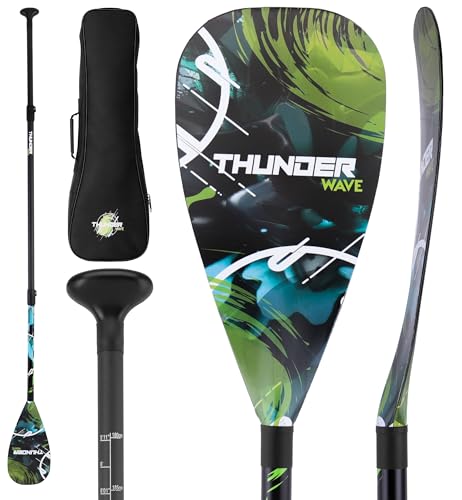
SereneLife Adjustable Carbon Fiber SUP Paddle 3-Piece

SereneLife Adjustable SUP Paddle for SLSUPB518

OCEANBROAD Adjustable SUP Paddle with Aluminum Alloy Shaft

Boardworks 2 Piece SUP Paddle, 70-86 Inches

Adjustable SUP Paddleboard Paddle

CRISURF Full Carbon Racing SUP Paddle 170-210 cm
Inside Each Recommended Option
The SereneLife Adjustable Carbon Fiber SUP Paddle 3-Piece offers a useful balance of low weight and manageable construction for trips across calm lakes or sheltered coastal water. Its three-section format also makes it easier to separate and fit into a vehicle or carry bag, although you’ll need to tighten the lever-lock clamp securely before heading out.
Unlike the heavier aluminum approach used by the OCEANBROAD later in this list, this model combines a carbon-and-glass shaft with a teardrop blade. That construction should feel more responsive to stroke changes for an improving paddler, while the adjustable design lets you dial in a comfortable reach.
Real-World Strengths
- The stated weight of 0.42 pounds reduces bulk during long carry-ins.
- A three-piece breakdown helps with transport and compact storage.
- The lever-lock clamp allows quick length changes between paddlers.
- Saltwater readiness suits coastal launches with fresh-water rinsing afterward.
Small Caveats
- Carbon components deserve careful storage, particularly around the clamp and ferrule.
- The teardrop blade favors general paddling rather than a narrowly specialized racing shape.
Feature Snapshot
Made For
You’ll benefit most from this paddle as a beginner or intermediate paddler using it across mixed recreational sessions.
Another Choice May Suit
OCEANBROAD Adjustable SUP Paddle with Aluminum Alloy Shaft suits you better when kayak conversion matters more than minimal carry weight.
This SereneLife paddle makes the most sense as a convenient replacement or companion for the SLSUPB518 Rising Flow inflatable board. Its model-focused design removes much of the guesswork from finding a matching shaft, while the adjustable construction still offers some flexibility for shared family use.
Compared with the SereneLife three-piece carbon option, this choice appears less oriented toward minimal carry weight. In exchange, you receive a straightforward option tied closely to a recognizable board model, which can be reassuring during an urgent replacement.
Everyday Advantages
- Direct SLSUPB518 compatibility simplifies replacement decisions.
- Adjustability accommodates paddlers with different reach preferences.
- Its universal SUP format can also suit compatible boards beyond the named model.
Points To Keep In Mind
- Confirm your board model and connection style before ordering.
- A foam-filled section can add bulk compared with a more segmented travel paddle.
- Rinse the shaft and blade after saltwater use to limit salt and sand buildup.
Right Fit For
This model serves you best as an SLSUPB518 owner who wants an uncomplicated replacement rather than a racing-oriented setup.
A Better Fit Elsewhere
CRISURF Full Carbon Racing SUP Paddle 170-210 cm is the stronger fit for you when low weight and a complete carbon construction take priority over model-specific convenience.
The OCEANBROAD Adjustable SUP Paddle with Aluminum Alloy Shaft stands apart because it can move between stand-up paddleboarding and kayak use. An anti-twist shaft, meaning a design intended to limit blade rotation, gives it a steadier feel for users who alternate between a SUP board and a sit-on-top kayak.
You’ll carry more mass than with the full carbon CRISURF model, yet the aluminum shaft provides a different ownership profile that may appeal to paddlers who cycle between two watercraft. The reinforced nylon blades and UV-stable construction also suit regular outdoor exposure.
Key Advantages
- Four-piece construction converts between SUP and double-bladed kayak modes.
- The SUP configuration adjusts from 66 to 84 inches.
- Anti-twist control helps keep the blade aligned during strokes.
- Reinforced nylon blades provide practical durability for regular sessions.
Worth Noting
- Its 2-pound SUP weight is heavier than the carbon-focused alternatives.
- More frequent joint checks are sensible because the conversion uses several connection points.
Quick Facts
Built With In Mind
You’ll appreciate this paddle most as a recreational paddler who uses both a SUP board and a kayak.
Look Elsewhere When
SereneLife Adjustable Carbon Fiber SUP Paddle 3-Piece fits you better for a lightweight single-sport setup with minimal carry weight.
The Boardworks 2 Piece SUP Paddle, 70-86 Inches, offers a grounded alternative to the more specialized carbon racers. Its carbon shaft and fiberglass-core blade balance responsiveness with a buoyant feel, making it a sensible fit for regular lake paddles and fitness sessions.
Compared with the OCEANBROAD’s dual-purpose design, this model concentrates on stand-up paddling. The blade’s protective ABS edge can also soften contact with the board rail during an errant stroke, a detail that matters in crowded launch areas or choppy water.
The Case For It
- Sixteen inches of length adjustment covers a useful range of body sizes.
- The two-piece format packs down with fewer connections than four-piece systems.
- Fiberglass foam core adds buoyancy for a lighter in-water sensation.
- Protective edging reduces direct contact with the rail.
Practical Considerations
- Dry the fiberglass blade after use to reduce lingering moisture and salt.
- Its 70-inch minimum may be less comfortable for a notably shorter paddler.
Technical Highlights
Who It Suits Best
You’re a good match for this paddle if your sessions center on recreational SUP use and a single-board setup.
Consider Something Else When
OCEANBROAD Adjustable SUP Paddle with Aluminum Alloy Shaft makes more sense for you when kayak versatility takes priority over low weight.
The LINGVUM Adjustable SUP Paddleboard Paddle combines practical adjustment with a wood-grain finish that stands apart from the technical appearance of most black paddles. Its fiberglass shaft and streamlined polypropylene blade target casual lakes, calm coastal water, and paddlers who want a coordinated look with a matching board.
The 66- to 82-inch range provides meaningful room to tune your reach, but it doesn’t offer the specialized carbon construction of the CRISURF model. For most relaxed sessions, that trade seems reasonable, particularly when coordinated styling matters to you.
Practical Pluses
- Sixteen inches of adjustment helps establish a comfortable stroke position.
- The 30 mm fiberglass shaft avoids the heavier feel associated with aluminum.
- A symmetric PP blade is designed to reduce water resistance.
Minor Gripes
- The decorative finish may be less practical for paddlers who prefer a plain working surface.
- Confirm your board’s shaft fitting before ordering, since shared fit assumptions can be misleading.
- Rinse and dry the blade after coastal outings to preserve the clean finish.
Made For
This paddle fits you best for relaxed SUP days and anyone who values coordinated styling alongside adjustable sizing.
Reach For A Different Pick When
CRISURF Full Carbon Racing SUP Paddle 170-210 cm suits you better for performance-focused fitness or racing sessions.
The CRISURF Full Carbon Racing SUP Paddle 170-210 cm is built for paddlers who put a premium on efficient strokes, stable blade alignment, and low moving weight. Both shaft and blade use carbon fiber, a material prized for stiffness without the mass of aluminum. That makes it most convincing for longer fitness sessions, touring, or faster-paced paddling.
You’ll feel the biggest contrast against the aluminum OCEANBROAD model, particularly during repeated strokes. Still, the full carbon setup may feel unnecessarily specialized for occasional lessons or short family outings, where adjustable fit and easy handling matter more.
Advantages To Know
- Full carbon construction supports efficient energy transfer through the stroke.
- A no-twist shaft design helps maintain a consistent blade angle.
- The three-piece format supports compact transport between sessions.
- Floating construction helps reduce the blade’s sinking tendency.
Trade Offs To Consider
- Carbon parts need careful handling around rocks, docks, and vehicle storage.
- The performance focus offers less appeal for very casual paddling.
Core Details
Built With In Mind
You’ll get the most from this paddle as an experienced fitness, touring, or racing-focused paddler.
Where A Sibling Pick Shines
Boardworks 2 Piece SUP Paddle, 70-86 Inches, suits you better for relaxed recreational days and mixed paddler households.
What Matters Before You Choose a SUP Paddle
Length and reach
A SUP paddle should reach your upper hand comfortably while you stand with relaxed shoulders. Adjustable models cover a broader range of users, but the adjustment range still matters. Measure from the waterline to your chin for a practical starting point, then refine the setting based on your stroke and board height.
Shaft and blade materials
Carbon fiber is light and responsive, fiberglass offers a lighter aluminum alternative, and aluminum tends to provide a heavier, steadier feel. A polypropylene blade balances utility with corrosion resistance. The trade-off comes down to portability, handling preference, and how often you move the paddle between sessions.
Intended watercraft
Single-sport paddles can keep construction and storage simple. The OCEANBROAD model converts to a kayak, while the SereneLife replacement paddle centers on a specific board model. Confirm shaft fit, intended board type, and storage requirements before making a final choice.
Adjustability and care
Clip locks and lever clamps make length changes convenient, though each mechanism needs periodic inspection. Rinse salt water from the blade, loosen wet hardware for drying, and store carbon sections away from sharp or abrasive surfaces. Taking a few extra minutes helps keep the shaft and connection points in good working order.
Choosing More Carefully
Mistakes Worth Dodging
A paddle that’s too short can encourage bent elbows and a choppy stroke, while an overly long shaft can reduce control. Don’t rely on a generic model name alone, especially for a replacement part. Check the board connection, handle position, and expected paddle length before ordering.
What The Higher Tier Buys
Full carbon construction can reduce moving weight and improve response during repeated strokes, which matters in fitness, touring, and race-oriented settings. A higher-tier design may cost more, but it is most useful for paddlers who train often or spend longer periods on the water. Casual sessions may benefit more from a simpler, lower-cost option.
Frequently Asked Questions
How long should a SUP paddle be?
Start with a length that places the grip around your upper-hand height. Board thickness and paddling style also affect the final setting.
Are carbon paddles better than aluminum?
Carbon paddles are usually lighter and more responsive, while aluminum often feels heavier but straightforward. Choose based on your handling preference and session type.
Can one SUP paddle work with different boards?
Many adjustable paddles fit multiple compatible boards, but shaft and connection fittings must match. Check the manufacturer’s dimensions before purchasing.
How often should you replace a SUP paddle?
Replacement becomes more likely after severe damage, repeated delamination, or a connection that no longer holds securely. Inspect the shaft, blade, grip, and clamp regularly.
Should I rinse a paddle after use?
Fresh-water rinsing helps remove salt and dirt, especially after coastal paddling. Dry the shaft and blade before storing them.
Wrap Up
Choosing a SUP paddle comes down to fit, weight, and the way you use the water. SereneLife offers focused replacement and lightweight three-piece options, OCEANBROAD adds kayak versatility, and Boardworks provides a balanced recreational setup. LINGVUM brings adjustable sizing and distinctive styling, while CRISURF targets performance-focused paddling. Match the paddle to your board, your typical water, and the effort you actually want to make on each outing.
