Setting up a tent correctly in windy weather is crucial for your safety and comfort. Wind can create challenges, such as unstable tents and disrupted sleep. To combat these issues, you must scout for natural wind barriers like trees or rocks. Additionally, when you set up a tent, anchoring it securely with high-quality stakes and guy lines helps maintain stability.
Key Takeaways
Gather essential equipment like heavy-duty stakes and robust guy lines to ensure your tent remains stable in windy conditions.
Choose a tent location wisely by utilizing natural windbreaks such as trees or rocks to reduce wind impact and enhance safety.
Regularly check and maintain the tension of your stakes and guy lines to keep your tent secure against strong winds.
Preparation

Gather Equipment
Before you set up a tent, gather the right equipment. This preparation ensures you can handle windy conditions effectively. Here are some essential items you should have:
Heavy-duty stakes: Use stakes that can withstand strong winds. Drive them at least 5 feet away for 7-foot legs and 6 feet away for 8-foot legs.
Robust guy lines: These help stabilize your tent against wind pressure. Deploy them with reliable tensioners to evenly distribute the wind load.
Tent Ballasting System: Consider this alternative if stakes are not feasible. It provides extra security for your tent.
Tip: Ensure stakes have 6 inches or less of the head exposed for better holding strength. Vertical stakes offer improved holding strength compared to angled ones.
Check Weather
Checking the weather is crucial for a successful camping experience. Reliable forecasts inform you about wind speeds and conditions. For instance, if forecasts indicate winds over 36 mph, evacuate the tent and move guests indoors. This information helps you make informed decisions about tent stability and safety.
To find accurate weather information, consider these reliable sources:
The National Weather Service: Offers precise weather information for specific locations.
Mountain-Forecast.com: Provides forecasts by elevation, useful for mountainous areas.
Radar and Satellite Imagery: Helps track weather systems effectively.
By gathering the right equipment and checking the weather, you set yourself up for a safer and more enjoyable camping experience.
Set Up a Tent Location
Natural Windbreaks
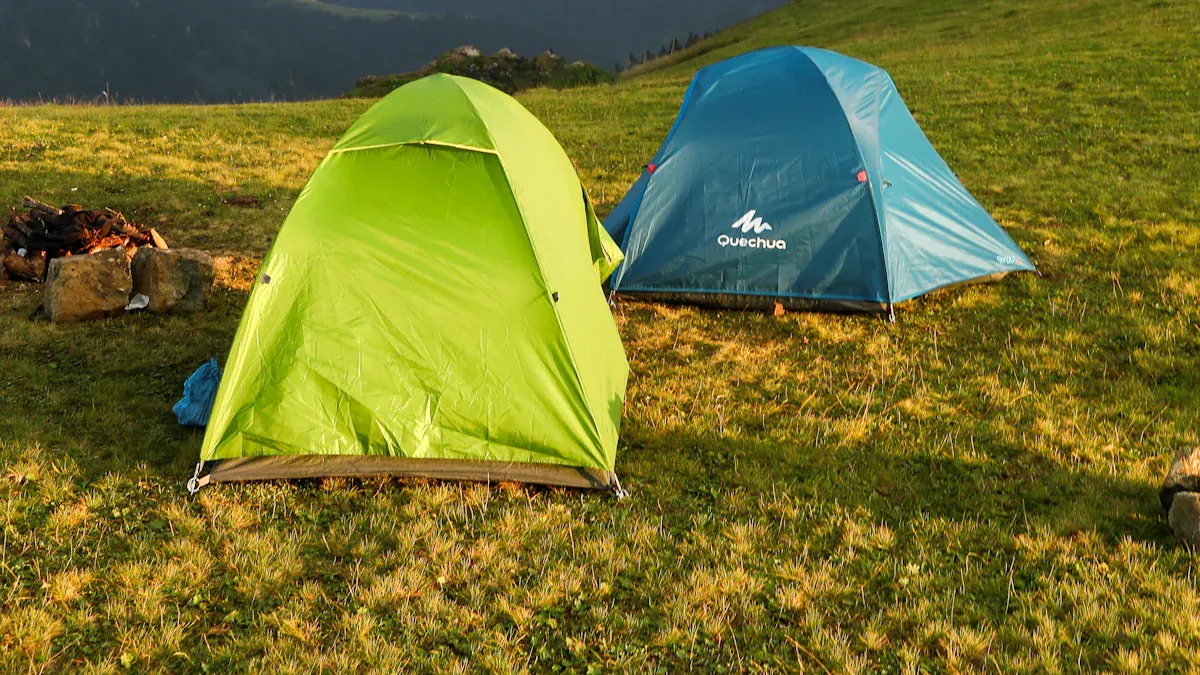
Choosing the right location for your tent can significantly impact its stability in windy weather. Position your tent behind natural windbreaks like shrubs, boulders, or tree lines. These features can reduce wind speed and protect your tent from harsh gusts. When you pitch your tent near these barriers, you create a sheltered environment that enhances your camping experience.
Windbreaks work by intercepting airflow, which reduces wind speeds. The arrangement and type of vegetation can enhance their effectiveness. For example, trees and rocks can significantly reduce high winds, making them ideal spots for setting up a tent. If you camp low in the shelter of trees, you minimize your vulnerability to strong winds.
Here are some tips for utilizing natural windbreaks effectively:
Orient the tent’s lowest profile towards the wind: This usually means positioning the foot end of the tent into the wind.
Utilize all guylines: This helps stabilize your tent against wind pressure.
Ensure all stakes are secure: Loose stakes can lead to tent failure, especially in windy conditions.
Avoid Low Areas
While it may seem tempting to set up your tent in a low-lying area, this choice can lead to several dangers. Low areas can quickly fill with water during heavy rain, increasing the risk of flooding. Additionally, these spots may be more exposed to strong winds, which can destabilize your tent and lead to collapse.
Consider these potential dangers when selecting a campsite:
Low-lying areas can become waterlogged, making your tent vulnerable to flooding.
These areas may experience stronger winds, which can compromise your tent’s stability.
Camping under dead branches poses a risk, as they can fall during storms.
Instead, aim for higher ground when setting up a tent. Higher terrain often offers better wind protection and warmth. Natural barriers like trees can enhance warmth in windy conditions, making your camping experience more comfortable.
By carefully selecting your tent location, you can ensure a safer and more enjoyable camping experience, even in windy weather.
Setup Techniques
Staking Down
Properly staking down your tent is essential for stability in windy conditions. Follow these steps to maximize your tent’s grip on the ground:
Choose the Right Site: Select a sheltered location protected from strong winds. Look for natural windbreaks like trees or rocks.
Double Stake: Drive stakes at a 45-degree angle into the ground. Use multiple stakes per anchor point in an ‘X’ shape for better grip.
Consider Wind Direction: Position the narrowest side of the tent facing the wind. This reduces resistance and helps keep your tent grounded.
Regular Maintenance: Periodically check and adjust the tension of your stakes. Wind can shift them, so maintaining their grip is crucial.
Using the right type of stakes also matters. For example, the Orange Screw Ultimate Ground Anchors work well in loose sand, while the MSR Ground Hog performs effectively in various soil conditions. These stakes provide superior hold when properly anchored.
Use Guy Lines
Guy lines play a critical role in enhancing your tent’s stability during strong winds. Here’s how to use them effectively:
Attach Properly: Secure guylines to anchor points on your tent. Ensure they are taut to prevent the tent from acting like a sail.
Use Quality Materials: Opt for springy or non-stretch materials for your guy lines. This helps absorb shock loads from wind gusts.
Tensioning: Tensioning the guy lines reduces the forces on the stakes. A taut panel sheds wind effectively, while a loose panel can distort and catch the wind.
Add Extra Lines: Consider adding a second guy line to increase stability. This distributes force between two points, making your setup more secure.
When attaching guy lines, aim for a 45-degree angle. This angle helps withstand gusty winds and minimizes the risk of your tent being lifted. Remember, a well-staked and guyed tent can withstand much stronger winds than one that is not.
By following these techniques, you can confidently set up a tent that remains stable and secure, even in challenging weather conditions.
Setting up a tent in windy weather requires careful preparation and technique. Use high-quality materials and secure anchoring methods. Practice your setup skills in controlled environments to build confidence. Remember, smaller tents handle wind better. By following these tips, you can ensure a safe and enjoyable camping experience.