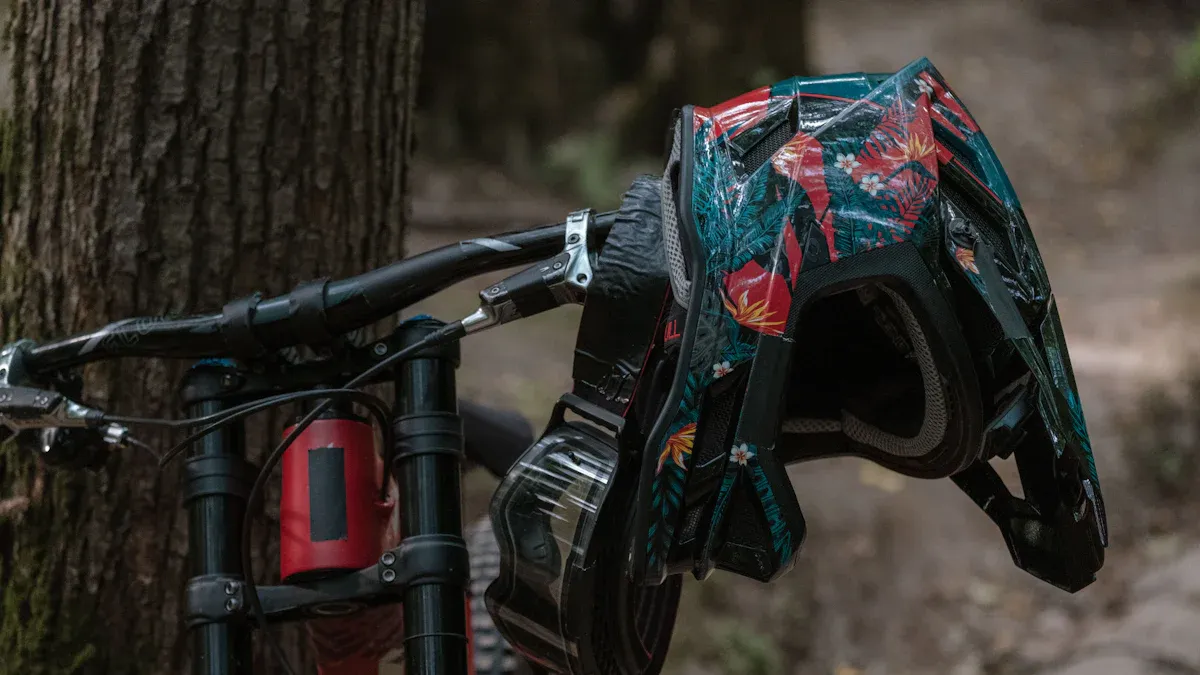
When you hit the trails for mountain biking, safety gear plays a crucial role in protecting you from injuries. Studies show that personal protective equipment significantly reduces the risk of harm. For instance, 99% of injured riders in a Scottish study wore helmets. This statistic highlights the importance of a quality helmet. Essential gear includes helmets, knee and elbow pads, and gloves. Being well-equipped not only keeps you safe but also boosts your confidence on challenging terrains.
Key Takeaways
Always wear a quality helmet to reduce the risk of head injuries by up to 69%. Choose a helmet that fits snugly and meets safety standards.
Use knee and elbow pads to protect your joints from impacts. These pads can significantly lower the risk of cuts and fractures during falls.
Select gloves that enhance your grip and protect your hands from abrasions. Look for gloves with padding for added safety.
Choose protective clothing based on weather conditions. Opt for breathable fabrics in summer and waterproof layers in winter to stay comfortable.
Assess your riding style to select the right gear. Different styles require different levels of protection, so choose accordingly.
Safety Gear
Mountain Biking Helmets
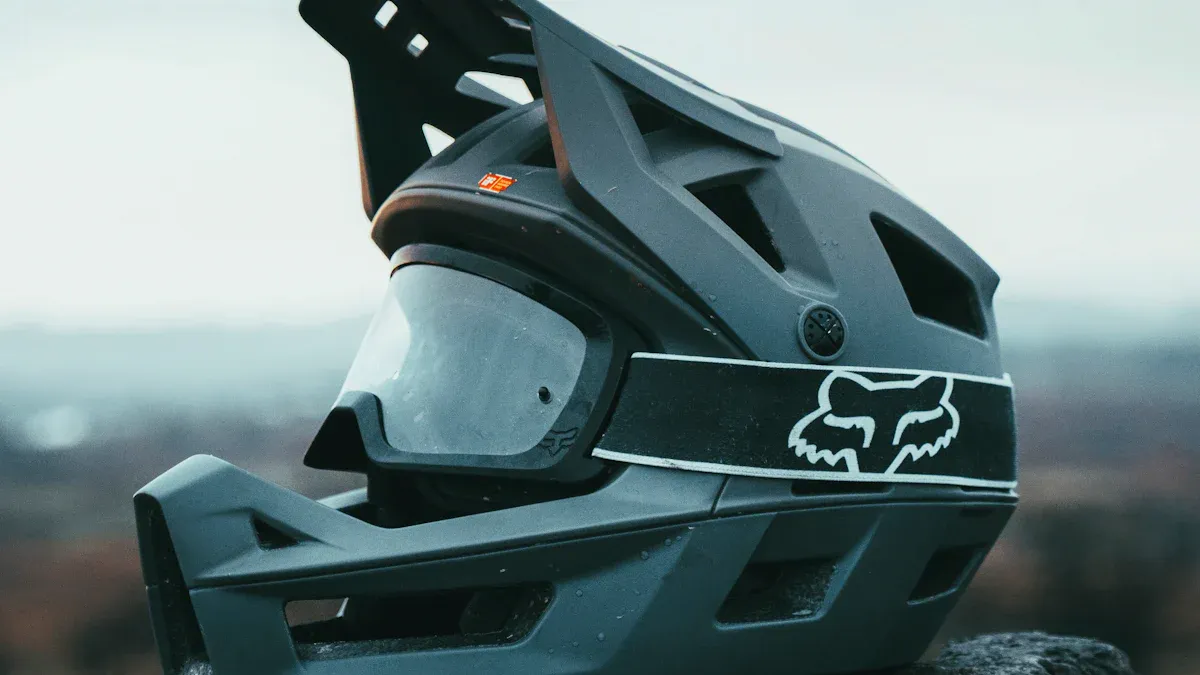
A quality helmet is your first line of defense when mountain biking. Helmets reduce the risk of head injury by 69% and brain injury by 65%. They also lower the chances of severe brain injuries by 74%. You can choose from various types of helmets, including:
Half-Shell Helmets: These provide basic protection and are lightweight, making them ideal for cross-country riding.
Full-Face Helmets: These offer maximum protection, especially for downhill riders. They cover your entire face and provide extra padding.
Breakaway Helmets: Designed to minimize injury during crashes, these helmets detach upon impact.
Proper fit is crucial. A poorly fitted helmet increases the likelihood of head injuries. Always ensure your helmet meets safety standards like CPSC or ASTM.
Helmet Type | Safety Certification(s) |
|---|---|
Cross-Country | CPSC, EN-1078 |
Trail/All-Mountain | CPSC, EN-1078 |
Downhill/Freeride | ASTM F1952, SNELL B-95 |
Knee and Elbow Pads
Knee and elbow pads are essential for protecting your joints during falls. They cushion impacts and reduce the risk of cuts, bruises, or fractures. Wearing these pads can also prevent long-term damage from repeated minor injuries. Here are some features to consider:
Hardshell Armor Plate: This is crucial for protecting your knees during impacts.
Durable Construction: Look for pads made from heavy-duty materials to withstand crashes.
D30 Viscoelastic Foam: This material offers flexibility during normal use but hardens upon impact for added protection.
Using knee and elbow pads enhances your confidence on the trails, allowing you to ride more safely.
Gloves
Mountain biking gloves provide vital hand protection and improve your grip on the handlebars. They act as a barrier against abrasions and impacts. Common injuries to hands include scrapes, bruises, and sprains. Gloves help prevent these injuries by offering:
Grip: A good grip is essential for control and safety during rides.
Padding: Some gloves, like the 100% Cognito D30, feature advanced impact protection with D30 knuckle pads.
Wearing gloves not only protects your hands but also enhances your overall riding experience.
Protective Clothing
Choosing the right protective clothing is crucial for your safety and comfort. Durable, abrasion-resistant fabrics are essential for rocky or muddy trails. Here are some recommended clothing types based on weather conditions:
Clothing Type | Weather Condition | Features |
|---|---|---|
Bike Jackets | Cold/Rainy | Waterproof/breathable, cycling-specific design, helmet-compatible hood |
Bike Tights/Pants | Cold/Damp | Padded, waterproof/breathable options for wet conditions |
Insulating Layers | Cold | Long underwear or fleece, avoid cotton, use wool/polypropylene/nylon |
In summer, opt for lightweight, breathable clothing to limit sun exposure. In winter, layer your clothing for warmth and protection against the elements. Protective clothing significantly lowers the risk of abrasions and lacerations during crashes, making it a vital part of your mountain biking gear.
Selecting Gear
Assessing Riding Style
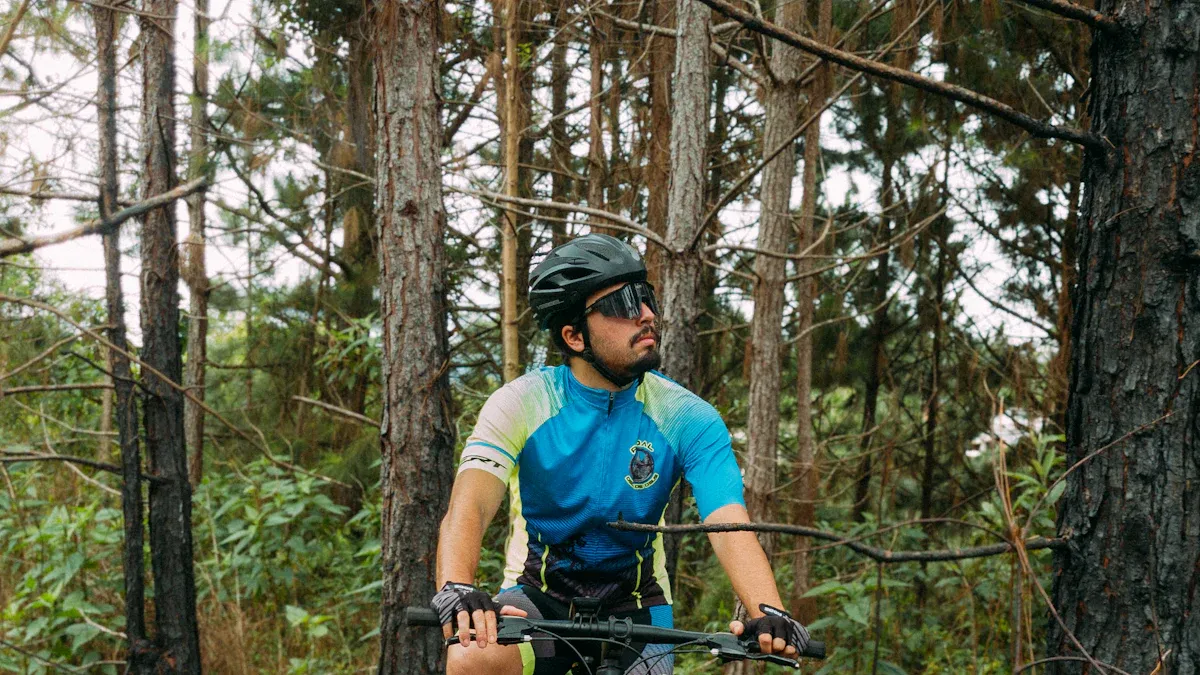
Choosing the right safety gear based on your riding style is essential. Different styles require different levels of protection. Here’s a breakdown of what you might need:
Downhill Riders: You should prioritize maximum protection. A full-face helmet, knee pads, and elbow pads are crucial due to the higher speeds and risks involved.
Cross-Country Riders: Lightweight gear is your best friend. You may sacrifice some comfort for performance. Look for helmets and pads that allow for efficient pedaling without weighing you down.
Enduro Riders: You need shoes that balance comfort for longer rides with performance for downhill sections. This style often requires versatile gear that can handle various terrains.
Fit and Comfort
Proper fit and comfort are vital for your safety and performance. Here are some key indicators to consider:
Sizing: Measure the circumference of your head to find the right helmet size. A snug fit is essential, but it shouldn’t be too tight or loose.
Strap Adjustment: Ensure the straps form a ‘Y’ shape around your ears. The buckle should sit under your chin, allowing for one or two fingers of space.
Padding: The padding inside your helmet should be soft and help it fit snugly. Removable padding is beneficial for cleaning and replacement.
Ventilation: Look for helmets with good ventilation. This feature keeps your head cool during rides.
Remember, even the best safety gear can fail to protect you if it doesn’t fit properly. An ill-fitting helmet or pads can increase your risk of injury during a crash.
Budget Considerations
You don’t have to break the bank to get quality safety gear. Many budget-friendly options meet industry safety standards. Here are some affordable choices:
Helmets: Consider options like the Lazer Coyote KinetiCore, Giro Radix Mips, and Specialized Camber. These helmets offer impressive impact scores and comfort without a hefty price tag.
Protective Gear: Look for knee and elbow pads that provide good protection without being overly expensive. Many brands offer durable options that won’t strain your wallet.
Investing in proper safety gear is crucial for your mountain biking experience. It enhances your safety and allows you to enjoy the ride with confidence.
Benefits of Gear
Protection and Injury Prevention
Using safety gear significantly enhances your protection while mountain biking. A large-scale meta-analysis found that protective equipment can reduce head injuries by 48%. Helmets, knee pads, and elbow pads play a crucial role in preventing injuries. For instance, wearing elbow pads can lead to an 82% reduction in elbow injuries, while knee pads can decrease knee injuries by 32%. Here’s a quick overview of injuries prevented by specific gear:
Type of Injury | Safety Gear Used |
|---|---|
Knee Injuries | Knee Pads |
Spine Injuries | Back Protection |
Hand Injuries | Gloves |
Eye Injuries | Quality Eyewear |
Performance Enhancement
Advanced safety gear not only protects you but also enhances your performance. Modern helmets with rotational impact protection systems, like MIPS, absorb impacts effectively. This allows you to focus on your skills without worrying about potential injuries. Additionally, lighter and more breathable gear improves your mobility. Properly fitted gear, such as compression-style sleeves, prevents shifting during rides, which can lead to injuries. Comfort in your gear encourages consistent use, essential for safety during your rides.
Weather Adaptability
Specialized mountain biking gear helps you adapt to extreme weather conditions. For example, gear made with Polartec materials provides breathability and weather protection. This allows you to maintain comfort without frequent layer adjustments. Polartec® Alpha® insulation adjusts to your exertion levels, keeping you warm without overheating. When you choose the right gear, you can enjoy your ride regardless of the weather.
In summary, selecting the right safety gear is vital for your mountain biking experience. You should assess your personal needs based on your riding style, experience level, and the terrain you tackle. Here are some key takeaways:
Comfort is crucial; your gear should fit well and allow freedom of movement.
Protection from the elements matters; choose waterproof or water-resistant clothing.
Visibility is key; opt for bright colors or reflective details for safety in low light.
Quality materials ensure durability and performance over time.
By making informed choices, you can enhance your safety and enjoy your rides with confidence. Remember, the right gear not only protects you but also boosts your overall biking experience.
FAQ
What should I look for in a mountain biking helmet?
When choosing a helmet, prioritize safety certifications like CPSC or ASTM. Ensure a snug fit and good ventilation. Consider your riding style; downhill mountain biking requires full-face helmets for maximum protection.
How do knee and elbow pads help during rides?
Knee and elbow pads protect your joints from impacts and abrasions. They cushion falls and reduce the risk of injuries. Wearing them boosts your confidence, allowing you to tackle challenging trails more safely.
Are gloves necessary for mountain biking?
Yes, gloves are essential. They provide grip on the handlebars and protect your hands from scrapes and impacts. Look for gloves with padding for added protection during rides.
How can I ensure my gear fits properly?
To ensure a proper fit, measure your head for helmet size. Adjust straps to form a ‘Y’ shape around your ears. For pads, check that they stay in place without restricting movement.
What is the best clothing for mountain biking in different weather?
Choose breathable, moisture-wicking fabrics for warm weather. In colder conditions, layer with waterproof and insulated clothing. Proper clothing protects against abrasions and keeps you comfortable during rides.