When you are in nature, staying clean can be hard. But good hygiene is important for enjoying your camping trip. Many campers worry about things like dirty hands or unsafe water. You might see signs of bad hygiene in camping spots, like poop and toilet paper left behind. Let’s look at some easy camping hygiene tips to help you stay clean while camping!
Personal Hygiene
When you are in the wild, staying clean is very important. It helps you feel good and stay healthy. Let’s look at some camping hygiene tips to help you stay clean.
Hand Washing
Washing your hands is the best way to fight germs. You might think you can skip this outside, but that’s not true. Not washing your hands can make you sick. This can ruin your fun. Here are some good ways to wash your hands when water is low:
- Use a small amount of water to rinse your hands.
- Use a bite valve from a water bottle to wash hands easily.
- Make a rinsing system with a ziplock bag and a cord to pour water.
- Set up a siphon with a water bottle and tubing to wash hands without touching.
These ways help keep your hands clean, especially after using the bathroom or touching food. Don’t forget baby wipes! They are great when you don’t have water.
Bathing Options
Bathing while camping can be hard, but it’s key to staying fresh. You can use natural water or baby wipes.
| Pros of Natural Water Sources | Cons of Natural Water Sources |
|---|---|
| Gives running water when available | Hard to fill with limited water |
| Can use with a shower head | Uses more water than other ways |
| Lets you fully soak in water | Bending may not work for everyone |
Natural water is nice, but be careful. Even biodegradable soap can harm fresh water. It can hurt fish and plants, so don’t use soap in water. Instead, use baby wipes. They are great when water is low and can be made at home with simple things.
Here’s how to make baby wipes:
- Cut a roll of paper towels in half.
- Put the wipes in a container and add water and mild soap.
- Let them soak for 5-10 minutes before using.
Choose unscented or mild wipes to avoid skin problems.
Hair Care
Don’t forget about your hair while camping! Not washing it often can cause oils and dead skin to build up. This can hurt your scalp and hair growth. Brushing helps keep your scalp healthy and your hair better.
If you can’t wash your hair, use a bandana or hat to keep it clean and out of your face. This small step can help you feel better on your trip.
By following these hygiene tips, you can enjoy camping without worrying about being clean. Good hygiene can stop infections and keep you feeling good during your adventure!
Food Hygiene Tips
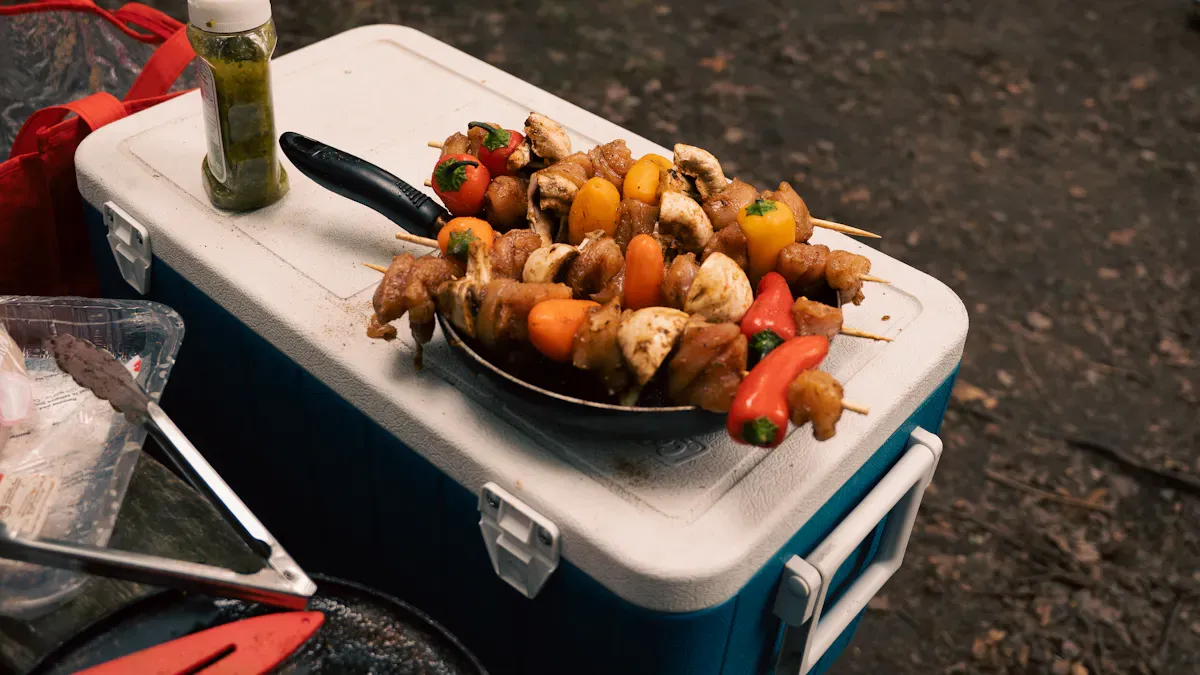
Keeping your food safe while camping matters a lot. It helps you avoid sickness and enjoy your meals without worry. Let’s dive into some key tips on how to store, cook, and clean your food properly outdoors.
Safe Food Storage
Storing food safely keeps it fresh and stops animals from getting into it. You want to keep cold foods cold and hot foods hot. Here’s a quick look at how to do that:
| Food Type | Temperature Requirement | How to Keep It That Way |
|---|---|---|
| Hot Foods | At or above 140°F | Use chafing dishes with Sterno fuel or heated bricks in a cooler. |
| Cold Foods | At or below 40°F | Use ice baths, shallow containers in pans filled with ice, and check with a thermometer. |
You should keep cold foods at 40°F or below until you eat them. Don’t let cold food sit out for more than 2 hours. If it’s hotter than 90°F outside, that time drops to 1 hour. Hot food should stay at 140°F or warmer and also not be left out longer than 2 hours (or 1 hour if it’s very hot).
When you pack food, separate raw items like meat from ready-to-eat foods. Use different containers and utensils for each. This helps stop germs from spreading.
If you camp where bears or other wildlife roam, use special containers made to keep animals out. BEARicuda food canisters are great for this. They are light, fit in your backpack, and can hold food for several days. Planning your food and repackaging it can help you fit everything safely inside.
Cooking Safely
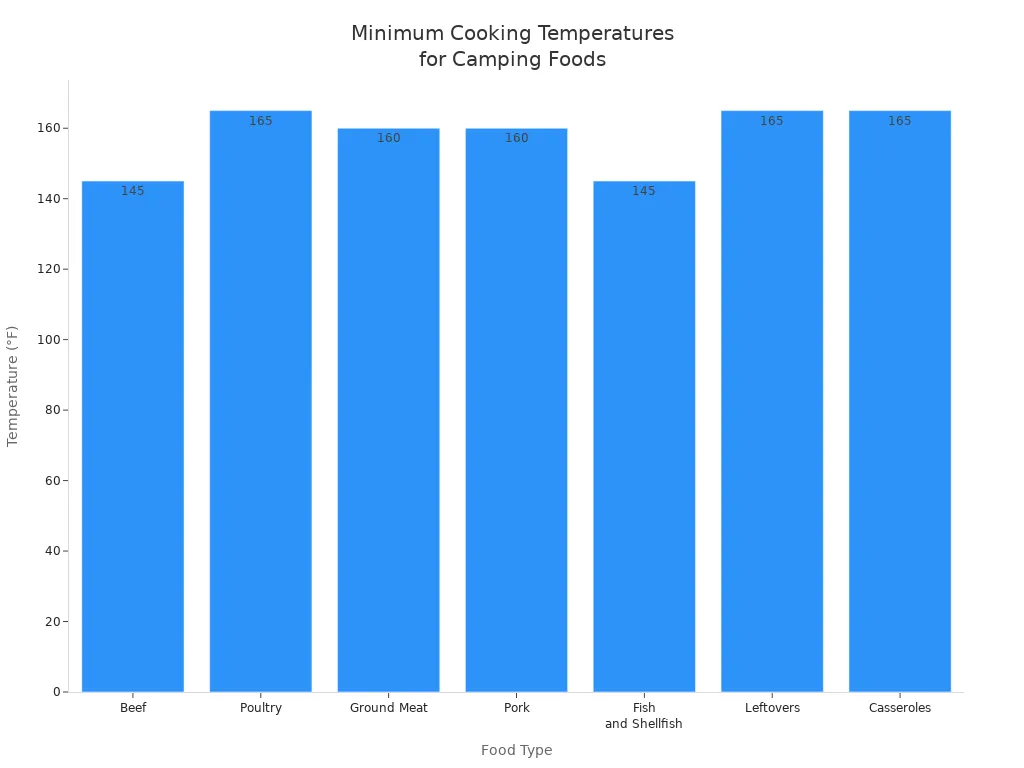
Cooking food to the right temperature kills harmful germs. Here’s a handy table showing the minimum internal temperatures you should reach for common camping foods:
| Food | Minimum Internal Cooking Temperature |
|---|---|
| Beef | 145 °F (63 °C) |
| Poultry (chicken, turkey) | 165 °F (74 °C) |
| Ground Meat (beef, pork) | 160 °F (71 °C) |
| Pork | 160 °F (71 °C) |
| Fish and Shellfish | 145 °F (63 °C) |
| Leftovers | 165 °F (74 °C) |
| Casseroles | 165 °F (74 °C) |
To avoid cross-contamination, keep raw meat separate from other foods. Use different cutting boards and utensils for raw and cooked items. Wash your hands often, especially after handling raw meat. If you follow these steps, you reduce the risk of foodborne illness.
Remember to throw away any perishable food left out for more than two hours. If it’s hot outside, don’t wait longer than one hour.
Cleaning Utensils
Cleaning your cooking tools and dishes is just as important as cooking food safely. Dirty utensils can carry harmful bacteria like E. coli, Staphylococcus aureus, and Pseudomonas aeruginosa. These germs can cause stomach problems and infections.
Use biodegradable soap to wash your utensils. These soaps work well and don’t harm the environment. Make sure to wash all surfaces of your utensils thoroughly. Rinse with clean water and dry them before storing.
Here are some tips to keep your utensils clean:
- Wash utensils right after use to stop germs from growing.
- Use separate sponges or cloths for dishes and cutting boards.
- Bring extra paper towels and hand sanitizer for quick cleanups.
- Avoid washing dishes directly in lakes or streams. Instead, use a basin and dispose of wastewater at least 200 feet away from water sources.
By keeping your food stored, cooked, and cleaned properly, you protect yourself and others from getting sick. Plus, you help keep the campsite clean and safe for wildlife and future campers. Good food hygiene makes your camping trip tastier and healthier!
Staying clean while camping makes your trip better and more enjoyable. Easy things like washing your hands and storing food properly help you stay healthy and feel good. Campgrounds with nice bathrooms and clear signs show how good hygiene helps everyone:
| Feature | Benefit |
|---|---|
| Updated bathrooms | More comfort and cleanliness |
| Clear hygiene signs | Reminds you to keep the area clean |
Use these tips to have a great outdoor adventure!
FAQ
What should I do if I can’t find a bathroom while camping?
Use a designated area at least 200 feet from water sources. Bring a trowel to dig a small hole for waste.
How can I keep my hands clean without soap?
Use hand sanitizer with at least 60% alcohol. Alternatively, use baby wipes for quick cleaning when soap and water aren’t available.
Is it safe to wash dishes in a lake or river?
No, avoid washing dishes directly in natural water. Use a basin and dispose of wastewater at least 200 feet away from water sources.