Camping for beginners is a fantastic way to escape the hustle and bustle of everyday life. Imagine breathing in fresh air, surrounded by nature, and making lasting memories with friends and family. Did you know that about 78 million households in the U.S. participate in camping each year? Many people turn to camping to unplug from technology and reconnect with nature. It’s a great chance to build new skills and enjoy some quality time outdoors. So, let’s get you prepared for your first-time camping experience!
Key Takeaways
Choose a tent with a waterproof rating of at least 1500mm to stay dry during your trip.
Pack a well-stocked first-aid kit, including bandages and antiseptic wipes, for safety.
Select appropriate clothing layers made from moisture-wicking materials to stay comfortable.
Plan meals ahead of time and use multi-purpose ingredients to simplify cooking.
Always check the weather forecast before your trip and pack extra layers for changing conditions.
Camping Gear Essentials
When you’re gearing up for your first camping trip, having the right equipment can make all the difference. Here’s a breakdown of the essentials you’ll need to ensure a comfortable and enjoyable experience in the great outdoors.
Tent and Sleeping Gear
Your tent is your home away from home, so choose wisely! Look for a tent that suits your camping style and the weather conditions. Here are some features to consider:
Waterproof rating: Aim for at least 1500mm to keep you dry.
Strong poles: Aluminum or fiberglass poles provide stability.
Ventilation: Mesh panels help with airflow, especially in warmer weather.
For sleeping gear, a good sleeping bag is crucial. Depending on the season, you might choose:
Feature | Down Insulation | Synthetic Insulation |
|---|---|---|
Warmth | Excellent warmth-to-weight ratio | Retains warmth when damp |
Compressibility | Highly compressible for backpacking | Dries faster than down |
Ideal Conditions | Dry, cold environments | Wet conditions |
Don’t forget a sleeping pad for extra comfort and insulation from the ground!
Cooking Equipment
Cooking while camping can be fun and rewarding. Here’s a list of essential cooking gear:
Portable stove: Options like the Coleman Triton or Jetboil Genesis Basecamp are great for cooking meals.
Cookware: Bring pots, pans, and utensils that are lightweight and easy to clean.
Cooler: Keep your perishables fresh. Use two coolers-one for drinks and another for food.
Meal-prepping tips:
Store pancake batter in a squeeze bottle for easy cooking.
Freeze meals ahead of time to use as ice packs in your cooler.
Clothing and Footwear
Dressing appropriately can enhance your camping experience. Here are some clothing essentials:
Moisture-wicking materials: Fabrics like merino wool and synthetic insulation help regulate temperature and keep you dry.
Layering: Bring base layers, mid-layers, and outer layers to adapt to changing weather.
Footwear: Choose shoes based on terrain:
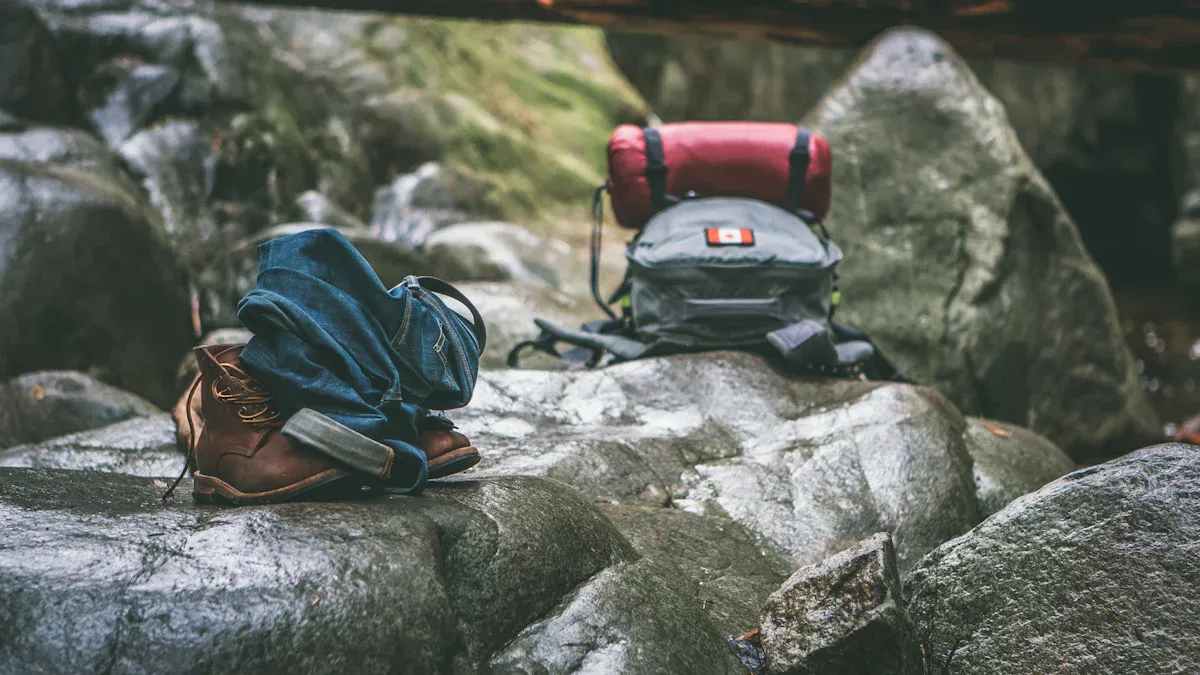
Rocky Terrain: Look for sturdy hiking boots with good ankle support.
Muddy Trails: Waterproof boots with deep lugs for traction are ideal.
Safety Items
Safety should always be a priority. Here’s a list of essential safety items:
First aid kit: Include bandages, antiseptic wipes, and any personal medications.
Lighting: A headlamp or flashlight with extra batteries is crucial for navigating at night.
Insect repellent and sunscreen: Protect yourself from bugs and sunburn.
Navigation tools: A map and compass can help you find your way.
By packing these camping essentials, you’ll set yourself up for a successful and enjoyable first-time camping experience. Remember, preparation is key!
Safety Tips for First-Time Campers
When you head out for your first time camping, keeping safety first should be your top priority. Understanding the environment around you can help you avoid potential hazards. Here are some essential safety tips to keep in mind.
Weather Preparedness
Weather can change quickly when you’re outdoors. Being prepared can make a big difference. Here are some common weather-related risks you might face while camping:
Weather-Related Risks | Mitigation Strategies |
|---|---|
Thunderstorms | Conduct risk assessments and implement emergency preparedness plans. |
Hurricanes | Provide clear signage and prepare for evacuation procedures. |
Tornadoes | Develop a comprehensive severe weather emergency plan. |
Flash Floods | Regularly assess campground hazards and ensure proper communication with campers. |
Before you leave, check the weather forecast using reliable apps like Weather Underground or Dark Sky. These tools can give you real-time updates and alerts about changing conditions. Always pack extra layers and rain gear, just in case!
Wildlife Awareness
Encountering wildlife can be one of the most exciting parts of camping, but it also comes with risks. Here are some common wildlife encounters you might experience in North America:
National Park | Common Wildlife Encounters |
|---|---|
Yellowstone National Park | Bison, wolves, bears |
Great Smoky Mountains National Park | White-tailed deer, wild turkeys, black bears, elk |
Everglades National Park | Alligators, wading birds, manatees |
Rocky Mountain National Park | Elk, bighorn sheep, moose |
To minimize the risk of attracting wildlife to your campsite, follow these tips:
Store all food, trash, and scented items in bear-proof containers or hang them from a tree at least 10 feet off the ground and 4 feet away from the trunk.
Keep a clean campsite by cleaning up spills and disposing of food scraps properly.
Never leave food unattended and ensure all trash is secured in animal-resistant containers.
Observe wildlife from a safe distance, using binoculars or a camera with a zoom lens.
Maintain a respectful distance of at least 100 yards from large animals and 25 yards from smaller animals.
Never attempt to feed or touch wild animals to avoid altering their natural behaviors.
Adhere to Leave No Trace principles, including proper waste disposal and minimizing campfire impacts.
Fire Safety Guidelines
Campfires can enhance your camping experience, but they also pose risks. Here are some leading causes of campfire-related accidents:
Improper supervision is a leading cause of campfire-related accidents.
The use of accelerants, such as gasoline, significantly increases the risk of fire-related injuries.
Contact with hot coals or embers is a common source of burns, as they can retain heat for a long time.
To ensure fire safety, follow these best practices for safely extinguishing a campfire:
Drown: Pour a significant amount of water on the fire until the hissing sound ceases, ensuring all embers are extinguished. Avoid using dirt or sand alone.
Stir: Use a shovel to mix the water with the embers, dirt, and sand thoroughly. Ensure that no embers are left exposed or smoldering.
Drown again: Continue adding water, dirt, and sand until all materials are cool to the touch.
Feel: Check the ashes with the back of your hand to confirm that all embers are cool before leaving.
Navigation Tips
Getting lost can be a scary experience, especially for first-time campers. Here are some reliable navigation tools to help you stay on track:
Use a map-based app with listings for camping and essential services.
Consider reliable navigation apps designed for RV travel, which offer offline navigation and tailored routing.
The iOverlander app can help you find campsites and amenities, with user-generated information on road conditions.
Avoid common navigation mistakes, such as forgetting to bring navigational tools in areas with no service or relying solely on electronic devices like GPS without backups. Always carry a physical map and know how to use a compass.
By following these safety tips, you can enjoy your first time camping while minimizing risks. Remember, preparation is key to a successful outdoor adventure!
Planning Your First Camping Trip
Planning your first camping trip can feel overwhelming, but it doesn’t have to be! With a little preparation, you can set yourself up for a fantastic outdoor adventure. Let’s break down the key steps to make your trip enjoyable and stress-free.
Choosing a Campsite
Selecting the right campsite is crucial for a successful trip. Here are some factors to consider:
Type of Landscape: Decide if you prefer a lakeside, forest, or mountain setting.
Level Ground: Look for a flat area to pitch your tent. This ensures comfort while you sleep.
Flood Risks: Avoid camping near dry riverbeds to prevent flooding during unexpected rain.
Additionally, keep these tips in mind:
Watch for Widow-Makers: Stay clear of areas with dead branches that could fall.
Set Up Before Dark: Arrive at least two hours before sunset to avoid hazards in the dark.
Emergency Procedures: Know the location of nearby medical facilities and have a first aid kit handy.
For beginners, consider starting with a drive-up campground that offers amenities like toilets and potable water. This way, you can focus on enjoying your time outdoors without worrying about the basics.
Creating a Camping Checklist
A camping checklist is your best friend when it comes to packing. Here’s a comprehensive list of items you should include:
Durable tent
Warm sleeping bag
Comfortable, waterproof clothing and shoes
First aid kit
Quality food
Reliable light source (headlamp, lantern, extra batteries)
Toiletries (soap, camp shower, shampoo, etc.)
Hat or cap
Jacket (light waterproof material)
Raincoat poncho
Sweater (fleece or wool)
T-shirts (two pairs)
Pants (two pairs)
Socks (two pairs of hiking socks and one or two pairs of wool socks)
Sufficient food and drink for the trip
Make sure to check off items as you pack them. This will help you avoid forgetting anything important!
Setting Up Camp
Once you arrive at your campsite, it’s time to set up camp. Follow these steps for a smooth setup:
Find a Flat Area: Look for a large, flat space to pitch your tent.
Remove Debris: Clear away rocks and sticks to create a comfortable sleeping area.
Position Your Tent: Set your tent with your head uphill while sleeping to avoid water pooling inside.
Follow Instructions: Assemble your tent according to the manufacturer’s guidelines.
Also, establish a cooking zone away from your sleeping area. This keeps your sleeping space clean and reduces the risk of attracting wildlife. Use proper lighting for safety at night, and designate specific areas for sleeping, cooking, and gathering.
Meal Planning
Meal planning is essential for a successful camping trip. Here are some strategies to ensure you have balanced nutrition:
Choose Your Meals: Decide how many meals you need and select those that require minimal ingredients.
Select Multi-Purpose Ingredients: Use items that can serve multiple purposes in different recipes.
Label and Organize: Clearly label food items and pack them logically for easy access.
Prepare Ahead: Pre-cook meals and freeze them for convenience during the trip.
Understanding your nutritional needs is vital for maintaining energy while camping. A balanced diet should include carbohydrates for immediate energy, proteins for muscle repair, and fats for long-lasting energy. Don’t forget to pack popular camping meals like peanut butter and jelly sandwiches, grilled cheese, and campfire scrambled eggs!
By following these planning tips, you’ll be well on your way to enjoying your first-time camping trip. Remember, preparation is key to a successful outdoor adventure!
Camping is an exciting adventure, but being well-prepared is essential for a great experience. Here are some key takeaways to remember:
Pack a well-stocked first-aid kit, including adhesive bandages and antiseptic wipes.
Choose appropriate lighting gear like headlamps and lanterns for safety.
Establish clear meeting points for your group and teach kids how to identify park staff.
When planning your trip, consider these essential items:
Shelter: Tent, footprint, stakes, rainfly
Sleep System: Sleeping bag, pad, pillow, liner
Cooking Gear: Stove, fuel, cookware set, utensils
Safety Kit: First-aid kit, headlamp, lantern, compass
Personal Items: Clothing layers, toiletries, insect repellent
Embrace the adventure of camping and enjoy your time in nature. With the right preparation, you’ll create unforgettable memories!
FAQ
What should I pack for my first camping trip?
Pack essentials like a tent, sleeping bag, cooking gear, clothing layers, and a first aid kit. Don’t forget food, water, and personal items like toiletries!
How do I choose the right campsite?
Look for flat ground away from hazards like dead branches. Consider proximity to water and facilities. Research the area to find a site that matches your preferences.
What if it rains during my camping trip?
Always check the weather before you go. Pack waterproof gear and a rainfly for your tent. Set up camp in a location that avoids flooding.
How can I stay safe from wildlife?
Store food securely in bear-proof containers or hang it from trees. Keep your campsite clean and observe wildlife from a distance. Never feed animals!
What are some easy meals to cook while camping?
Try simple meals like sandwiches, pasta, or foil packet dinners. Pre-cook and freeze meals for convenience. Bring snacks like trail mix and granola bars for energy!