A thorough boating safety checklist is essential for every trip on the water. It helps you prevent accidents and ensures the safety of all passengers. Before leaving the dock, check for vital items like navigation lights, fire extinguishers, and first aid kits. These elements form the core of your pre-departure checklist. Always conduct a final walk-around before casting off to confirm that all safety equipment is in good condition. Understanding why the checklist matters can save lives and make your boating experience enjoyable.
Key Takeaways
Always check your safety equipment before every trip. Ensure life jackets, fire extinguishers, and first aid kits are in good condition.
Use a VHF radio for reliable communication on the water. It is essential for emergencies and can reach multiple vessels at once.
Regularly inspect your boat’s engine, fuel systems, and electrical systems. This helps prevent mechanical failures and ensures a safe journey.
Stay informed about weather conditions before and during your trip. Understanding the forecast can help you avoid dangerous situations.
Conduct a final walk-around of your boat before departure. This simple step can confirm that all safety measures are in place.
Safety Equipment Checklist
Life Jackets and PFDs
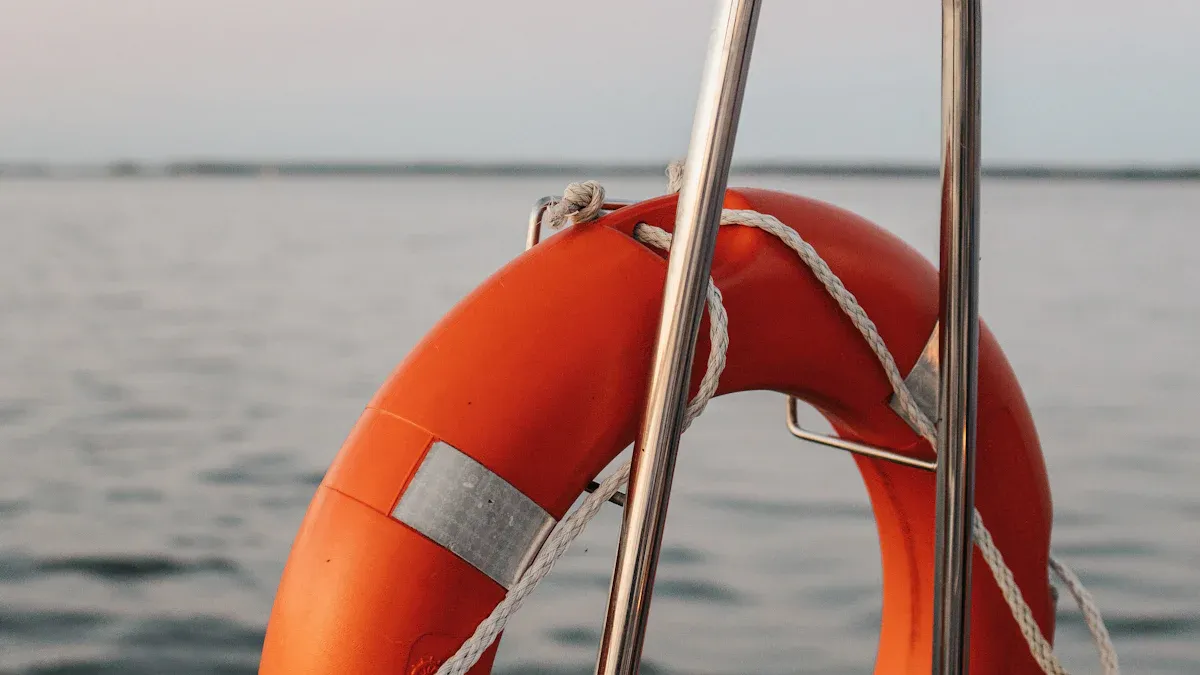
Life jackets and personal flotation devices (PFDs) are crucial for safety on the water. You must have a U.S. Coast Guard-approved wearable PFD for every person on board. These devices can significantly reduce the risk of drowning. In fact, studies show that life jackets may cut the risk of drowning by half. In 2012, only 15% of drowning victims were wearing a life jacket during recreational boating incidents.
When checking your life jackets and PFDs, ensure they meet the following requirements:
Requirement | Description |
|---|---|
PFD Requirement | A U.S. Coast Guard Approved Wearable PFD must be available for each person onboard. |
Size and Fit | Life jackets must be the appropriate size for the intended user and activity. |
Condition | PFDs must be in good and serviceable condition. |
Accessibility | Wearable PFDs should be readily accessible and not stowed in locked compartments. |
Child Regulations | Regulations for children may vary by state, and child-sized life jackets must be used for children. |
Always check the condition of your life jackets and PFDs before departure. Look for any signs of wear, such as fraying straps or damaged buckles. If you find any issues, replace the equipment immediately.
Fire Extinguishers
Fire extinguishers are another essential piece of safety equipment. You must have the right number and type of extinguishers based on your boat’s size. Here’s a quick reference:
Length of Vessel | Without Fixed System | With Fixed System* |
|---|---|---|
Less than 26 feet | one 5-B | none |
26 feet to less than 40 feet | two 5-B (or one 20-B) | one 5-B |
40 feet to less than 65 feet | three 5-B (or one 20-B and one 5-B) | two 5-B (or one 20-B) |
You should inspect your fire extinguishers regularly. Although the Coast Guard does not specify a frequency for inspections, many recommend checking them at least once a year or even monthly. Ensure that they are unexpired, accessible, and in good condition. Look for broken seals, check the pressure gauge, and ensure there are no visible damages.
First Aid Kits
A well-stocked first aid kit is vital for handling emergencies on the water. Your kit should include a variety of first-aid and emergency supplies. Here are some essential items to include:
Tweezers
Sunscreen
Larger bandages and dressings
Eye wash treatments
Burn treatments
Pressure and packing dressings
Space blanket
Nitrile gloves
Additionally, consider including over-the-counter painkillers, antiseptic wipes, and a first-aid instruction booklet. Regularly check your first aid kit to ensure all items are in good condition and not expired.
By ensuring you have the right safety equipment and conducting thorough checks, you can significantly enhance the safety of your boating experience.
Communication Devices

Reliable communication devices are essential for safe boating. They help you stay connected and call for help in emergencies. Here are the key devices you should have on board:
VHF Radio
A VHF radio is a must-have for any boater. It allows you to communicate with the Coast Guard and other vessels. Here are some advantages of using a VHF radio over a cell phone:
Network Independence: VHF radios operate on a dedicated marine band, ensuring reliable communication without relying on cell towers.
Immediate Emergency Broadcasts: You can broadcast distress calls to all nearby vessels and the Coast Guard at once. This feature is crucial during emergencies.
Digital Selective Calling (DSC): Modern VHF radios can send automated distress alerts with your position, which cell phones cannot do.
Cell Phones
While cell phones are useful, they have limitations when used on the water. Here are some common issues:
Limitation | Description |
|---|---|
Limited offshore coverage | Cell phones often lose signal far from shore, making them unreliable in emergencies. |
Difficulty in locating callers | If you are unsure of your location, it complicates rescue efforts by authorities. |
Inability to communicate with multiple parties | Distress calls via cell phones only reach one recipient, limiting emergency communication. |
Experts recommend that you never leave the dock without a VHF-FM radio. It is a more reliable means of calling for help compared to cell phones.
Emergency Beacons
Emergency beacons are life-saving devices that send distress signals to rescue satellites. Here are the main types:
Type of Beacon | Activation Procedure |
|---|---|
EPIRB | Activates automatically when floating or can be activated manually. |
PLB | Can be activated manually or semi-automatically when a life jacket inflates. |
AIS Beacons | Activation procedures vary by model. |
Always ensure your emergency beacons are in working order. They can make a significant difference in survival rates during boating emergencies.
By equipping your boat with reliable communication devices, you enhance your safety and that of your passengers. Always check these devices before setting out on your adventure.
Weather and Environmental Checks
Before you set sail, always check the weather. Understanding the forecast can help you avoid dangerous conditions. Weather-related incidents contribute to many boating accidents. In fact, cold water and poor weather conditions frequently lead to emergencies. Here’s a quick look at how weather factors into boating safety:
Contributing Factor | Percentage |
|---|---|
Not Wearing A PFD or Lifejacket | Over 80% |
Alcohol Consumption | Roughly 40% |
Cold Water and Poor Weather Conditions | Frequent |
Local Weather Forecast
You should always check the local weather forecast before heading out. Reliable sources provide accurate marine weather updates. Here are some recommended sources for obtaining forecasts:
NOAA Marine Weather
The Weather Channel
Weather Underground
Accuweather
FishWeather
These sources can help you stay informed about any changes in weather conditions. If storms or high winds are predicted, consider postponing your trip. Safety should always come first.
Wind and Water Conditions
Wind and water conditions can change quickly. Sudden shifts can affect your boat’s stability and safety. Here’s how different conditions impact your experience:
Condition | Impact on Stability and Safety |
|---|---|
Strong Waves | Can cause structural damage, leading to potential break apart of the boat. |
Beam Seas | Excessive roll can shift the load, creating a dangerous list. |
Following Seas | Loss of stability on wave crests; excessive speed can lead to broaching, causing loss of control. |
Quartering Seas | Combination of beam and following seas creates serious conditions for boaters. |
To maintain safety, you should:
Prioritize stability and control when facing heavy rain or strong winds.
Reduce speed to maintain balance and avoid slamming into waves.
By checking the weather and understanding wind and water conditions, you can ensure a safer boating experience. Always stay alert and prepared for changes.
Pre-Departure Boat Condition
Before you leave the shore, ensure your boat is in optimal condition. A thorough inspection can prevent mechanical failures and enhance safety. Here are the key areas to check:
Engine and Fuel Checks
Your engine is the heart of your boat. A malfunction can lead to serious issues on the water. Follow these steps to ensure your engine and fuel systems are ready:
Drain water from the fuel-water separator daily.
Change the primary fuel filter every 250 hours or annually.
Change the secondary fuel filter at the same interval.
Check all fuel lines for cracks, chafing, or leaks.
Remove air from the system by loosening bleed screws and operating the manual lift pump until fuel flows without bubbles.
Additionally, always check the fuel level and quality before each trip. A cloudy appearance or the presence of water in your fuel indicates contamination. This can lead to engine issues. Ensure the fuel valve is open, as it may accidentally close during navigation.
Common mechanical failures that cause boating breakdowns include:
Engine or equipment breakdown.
Fuel-related issues.
Out of gas.
Dead battery.
Ran aground.
By addressing these potential problems, you can avoid being stranded on the water.
Electrical Systems
Electrical systems are vital for your boat’s operation. Regular inspections can prevent failures. Here’s what you should do:
Inspect your electrical system annually. This helps identify potential issues early.
Conduct a thorough inspection before long voyages. This is especially important in challenging conditions.
Check the electrical system after repairs or modifications. Ensure everything is safe and functional.
Before departure, verify battery charge and electrical connections. Test the engine operation at idle to ensure everything runs smoothly.
Hull Inspection
Your boat’s hull protects it from the elements. Inspecting it regularly can prevent serious damage. Here are signs of hull damage to check for:
Look for blisters or bubbling.
Check for cracks and soft spots.
Inspect for areas where paint or gel coat is chalking.
Rinse and scrub the bottom to remove algae and barnacles.
Examine drains, fittings, and through-hull openings for leaks or corrosion.
Inspect rub rails, trim tabs, and underwater hardware for damage.
Pay special attention to any signs of water seepage or discoloration stains along the keel to hull joint. These can indicate serious issues that need immediate attention.
By ensuring your boat’s engine, electrical systems, and hull are in good condition, you enhance your safety and enjoyment on the water. Always take the time to conduct these checks before setting sail.
Conducting a thorough safety checklist before leaving shore is critical for your safety and that of your passengers. By integrating safety practices into your routine, you improve your own safety and contribute to a culture of safety on the water. Regularly review your checklist to ensure it meets current needs. Here are some key benefits of consistent safety checks:
Improved safety
Increased survival chances in emergencies
Enhanced emergency readiness
Make safety a priority. Enjoy your time on the water while staying secure and prepared.