

A kayak trip turns quickly when rain, paddle splashes, and spray reach the clothes, phone, snacks, or camera you left in an open stern. You need a dry bag that closes securely, carries comfortably, and matches the amount of gear you actually take on the water. The right choice depends on capacity, weight, closure design, and whether you need one organized compartment or several sizes.
The Leading Options At A Glance

Lamicall Dry Bag Backpack with Phone Pouch 20L

Unigear Floating Waterproof Dry Bag 20L

Sea to Summit Lightweight Dry Bag 1.5L
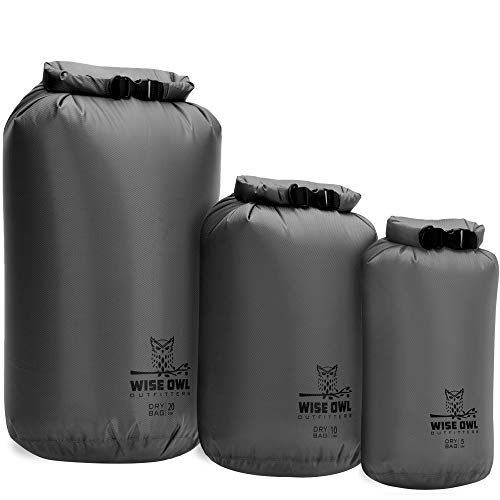
Wise Owl Outfitters Waterproof Dry Bag 3-Pack
HEETA Waterproof Duffel Backpack 60L

ECHTPower 2-Pack Waterproof Waist Pouch Bags
The Picks, Examined More Closely
Carrying a full day of paddling gear becomes less cumbersome in a backpack-style dry bag. The Lamicall model combines a 20-liter main compartment with a phone pouch, so you can separate a reachable phone from clothing, food, or electronics inside the main section.
Unlike the compact Sea to Summit option later in this roundup, this bag looks more at home on longer trips with a sizable load. Buoyancy is useful during an overboard recovery, although floating behavior still depends on correct closure, sufficient air, and a manageable load.
Why It Works Well
- The backpack format leaves both hands available for paddling.
- High-density 500D PVC offers a heavier-duty shell than lightweight nylon.
- Welded seams reduce stitched openings that can admit water.
- The separate phone pouch keeps a small essential easy to find.
- Sealed air can give the main compartment float support on the water.
Practical Considerations
- The 20-liter shell carries more bulk than a small electronics pouch.
- Owners should inspect the closure and seams after repeated transport and abrasion.
Key Specs
Made For
You benefit most from this model on day-long kayak, rafting, or paddleboard trips that require both hands and a substantial gear load.
Another Choice May Suit
The Unigear Floating Waterproof Dry Bag 20L suits you better when buoyant storage and straightforward roll-top access matter more than backpack convenience.
The Unigear bag keeps the basic dry-storage task focused: roll the opening, remove trapped air, and secure the top. That simple system works well for wet paddles, clothing, documents, snacks, and a camera stored according to its own water-resistance limits.
Compared with the Lamicall backpack, this option puts more emphasis on floating storage and less on hands-free carrying. The stiff 500D PVC feels like a sensible choice for beach days and river trips, though you may find the full-size version less convenient during long approaches on foot.
The Upside
- The floating design helps during an overboard recovery.
- Rigid PVC resists abrasion better than many lightweight packcloth options.
- The roll-top closure adjusts to changing gear loads.
- Welded seams limit paths for water around stitched joints.
Worth Noting
- Correct rolling is essential because a loosely folded top can leave air inside.
- The stiff material adds bulk compared with nylon dry sacks.
- Sand can remain in creases, so regular rinsing and drying deserve attention.
Feature Snapshot
Right Fit For
You get the most value from this bag on kayaking, rafting, boating, and beach trips where floating storage and durable fabric take priority.
Where A Sibling Pick Shines
The Lamicall Dry Bag Backpack with Phone Pouch 20L is the better fit for you during paddling approaches that require both hands to stay free.
Small essentials rarely need a 20-liter vault. This 1.5-liter Sea to Summit bag gives you a compact place for a phone, keys, documents, snacks, or a small camera during a sea-kayaking excursion.
The shift from the Unigear model is substantial. PU-coated 70D nylon and a water-repellent finish prioritize low carried weight, while the white interior helps you locate dark items without unpacking everything.
Benefits That Matter
- The compact capacity suits personal essentials without taking over your deck space.
- Lightweight nylon suits backpacking, hiking, cycling, and short paddling trips.
- The white lining improves visibility inside the bag.
Small Caveats
- The 1.5-liter limit leaves little room for clothing or bulky camera equipment.
- Lightweight fabric generally favors portability over the heavier PVC shells used by larger picks.
- You still need to roll and secure the top carefully in rough water.
- Storing the bag damp can lead to mildew or trapped sand in the folds.
Built With In Mind
You benefit from this model as a light packer who carries only compact essentials across kayaking, hiking, camping, and travel days.
Reach For A Different Pick When
The Wise Owl Outfitters Waterproof Dry Bag 3-Pack gives you a better fit for separating larger clothing, food, and electronics among several floating compartments.
Organization gets easier with three sizes instead of one. The Wise Owl Outfitters set includes 5-, 10-, and 20-liter bags, letting you separate wet clothing, snacks, electronics, and shared paddling equipment without forcing everything into one crowded compartment.
For most day paddlers, three floating bags reduce the need to open the entire load each time you need one item. The ripstop nylon is coated for water resistance, offering a lighter and more flexible option than the PVC shells from Lamicall and Unigear.
Features That Help
- Three capacities suit separate storage tasks without duplicate tubs.
- Ripstop nylon balances low weight with resistance to tearing.
- The floating design gives you options during an overboard event.
- Coated fabric helps protect contents from rain, spray, sand, and dust.
Points To Note
- More bags mean more closures to roll and inspect before launching.
- You need to confirm the current closure and buoyancy configuration on the chosen listing variant.
Core Details
Who Will Love This
You get the most from this set as a kayaker or beachgoer who wants multiple floating compartments and prefers sorting gear by task.
Swap It Out When
The HEETA Waterproof Duffel Backpack 60L suits you better for one consolidated load of camping, travel, or watersports equipment.
Longer adventures often bring more than a kayak deck can comfortably hold. The HEETA duffel gives you room for clothing, camping equipment, and water-sports gear while also moving between travel, beach, and motorcycle settings.
Unlike the floating sacks in this group, the 60-liter design focuses on volume rather than recovery after a drop overboard. It appears better suited to shore-based packing, vehicle transport, or a larger camp duffel than to keeping essential items accessible on the seat.
Everyday Advantages
- The 60-liter capacity reduces the number of separate gear containers.
- Waterproof and sand-resistant construction supports wet, dusty environments.
- The duffel-and-backpack format works across travel, camping, and watersports trips.
Where It Is Less Suited
- The large capacity becomes inconvenient for short paddles or walking-heavy launches.
- Buoyancy is not specified, so you shouldn’t depend on it for an overboard recovery.
- Cleaning around the closure and bottom panel takes care after sandy or muddy use.
Important Details
Best Suited To
You benefit most from this duffel on longer camping, travel, beach, and watersports trips with a large, mixed gear load.
Look Elsewhere When
The Sea to Summit Lightweight Dry Bag 1.5L fits you better for a small personal load where minimizing carried weight matters most.
Some kayak essentials need to stay close rather than disappear inside a larger barrel. These ECHTPower pouches use an adjustable waist strap, giving you quick access to a phone, keys, snacks, or other small items while keeping your hands available.
The two-pack creates a simple division: one pouch can hold frequently reached gear while the other protects a backup item. Compared with the Wise Owl set, the concept is less about bulk storage and more about wearable, floating organization.
Reasons It Performs
- Waist carrying keeps essentials away from wet deck storage.
- The adjustable strap supports a hands-free paddling posture.
- Two pouches help separate frequently used gear from a reserve item.
- Floating construction suits swimming, kayaking, and boating trips.
Practical Considerations
- The small format is better for essentials than clothing or bulky outdoor equipment.
- You should verify the closure details on the current listing before treating electronics as protected.
- Constant body movement can make small comfort details more noticeable during long trips.
Made For In Mind
You benefit most from these pouches as a paddler who wants a phone, keys, and snacks close at hand without opening a main dry compartment.
A Better Fit Elsewhere
The Unigear Floating Waterproof Dry Bag 20L suits you better for larger loose gear that should stay packed and separated from your body.
What Matters Before Your Dry Bag Goes on the Water
Capacity Without the Bulk
Start with the gear you carry, not the largest size available. A 1.5-liter pouch works for a phone, keys, documents, and snacks, while 5 to 20 liters suit clothing, food, and camera gear. Going larger becomes inconvenient during launches and shoreline approaches.
Closure, Seams, and Water Resistance
A roll-top closure works by folding the opening several times, removing excess air, and securing it correctly. Welded seams limit water entry around joints, while coated fabric and PVC serve different needs: nylon saves weight, while PVC tends to favor abrasion resistance.
Floatation and Carrying Style
Floatation can help during an overboard recovery, but it depends on sealing the bag correctly and avoiding an excessive load. A backpack suit hands-free carrying, a waist pouch keeps essentials close, and a large duffel favors camping or travel equipment.
Pack for the Kind of Paddle You Actually Take
Once capacity and carrying style are settled, sort the contents into separate dry and wet compartments. Keep frequently used items accessible, secure electronics according to their own water limits, and place damp clothing in a separate bag so it doesn’t transfer moisture to dry essentials.
Two Mistakes Worth Avoiding
Wrong Turns To Avoid
Don’t judge a dry bag by volume alone. A bulky bag can be awkward even when it is large enough. The real fit depends on carrying it over the launch, fitting it in your vehicle or storage area, and packing the equipment you normally use.
What Separates Premium From Basic
Higher-capacity, heavier-duty options spend more on fabric, closure systems, seams, and carrying hardware. That investment matters for frequent river trips, wet weather, camping gear, or occasional overboard recovery. A compact nylon pouch makes more sense for lightweight travel and small essentials.
Frequently Asked Questions
Are dry bags fully waterproof?
The level of protection depends on the bag, closure, seams, and how you use it. You must follow the manufacturer’s packing and sealing directions.
Can you use a dry bag for electronics?
You can protect some electronics with suitable protection, but not every device is designed for full submersion. Check the device’s water-resistance details before packing it.
Which size is best for kayaking?
A 5- to 10-liter bag suits personal essentials, while 20 liters offers room for clothing and food. Larger duffles work better for camping gear stored near the launch.
Do dry bags float?
Some models include floatation. You still need enough trapped air, a proper seal, and a load that does not overwhelm the bag’s buoyancy.
How should you maintain a dry bag?
Rinse out sand and dirt, let the bag dry fully, and inspect the closure and seams regularly. Storing it loose can help prevent trapped moisture and creases.
Wrap Up
Your strongest choice depends on the trip: Lamicall suits hands-free carrying, Unigear favors floating PVC storage, Sea to Summit keeps small loads light, and Wise Owl organizes gear across three sizes. HEETA takes the largest loads, while ECHTPower keeps small essentials within reach. Match the bag to your actual gear and your route, then learn the closure before you reach the water.
