

Telescopes can make the night sky feel wonderfully close, yet choosing a first model often means decoding aperture, focal length, mounts, and app guidance. These picks cover different needs, from guided visual observing to portable digital viewing and nautical display pieces. You’ll find practical options for families, beginners, and dedicated skywatchers without needing advanced astronomy knowledge.
A Closer Look At The Lineup

SVBONY SV48P 90mm F5.5 Refractor OTA
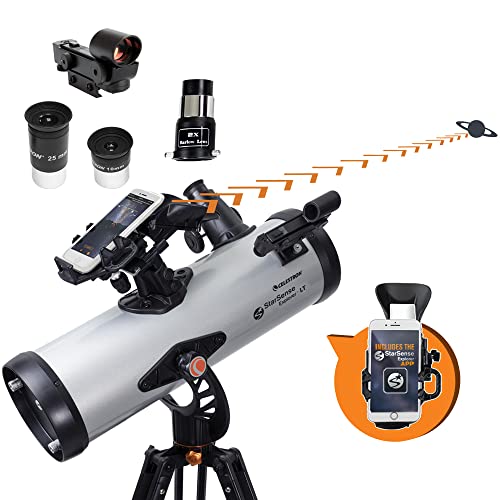
Celestron StarSense Explorer LT 114AZ
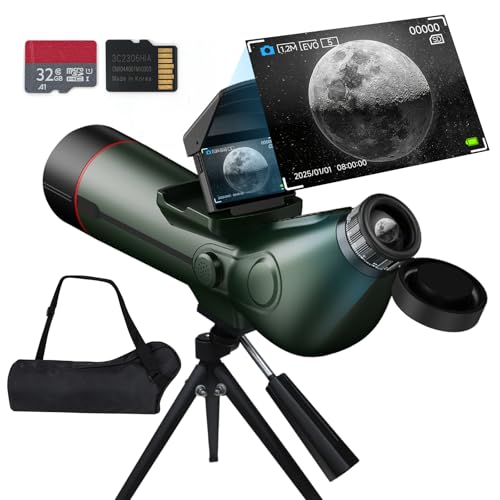
FASHIONARI Smart Auto-Focus Digital Telescope
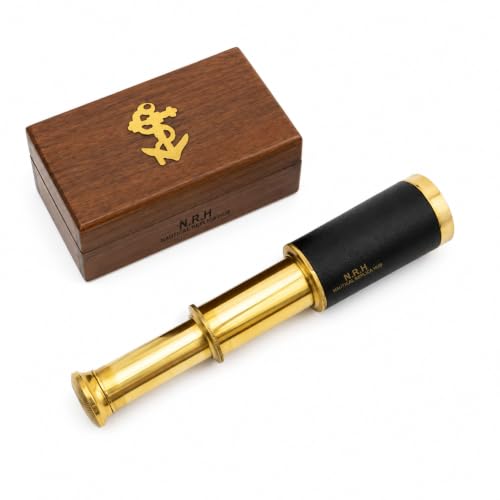
Nautical Replica Hub 6-Inch Brass Telescope
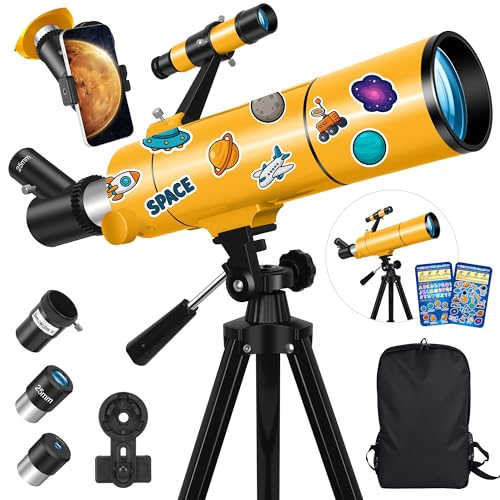
MEEZAA Telescope 80mm 500mm Refractor

MEEZAA Telescope 90mm 800mm Refractor
The Details Behind The Selections
The SVBONY SV48P brings a useful amount of light-gathering ability to visual observing, with a 90 mm aperture and 500 mm focal length. Aperture is the diameter of the main lens, so this larger opening gathers more light than many compact refractors, while the shorter focal length supports a broader view of open clusters and other wide-field targets.
Compared with the app-led Celestron later in the lineup, this optical tube puts more responsibility in your hands. For a beginner already using a compatible mount, that can be rewarding rather than intimidating, especially with bright moonlight or a nearby astronomical group.
Where It Delivers
- The 90 mm aperture offers a useful step up in light collection for lunar and deep-sky observing.
- A broad field of view makes star clusters and other scattered targets easier to frame.
- The 2-inch focuser has a 1:10 double-speed design for controlled focusing.
- Its metal focuser interface supports steadier accessory handling than lightweight plastic fittings.
Practical Considerations
- OTA means optical tube assembly, so a separate mount and suitable accessories are still needed.
- Assembly and star alignment require more attention than a guided setup.
Quick Facts
Built With In Mind
This tube best suits a beginner who already has a capable equatorial mount and wants more freedom than guided locating provides.
A Better Fit Elsewhere
The Celestron StarSense Explorer LT 114AZ suits anyone who wants smartphone guidance instead of manually acquiring targets.
Finding a recognizable object can be harder than it sounds on a clear night, especially for a first telescope. The Celestron StarSense Explorer LT 114AZ uses a docked smartphone and directional guidance to simplify that initial step, which makes it well suited to families learning to identify planets and brighter deep-sky targets.
Its 114 mm aperture gives it more light-gathering capacity than the 80 mm MEEZAA refractor, although the Newtonian design differs from the simpler lens-based instruments here. That makes this a thoughtful first system for backyard sessions where guidance matters more than compact packing.
Key Advantages
- Smartphone guidance reduces the frustration of manually hunting for targets.
- The 114 mm aperture offers solid light collection for visual observing.
- AZ stands for altazimuth, a mount that moves horizontally and vertically.
- The guided approach suits shared equipment because newcomers can spend less time adjusting the mount.
Things To Consider
- Phone compatibility, storage, and app permissions should be checked before an outdoor session.
- A Newtonian optical tube needs careful collimation, which means aligning its mirrors.
- Electronic guidance adds setup steps and may leave you dependent on a charged phone.
Feature Snapshot
Made For
This telescope fits beginners, couples, and families who value guided setup more than a minimal optical system.
Where Another Pick Shines
The MEEZAA Telescope 80mm 500mm Refractor is simpler for children learning basic sky viewing with adult supervision.
The FASHIONARI Smart Auto-Focus Digital Telescope changes the traditional experience by sending the viewed image to a screen rather than relying entirely on an eyepiece. Automatic focusing and a dual-screen display can make long-distance views more accessible during a trip, at a cabin, or around a bright yard.
Unlike the SVBONY optical tube, this is a connected digital platform rather than a conventional mount-and-accessory system. The 4K sensor and claimed magnification make it appealing for casual sky imaging, though image results will depend heavily on atmospheric conditions and target brightness.
The Helpful Details
- Auto-focus reduces the repeated manual adjustments required with a traditional optical tube.
- A digital sensor supports screen viewing and 4K image capture.
- The 80 mm aperture and 300 mm focal length provide a compact optical configuration.
- Up to 350X magnification can be useful for distant scenes, although faint sky objects remain challenging.
Worth Noting
- Digital magnification can enlarge atmospheric disturbance along with the target.
- Screen-based viewing may feel less immersive than looking through an eyepiece.
- Confirm supported devices and storage requirements before travel.
Core Details
The Right Fit
This digital telescope suits travelers, content creators, and people who prefer sharing screen views over traditional observing.
Consider Something Else When
The Celestron StarSense Explorer LT 114AZ better fits visual stargazers who want guided observations through an eyepiece.
The Nautical Replica Hub telescope belongs on a different shelf from the astronomical models. Its extended 6-inch body, brass appearance, leather-style handle, and compact wooden case make it a display piece inspired by traditional maritime navigation instruments.
That distinction matters because a decorative scope is not designed to deliver the same celestial experience as a multi-coated refractor or a guided Newtonian reflector. It works best beside a nautical-themed collection, study, or office, where its shape becomes part of the décor.
A Favorable Mix
- The brass finish gives shelves and display cabinets a warm vintage accent.
- A working extendable design adds visual interest beyond a static model.
- The wooden case offers a practical place to store the telescope when it retracts.
- Its old-world styling suits nautical rooms, offices, and educational displays.
Small Caveats
- This is primarily a decorative maritime telescope, not a dedicated astronomy instrument.
- The detailed finish needs gentle handling and a dry storage location to protect its appearance.
- A child may mistake it for a working sky telescope, so its display purpose should be clear.
Whose Shelf It Belongs On
This piece fits nautical collectors, educators, and anyone who wants maritime decor with a functional mechanical detail.
Swap It Out When
The MEEZAA Telescope 80mm 500mm Refractor is the more useful choice for observing the Moon and planets.
The MEEZAA Telescope 80mm 500mm Refractor offers a conventional entry point for family observing. An 80 mm lens gathers enough light for satisfying Moon and planet views, while a 500 mm focal length gives a practical balance between magnification and field width.
Multi-coated optics are designed to transmit more light and reduce reflections compared with basic uncoated glass. Compared with the 90 mm models later in the lineup, this one is smaller, but that simpler scale can be easier for adults and children to handle together.
The Upside
- The coated lens supports clearer lunar and planetary viewing than a basic decorative scope.
- A 500 mm focal length balances magnification with a relatively approachable field of view.
- The straightforward refractor design suits shared family sessions under adult supervision.
- Its smaller lens makes the instrument less demanding to handle than the 90 mm MEEZAA option.
Potential Drawbacks
- The 80 mm aperture gathers less light than the 90 mm telescopes in this list.
- Optical alignment is simpler than with a Newtonian reflector, although stable setup still matters.
- Lens surfaces collect fingerprints, so cleaning should use a soft cloth.
Who Will Love This
This refractor suits adults and older children learning astronomy together around the Moon and bright planets.
Another Choice May Suit
The MEEZAA Telescope 90mm 800mm Refractor suits a patient beginner seeking greater light collection and reach.
The MEEZAA Telescope 90mm 800mm Refractor advances the earlier 80 mm MEEZAA by increasing both light collection and focal length. The 90 mm aperture gathers more light, while the longer 800 mm focal length produces a narrower, more magnified view that can be useful for smaller lunar features and nearby planets.
For patient beginners, that reach is meaningful, but the trade-off is a longer optical tube and steadier support. It’s a natural step for a household moving beyond casual Moon viewing, especially compared with the SVBONY’s broader 500 mm view.
A Strong Showing
- The 90 mm aperture improves light gathering over the 80 mm family model.
- An 800 mm focal length provides more magnification for smaller observing targets.
- The refractor layout supports uncomplicated visual use without a mirror collimation routine.
- Coated optics are intended to improve light transmission and reduce reflections.
- Long focal length narrows the field, which can help isolate compact targets.
Trade-Offs To Consider
- The longer tube needs stable support to avoid shaking during observations.
- A narrow field can make broad star clusters harder to frame.
- Exposed optics need careful storage and gentle surface cleaning.
Technical Highlights
Best Suited To
This model fits beginners who value reach, steady mounts, and a step up from a small family refractor.
Reach For A Different Pick When
The SVBONY SV48P 90mm F5.5 Refractor OTA is a better match for wide-field observing and experienced optical-tube users.
What To Consider Before Buying
Aperture and focal length
Aperture determines how much light the main lens can collect, while focal length controls how much the image is enlarged. A larger aperture helps with faint Moon details, planets, and some deep-sky objects, although atmospheric conditions still influence the result. Shorter focal lengths show wider areas, making them useful for star clusters and landscape observing.
Guided or traditional setup
Smartphone-assisted finding can shorten the path from unpacking to viewing planets. Traditional mounts offer more control, but they require alignment, careful focusing, and an understanding of how the instrument moves. New observers benefit from guidance, while more experienced skygazers may prefer the flexibility of a separate mount and optical tube.
Optical design and handling
A refractor uses a lens and generally needs less internal alignment than a Newtonian reflector, which uses a primary mirror. Newtonian models can provide larger apertures in manageable packages, though their mirrors require periodic collimation. Refractors also vary in tube length, so check the full setup footprint and storage space before ordering.
Smart Telescopes Under 500: What Actually Matters
Common Shopping Slip Ups
Many first-time shoppers focus on magnification, while aperture, portability, and the included mount often matter more. Check whether the listing includes a complete observing setup or only an optical tube. Also consider phone compatibility, storage needs, and whether your family will use the telescope outdoors under changing light.
Where The Extra Money Goes
Higher-cost models commonly place more money into aperture, coatings, mounts, guidance, or digital sensors. Those upgrades can help with steadier images, easier target finding, or more comfortable viewing. For casual Moon viewing, a simpler refractor may be enough, while regular observing can justify spending more on a stronger mount or larger lens.
Frequently Asked Questions
What is the easiest telescope for beginners?
The Celestron StarSense Explorer LT 114AZ is designed to reduce target-finding through smartphone guidance. Its altazimuth mount also provides straightforward two-axis movement for visual observing.
Is 80 mm enough for viewing the Moon?
An 80 mm refractor can provide useful views of lunar craters, seas, and brighter surface features. Clear nights and steady mounting make a noticeable difference in image stability.
Which telescope is best for children?
The MEEZAA Telescope 80mm 500mm Refractor suits adults and older children learning together because of its manageable size. Younger children will still need close adult supervision around the optics and mount.
Are telescope magnifications higher than 350X useful?
High magnification does not automatically create a clearer view. Atmospheric turbulence, target brightness, mount stability, and optical quality can make lower magnification more enjoyable.
Can a telescope under 500 be used for astrophotography?
Digital and smartphone-capable models can make introductory sky images possible. Specialized smartphone models may be convenient, while traditional refractors usually require additional mounting, adapters, and exposure controls.
The Takeaway
The right telescope depends on how you plan to use it. Choose guided Celestron setup for easier target finding, the MEEZAA 80mm refractor for family observing, the MEEZAA 90mm model for greater reach, or the FASHIONARI digital scope for screen-based viewing. Take your time with the mount, setup, and storage before the first night outside.
