

If you’re planning extended trips or short hikes, choosing the right survival water filter can make or break your outing. You’ll want something light, reliable, and proven against bacteria, protozoa - and sometimes viruses. I’ll walk you through five top 2026 options with real-world pros and trade-offs so you can match flow rate, pore size, and durability to your needs, and avoid common mistakes that leave you thirsty and exposed.
| Lifesaver Jerrycan Military-Grade Water Purifier | 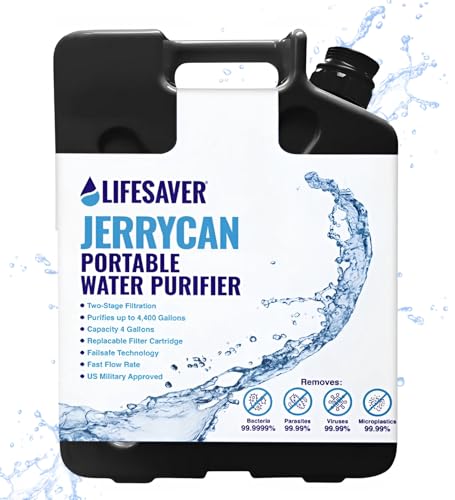 | Best for Groups | Filtration Technology: Pumped cartridge with activated carbon + military-grade filter meeting NSF P248 | Target Contaminants Removed: Viruses, bacteria, cysts, parasites (99.9%+); chlorine/taste/odor via activated carbon | Portability / Use Cases: Overlanding, camping, hiking, emergency preparedness, survival kits (18.5 L storage) | VIEW LATEST PRICE | Read Our Analysis |
| Membrane Solutions Squeezable Water Filter Kit (Portable) |  | Ultralight Traveler | Filtration Technology: 5-stage system with hollow-fiber ultrafiltration membrane (0.1 µm) + activated carbon | Target Contaminants Removed: Bacteria/cysts/particulates via 0.1 µm membrane; chlorine/taste/odor via activated carbon | Portability / Use Cases: Hiking, camping, travel, scouting, emergency preparedness; pocket/backpack sized | VIEW LATEST PRICE | Read Our Analysis |
| Waterdrop Gravity Water Filter Straw – 0.1μm 1.5gal | 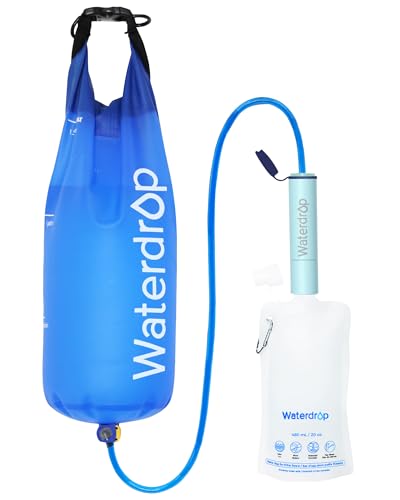 | Best Gravity System | Filtration Technology: 0.1 µm ultrafiltration membrane (gravity-fed) with backwashable elements | Target Contaminants Removed: Chlorine, particulates, sediment, taste/odor, microbes filtered by 0.1 µm membrane | Portability / Use Cases: Hiking, camping, backpacking, travel, emergency preparedness (gravity bag combo) | VIEW LATEST PRICE | Read Our Analysis |
| SurviMate Portable Electric Water Purifier with Replacement Cartridge |  | Tech-Forward Purifier | Filtration Technology: 0.01 µm hollow-fiber ultrafiltration membrane (electric) | Target Contaminants Removed: Fluoride, arsenic, chlorine, lead, heavy metals, odors, chemicals (claimed 99.9999%) | Portability / Use Cases: Camping, hiking, backpacking, travel, emergency survival (electric, hose included) | VIEW LATEST PRICE | Read Our Analysis |
| SurviMate 0.01 Micron 5-Stage Portable Water Purifier | High-Capacity Performance | Filtration Technology: 0.01 µm hollow-fibre ultrafiltration membrane (5-stage manual pump) | Target Contaminants Removed: Fluoride, arsenic, chlorine, lead, most heavy metals, odors, chemicals (claimed 99.9999%) | Portability / Use Cases: Emergencies, natural disasters, camping, hiking, backpacking, travel (manual pump) | VIEW LATEST PRICE | Read Our Analysis |
More Details on Our Top Picks
Lifesaver Jerrycan Military-Grade Water Purifier
If you need a rugged, high-capacity purifier for group trips or emergency caches, the Lifesaver Jerrycan Military-Grade Water Purifier is a top pick - it stores 18.5 liters and lets you pump instantly treated water from dubious sources. You’ll exceed NSF P248 military-grade standards, cutting viruses, bacteria, cysts, and parasites by 99.9% or more. Fill, pump, drink-it’s that simple. The built-in pump and filtered spout handle varied, dirty sources for overlanding, camping, or emergency kits. Activated carbon improves taste and removes chlorine. A failsafe indicator and easy-to-replace carbon filters keep maintenance straightforward and reliable.
- Filtration Technology:Pumped cartridge with activated carbon + military-grade filter meeting NSF P248
- Target Contaminants Removed:Viruses, bacteria, cysts, parasites (99.9%+); chlorine/taste/odor via activated carbon
- Portability / Use Cases:Overlanding, camping, hiking, emergency preparedness, survival kits (18.5 L storage)
- Lifespan / Capacity:Not specified in liters; uses replaceable small carbon filters with indicator for replacement
- Operation Method:Fill container, use built-in pump and filtered spout to dispense
- Replacement / Maintenance:Automatic indicator signals when to replace small carbon filters; easy to replace
- Additional Feature:Built-in pump/spout
- Additional Feature:18.5 L storage
- Additional Feature:Failsafe replacement indicator
Membrane Solutions Squeezable Water Filter Kit (Portable)
Choose the Membrane Solutions Squeezable Water Filter Kit when you want a truly portable purifier that fits in a pocket or pack without sacrificing performance. You get a 6.7-inch, 2-ounce filter straw plus a 23 oz collapsible bottle that tucks into backpacks, purses, or survival kits. Its 5-stage system-coarse screen, double-layer PP cotton, coconut-shell activated carbon, and hollow-fiber ultrafiltration-delivers 0.1 micron filtration at about 500 ml/min. It won’t strip beneficial minerals or lower TDS. Rated for up to 1,500 liters, it’s compact, durable, and ideal for hiking, travel, camping, scouting, and emergency preparedness.
- Filtration Technology:5-stage system with hollow-fiber ultrafiltration membrane (0.1 µm) + activated carbon
- Target Contaminants Removed:Bacteria/cysts/particulates via 0.1 µm membrane; chlorine/taste/odor via activated carbon
- Portability / Use Cases:Hiking, camping, travel, scouting, emergency preparedness; pocket/backpack sized
- Lifespan / Capacity:Up to 1,500 liters (396 gallons)
- Operation Method:Squeeze/strain through filter straw into drinking vessel or bottle
- Replacement / Maintenance:Long-life filter (rated to 1,500 L); designed for repeated use - replace when end of life
- Additional Feature:Collapsible 23 oz bottle
- Additional Feature:Palm-sized, 2 oz weight
- Additional Feature:Retains essential minerals
Waterdrop Gravity Water Filter Straw – 0.1μm 1.5gal
The Waterdrop Gravity Water Filter Straw is ideal for solo hikers and small groups who need fast, reliable gravity filtration without pumps. You get a 0.1 μm ultrafiltration membrane that strips chlorine, particulates, sediment, sand, bad taste and odor while delivering up to 700 ml/min. The kit pairs a 1.5 gal gravity bag with a disassemblable straw that fits standard water bags or 27.5 mm PET bottles. It’s backwashable via removable mouthpiece, recyclable, and rated for about 1,400 gallons (≈5,300 L). Open the bag drain first to purge air and avoid vacuum-related no-flow when connecting the straw.
- Filtration Technology:0.1 µm ultrafiltration membrane (gravity-fed) with backwashable elements
- Target Contaminants Removed:Chlorine, particulates, sediment, taste/odor, microbes filtered by 0.1 µm membrane
- Portability / Use Cases:Hiking, camping, backpacking, travel, emergency preparedness (gravity bag combo)
- Lifespan / Capacity:Up to ~5,300 liters (1,400 gallons) - note listing says 1,400 gallons (≈5,300 L)
- Operation Method:Gravity-fed flow from bag through straw (no pumping required)
- Replacement / Maintenance:Backwashable mouthpiece for flushing; long-life cartridge (up to listed lifespan)
- Additional Feature:Backwashable mouthpiece design
- Additional Feature:Includes 1.5 gal gravity bag
- Additional Feature:Bottle-thread compatible (27.5 mm)
SurviMate Portable Electric Water Purifier with Replacement Cartridge
For anyone who wants fast, no-fuss potable water in the field, the SurviMate Portable Electric Water Purifier delivers-just press the power button and you’ll have drinkable water in about 25 seconds without squeezing, sucking, or manual pumping. You get 0.01µm hollow-fiber ultrafiltration that cuts up to 99.9999% of fluoride, arsenic, chlorine, lead, heavy metals, odors, and many chemicals; SGS and NSF/ANSI 42 & 372 tests back those claims. The TYPE-C battery supports ~340 cycles/charge and 65,000 ml per charge. The cartridge lasts up to 6,000 liters or 240 days; replacement parts and a lifetime warranty protect your investment.
- Filtration Technology:0.01 µm hollow-fiber ultrafiltration membrane (electric)
- Target Contaminants Removed:Fluoride, arsenic, chlorine, lead, heavy metals, odors, chemicals (claimed 99.9999%)
- Portability / Use Cases:Camping, hiking, backpacking, travel, emergency survival (electric, hose included)
- Lifespan / Capacity:Inner cartridge up to 6,000 liters (1,585 gallons)
- Operation Method:Electric pump/button operation (wait ~25 seconds); rechargeable
- Replacement / Maintenance:Replaceable inner cartridge (search B0F2SVTG9R); battery/parts support under warranty
- Additional Feature:Electric push-button operation
- Additional Feature:Built-in SOS/emergency light
- Additional Feature:Type-C rechargeable battery
SurviMate 0.01 Micron 5-Stage Portable Water Purifier
If you need a lightweight, high-output purifier that handles everything from river water to your emergency kit, SurviMate’s 0.01‑micron 5‑stage unit delivers hospital‑grade filtration without power. You pump manually and get up to 1,500 ml/min through a 0.01 µm hollow‑fibre membrane that passed SGS and NSF/ANSI tests. The five stages (PP cotton, hollow‑fibre, activated carbon, post‑PP, metal pre‑filter) remove fluoride, arsenic, chlorine, lead, heavy metals, chemicals and odours. It’s food‑grade, BPA‑free, compact (6.1×3.54×1.96 in), includes hoses, clamps and a cup lid, and filters about 3,000 L per carbon cartridge depending on water quality.
- Filtration Technology:0.01 µm hollow-fibre ultrafiltration membrane (5-stage manual pump)
- Target Contaminants Removed:Fluoride, arsenic, chlorine, lead, most heavy metals, odors, chemicals (claimed 99.9999%)
- Portability / Use Cases:Emergencies, natural disasters, camping, hiking, backpacking, travel (manual pump)
- Lifespan / Capacity:Up to 3,000 liters (793 gallons) per reusable carbon filter (varies by water)
- Operation Method:Manual hand-pump operation (no electricity)
- Replacement / Maintenance:Replace inner cartridge when performance/taste declines (replacement B0F48QQV7T)
- Additional Feature:Manual hand-pump operation
- Additional Feature:Transparent lid doubles cup
- Additional Feature:Metal handle and hose clamps
Factors to Consider When Choosing Survival Water Filters for Outdoor
When choosing a survival water filter for outdoor use, you’ll want to prioritize filtration performance standards to guarantee pathogens and particulates are removed effectively. Consider flow rate and capacity alongside portability and weight so the unit fits your trip needs and won’t slow you down. Also check power and operation type plus maintenance and filter replacement requirements to avoid surprises in the field.
Filtration Performance Standards
Because your choice determines how safe and usable water will be in the field, you should focus on measurable filtration performance: pathogen reduction percentages, membrane pore size, certified contaminant claims, expected service life under realistic source conditions, and practical flow rates. Look for ≥99.9% reductions where testing standards apply, and check that virus-sized removal is claimed when needed. Match membrane pore size to threats: ultrafiltration (~0.1 μm) for bacteria/protozoa, submicron (~0.01 μm) for smaller pathogens and fine particulates. Verify independent lab certifications (NSF/ANSI or equivalent) for microbes, chlorine, heavy metals, or listed contaminants. Consider stated lifespan and volumetric capacity given sediment and clogging can degrade performance. Assess filtration stages-PP pre-filters, activated carbon, hollow-fiber membranes-to make certain the device meets your contamination profile.
Flow Rate And Capacity
Filtration specs tell you what a filter removes, but flow rate and capacity determine how usable it is in the field-how fast you’ll get drinking water and how long the unit will keep working before you need replacements or service. Check flow rate (ml/min or L/min) to know fill times: small personal filters may be hundreds of ml/min, while high-output units exceed 1.0 L/min and suit groups. Compare instantaneous output with total lifespan in liters; a fast filter with low capacity still forces frequent cartridge swaps. Expect real-world flow to drop with turbid sources, so allow margin for decreased performance and backflushing needs. For groups or emergencies, size the system to supply about 3–4 L per person per day to avoid long waits.
Portability And Weight
Packability and weight directly shape how you use a survival water filter in the field, so aim for systems under about 10 ounces (≈280 g) for truly packable options-straws, small pumps, and collapsible-bottle setups hit that sweet spot. You’ll also factor in accessories: hoses, bottles, and hand-pump components add ounces fast, so weigh the whole kit, not just the cartridge. Think about packed volume-soft gravity bags and collapsible bottles compress to a few cubic inches, while rigid pumps or jerrycans eat pack space and shift balance. Avoid battery-powered purifiers if minimizing weight matters, since batteries and chargers bulk up your load. Finally, match cartridge lifespan to trip length: heavier, higher-capacity filters can save you carrying spare cartridges.
Power And Operation Type
When choosing a survival water filter, think about how you’ll power and operate it-manual pumps, squeeze or straw systems, gravity bags, and electric purifiers all behave differently in the field. Manual pumps and squeeze/straw filters need no power and typically flow ~250–1,500 ml/min, so they’re reliable for multi-day trips or outages. Gravity and bag-fed systems also need no power, give hands-free continuous flow for groups, but rely on elevation and setup space to hit rated flow. Battery or USB electric purifiers give push-button convenience and near-instant water but require charging and are limited by cycles and mL per charge. Match the operation type to your mission: ultralight/no-power for backpacking; high-throughput pumps or electric units for base camps and group resupply.
Maintenance And Filter Replacement
After you pick the operation type that fits your trip, keep maintenance and timely filter replacement in mind-proper upkeep determines whether a unit works when you need it. Check the filter’s rated lifespan in liters or gallons and retire cartridges as cumulative volume approaches that limit; common ranges span a few hundred to several thousand liters. Watch indicators-flow-rate drops, taste or odor changes, pressure gauges, or LED/failsafe alerts-and replace elements at the first sign of performance decline. Honor manufacturer time-based intervals to prevent biological growth during use or storage. Carry spare cartridges with part numbers and store them cool, dry, and contaminant-free. Do routine tasks like backflushing and cleaning pre-filters or sediment traps, and swap carbon or pre-filter stages to preserve flow and extend main-filter life.
Contaminant Removal Spectrum
Because different filters stop different hazards, you should match a unit’s removal spectrum to the contaminants you expect to encounter. Check pore size or technology: ultrafiltration (~0.01–0.1 µm) removes bacteria, protozoa and many virus-sized particles; larger microfilters (~0.1–0.2 µm) block bacteria and protozoa but may miss viruses. Look for verified reduction percentages (e.g., >99.9% or 99.999%) for bacteria, viruses or heavy metals so you know expected protection. If you need chlorine, tastes, odors, organics or some pesticides, pick a system with activated carbon or chemical adsorption-membranes alone won’t remove dissolved organics. Confirm whether the filter treats dissolved ions (heavy metals, fluoride, salts) since that requires specialized media or RO. Prefer units with NSF/ANSI testing and lifespan tied to contaminant load.
