

Compact binoculars make more sense when they disappear into a daypack until a trail, stadium, or distant bird calls for a closer look. Their practical challenge is balancing portability with enough magnification, light gathering, focus control, and grip for adults, while lighter models need proportions that remain comfortable for children. I compare magnification, objective lenses, optical coatings, weather resistance, included accessories, and handling to separate genuinely useful travel gear from equipment that feels undersized or unwieldy.
Your Options, Compared

M MIXIO 10×25 Compact Binoculars

Luzsco Kids Binoculars 10×25

ZEISS Terra ED 10×42 Binoculars
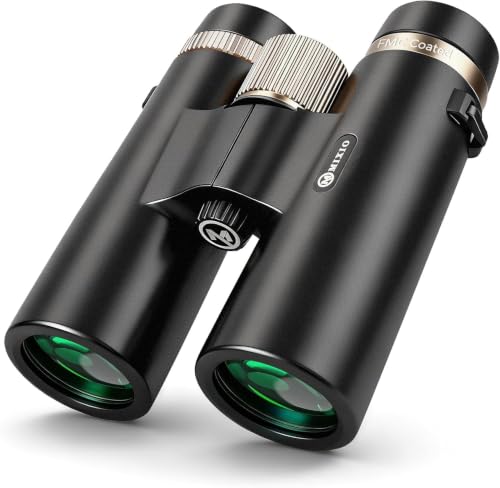
M MIXIO 12×42 Waterproof Binoculars

M MIXIO 20-60×80 Spotting Scope Kit

Carson 3D ED TD-042ED Binoculars

VULNESS 8×21 Compact Binoculars
More Details On Our Top Picks
The 10×25 format balances 10-power magnification with small 25mm objective lenses, making this M MIXIO pair easier to pack than full-size binoculars. For most day hikes, school trips, and stadium visits, that combination feels more useful than carrying extra bulk for a larger objective lens.
The armored housing and non-slip grip suit people who expect their travel gear to survive frequent handling. Compared with the Luzsco model later in this list, the broader intended use makes this one more appropriate for adults who need an everyday optic for wildlife, travel, and events.
What Pays Off
- The 10×25 configuration keeps magnification useful without creating an oversized optical body.
- BAK4 prism glass and fully multicoated lenses support clear, contrast-enhanced viewing.
- The shock-resistant armored housing adds practical protection during commuting and travel.
- A textured grip improves stability during extended birdwatching or event viewing.
- One compact pair can cover birding, hiking, cruises, concerts, and sports.
Practical Considerations
- The 25mm objective lenses gather less light than the 42mm lenses used by items 3, 4, and 6.
- Dust and moisture can still enter less-sealed equipment, so a dry pouch matters during wet travel.
Feature Snapshot
Made For
Adults and older children need a lightweight pair for casual birdwatching, hiking, cruises, concerts, and sporting events.
Where Another Pick Suits Better
The ZEISS Terra ED 10×42 Binoculars suit adults who prioritize a larger light-gathering lens and weather-sealed construction.
Children aged 8 to 12 get a more natural fit with the Luzsco design than with optics scaled primarily for adults. Its lightweight construction and 10×25 arrangement suit backyard exploration, family hikes, school field activities, and casual travel where a smaller instrument is easier to carry.
The purple finish also makes the binoculars easier to identify in a classroom bag or shared cabinet. The M MIXIO 10×25 Compact Binoculars offer a broader adult-oriented feature set, but the Luzsco model makes more sense when a young person’s grip and enthusiasm matter more.
Useful Highlights
- Lightweight construction reduces fatigue during school walks and nature activities.
- The 10×25 setup provides useful magnification in an easy-to-carry format.
- A child-focused size makes backyard birdwatching less intimidating.
- The purple finish is distinctive compared with conventional black binoculars.
Small Caveats
- The 25mm objective lenses may show less detail in shaded woodland or near dusk than larger 42mm lenses.
- Small hands can tire over long sessions, so supervised breaks make sense on extended walks.
- Compact barrels need careful storage to protect the eyepieces and focusing mechanism.
The Right Fit
This model best serves children ages 8 to 12 taking short nature walks, visiting educational centers, or exploring a campsite with family.
Another Choice May Suit
The M MIXIO 10×25 Compact Binoculars suit older children and adults who need a more rugged-looking, non-slip optic for mixed indoor and outdoor activities.
The Terra ED balances a traditional 10×42 format with a body compact enough for day trips. Its larger 42mm objective lenses gather more light than the 25mm lenses in the first two picks, which can matter during dawn birdwatching or under overcast skies.
Waterproof, nitrogen-filled construction gives it a reassuring outdoor profile for hiking, birding, and travel in variable weather. Fast focusing also helps when moving between a nearby trail marker and a bird perched across a clearing, though this remains a more substantial optic than the VULNESS model.
Points In Its Favor
- Extra-low-dispersion glass reduces color fringing around high-contrast subjects.
- Hydrophobic multicoatings help preserve clarity during wet or humid outings.
- The 10×42 configuration balances moderate magnification with stronger light gathering.
- Nitrogen filling and waterproof construction support dependable outdoor use.
- Fast focusing reduces the delay when subjects move between distances.
Details To Watch
- The 42mm objectives make this heavier and bulkier than a true pocket binocular.
- Premium optical construction may be unnecessary for indoor museums or playground exploration.
Technical Highlights
Built With In Mind
Adult birders, hikers, and travelers who value optical refinement and weather resistance will find the Terra ED especially convincing.
Consider Something Else When
The VULNESS 8×21 Compact Binoculars suit travelers who prioritize backpack weight and physical size over low-light performance.
Moving from the ZEISS model’s 10x magnification to 12x makes distant subjects appear larger, although handheld shake becomes more noticeable. This M MIXIO pair is better suited to stationary viewing on a trail, campsite, or scenic overlook than to following birds during a fast walk.
The 42mm objective lenses maintain a useful light-gathering role, and 20mm eyepieces help provide a broad viewing experience. It is less pocketable than the VULNESS 8×21 pair, but the wider field and stronger magnification give adults more reach from one position.
Strong Points
- 12x magnification brings distant landscapes and wildlife closer.
- A stated 303-foot field of view at 1,000 yards helps locate moving subjects.
- The 42mm objective lenses support outdoor viewing in subdued light.
- Waterproof construction suits camping, cruises, and changing weather.
- Twenty-millimeter eyepieces offer a comfortable adult-sized viewing area.
Where It May Fall Short
- Higher power can make the image shake more noticeably during walking.
- Its 1.3-pound weight and 6.1-inch length reduce everyday packability.
- A 12x view can narrow the scene, making the 10x ZEISS easier to scan with.
Feature Card
Right Fit For
Adults who camp or travel with frequent stops benefit from the extra magnification and broad 42mm viewing format.
Look Elsewhere When
The M MIXIO 10×25 Compact Binoculars suit people who spend more time walking and need a smaller, steadier everyday instrument.
A spotting scope changes the premise: instead of fitting a full binocular to a backpack, I can set up on a tripod and scan a landscape in 20x to 60x increments. Variable magnification lets me frame a broad scene first, then narrow the view for distant ridgelines, waterfowl, or rock formations.
The included tripod, phone adapter, and carrying bag create a more complete field setup than any binocular here. The honest catch is that this is not a compact binocular, and the phone adapter serves as a basic framing aid rather than a substitute for a dedicated camera.
What It Does Well
- Variable 20x to 60x magnification covers both landscape scanning and close detail.
- The 80mm objective lens supports a brighter view than compact binocular lenses.
- A tripod steadies the image at higher magnification.
- The phone adapter helps frame distant subjects for casual documentation.
- A carrying bag keeps the scope and accessories together during travel.
Possible Compromises
- The tripod and optics occupy far more space than any binocular in this roundup.
- Setup takes longer, making it less convenient for spontaneous sightings.
- Lens caps and exposed optics require disciplined storage and cleaning.
Whose Shelf It Belongs On
Birders, anglers, and landscape observers who regularly settle at a viewpoint benefit from the included support equipment and variable power.
Reach For A Different Pick When
The VULNESS 8×21 Compact Binoculars suit backpackers who need immediate handheld viewing without setting up a tripod.
The Carson TD-042ED combines a familiar 10×42 format with ED glass, which means special optical glass designed to limit colored edge distortion. That makes it appealing for birding, where branches, feathers, and distant bodies create high-contrast edges.
Rubberized armor and sealed, nitrogen-purged construction support regular outdoor use. Compared with the more refined ZEISS Terra ED, the Carson has a similar conventional profile, so the deciding factors are handling preference, physical size, and optical priorities.
Why It Works Well
- ED glass supports cleaner detail around high-contrast outdoor subjects.
- A 10×42 format provides a conventional balance of power and light gathering.
- Rubberized armor improves grip and protects the body from everyday knocks.
- Waterproof, nitrogen-purged construction suits changing outdoor conditions.
- The traditional shape feels natural for prolonged birdwatching.
Honest Caveats
- A 42mm objective lens creates a larger package than true pocket binoculars.
- The rubberized exterior needs occasional wiping to prevent dirt and salt from collecting around the body.
Important Details
Made For
Adult birders and outdoor observers who want ED glass, a secure grip, and sealed construction will find this format well matched to their routines.
Swap It Out When
The Luzsco Kids Binoculars suit younger explorers who need a lighter, child-focused design rather than a full-size 10×42 optical system.
For a long-haul flight or a crowded daypack, the VULNESS 8×21 pair puts size ahead of magnification. Eight-power viewing enlarges subjects without the pronounced shake associated with 12x models, while folding barrels make it easier to keep in a pocket or side bag.
Its 21mm objective lenses keep the optical system small, though that also limits low-light performance compared with the 42mm lenses in items 3, 4, and 6. For daytime landmarks, cruise excursions, concerts, and casual birding, the trade-off can be very reasonable.
The Upside
- Folding construction reduces the space required in carry-on luggage and daypacks.
- Eight-power magnification supports steadier handheld viewing than 10x or 12x models.
- A center-focus knob offers a direct way to adjust the shared focal distance.
- Right-eye diopter adjustment helps compensate for differences between the two eyes.
- The black folding design suits travel, cruises, events, and everyday outings.
Points To Note
- Small 21mm objective lenses produce a dimmer view at dusk than larger-lens models.
- Eight-power magnification may feel modest for distant wildlife.
- Hinged barrels and narrow eyepieces need careful packing to avoid pressure damage.
Quick Facts
Who Will Love This
Minimal-packing travelers, cruise passengers, and casual spectators benefit from the folding design and moderate eight-power view.
A Better Fit Elsewhere
The Carson 3D ED TD-042ED Binoculars suit birders who need stronger magnification, larger lenses, and stronger outdoor protection.
What Matters Most in a Travel-Ready Pair
Magnification and stability
Magnification enlarges distant subjects, but higher power also magnifies hand movement. Eight-power optics favor casual travel and handheld steadiness, while 10x provides a useful middle ground for birding and events. The 12x M MIXIO model reaches farther, though stationary use usually feels more comfortable.
Objective lens size
The objective lens is the larger lens that gathers incoming light. A 21mm or 25mm opening keeps binoculars compact, while 42mm lenses improve low-light visibility but add bulk. Bright daylight favors small lenses, while dawn birding and shaded landscapes give the larger models more room to show their value.
Optical treatments
ED glass reduces colored fringes around high-contrast subjects, a useful feature for feathers, branches, and distant ridges. Fully multicoated lenses limit reflected light, while BAK4 prism glass provides a higher-grade optical platform. These treatments matter more as the view becomes detailed than during casual sightseeing.
Carry size and protection
Compactness covers everything from jacket pockets to backpacks. Folding barrels and 10×25 dimensions work well for frequent travel, while 10×42 models make more sense when optical performance takes priority. Waterproof, nitrogen-filled construction offers added confidence outdoors, while armored or rubberized surfaces help during ordinary bumps.
Everyday Lessons Before Choosing
Common Shopping Slip Ups
Compact size alone does not guarantee comfortable handling, and magnification alone does not guarantee a clear view. Check body weight, eye spacing, focusing controls, and objective lens size together. I would avoid choosing a 12-power model for long walks unless a steady, stop-and-scan viewing style is expected.
Where The Extra Money Goes
Higher-tier binoculars commonly spend more on ED glass, multilayer lens coatings, sealed housings, and refined focus mechanisms. Those features become most valuable during birding, wet hikes, and long travel days. A museum visit or cruise excursion may be served well by a simpler compact pair, while frequent outdoor use gives a stronger optical system more room to matter.
Frequently Asked Questions for Small Compact Binoculars
Are 10×25 binoculars suitable for adults?
Yes, 10×25 binoculars suit many adults for travel, events, and casual birding. The 25mm objective lenses collect less light than 42mm lenses, so dim conditions favor a larger optical system.
Which magnification is easiest to hold steady?
Eight-power binoculars are generally the easiest to hold steady because they magnify hand movement less than 10x or 12x models. Stabilization still matters, especially for distant subjects.
Are compact binoculars good for children?
Lightweight 10×25 models can suit children who have comfortable eye spacing and adequate grip strength. The Luzsco option is specifically sized for ages 8 to 12, while adults may prefer a full-size body.
What does waterproof construction mean for outdoor use?
Waterproof construction helps protect the optics during rain, spray, and humid conditions. Sealed and nitrogen-filled housings also reduce the risk of internal fogging, though careful storage remains important.
Should I carry binoculars or a spotting scope?
Binoculars suit walking, short trips, and spontaneous viewing. The M MIXIO 20-60×80 spotting scope offers greater reach for stationary landscape scanning, but its tripod and accessories require more packing space.
Final Thoughts
I favor the ZEISS Terra ED for adults seeking a refined 10×42 balance, the M MIXIO 10×25 for broader everyday value, and the VULNESS 8×21 for minimal travel size. Children benefit most from the Luzsco design, while stationary landscape observers gain more from the complete spotting scope kit. Match magnification and lens size to the viewing activity, not merely the number printed on the box.
