

A trail camera turns an ordinary fence line or wooded boundary into a window you can check between visits. That matters for homeowners watching for property activity, hunters scouting before opening day, and nature lovers documenting backyard visitors. The main differences are power strategy, connectivity, coverage, and recording format, so your ideal setup depends less on headline resolution than it does on where the camera lives and how you want to retrieve footage.
An Overview Of The Picks

Stealth Cam Revolver PRO 40MP 1440P Cellular Camera

Stealth Cam 12V Battery Box

Meidase P70 Non-Cellular 64MP Trail Camera

CEYOMUR 4K 68MP Solar WiFi Camera 32GB
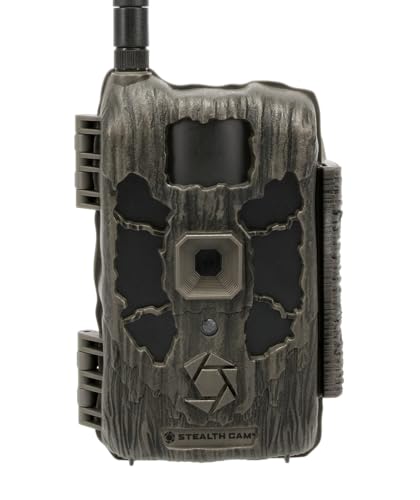
Stealth Cam Deceptor Max 2.0 40MP Cellular Camera

WOSODA 2 Pack Night Vision 48MP Game Cameras
Taking A Closer Look At The Options
The Revolver PRO is built around a 360-degree field of view, a major change from the narrower cone used by many trail cameras. That broad coverage makes it useful beside an open trail, clearing, or feeding area where a single traditional camera might miss animals approaching from the side.
Cellular connectivity adds another layer, letting you monitor remotely rather than visiting the camera constantly. Compared with the offline Meidase P70, this model suits people who value awareness over a broad property, though coverage alone doesn’t determine whether a distant animal appears sharply.
Noteworthy Benefits
- The panoramic design can reduce the number of cameras needed around a busy clearing.
- 40MP stills provide useful detail for subject recognition and habitat checks.
- 1440P video offers a higher-resolution alternative than standard definition footage.
- A 30-frame-per-second recording rate supports smoother movement in active scenes.
Practical Considerations
- Cellular service must be checked at the mounting location, and uploads can consume more power than local recording.
- For close-range scouting, the Meidase P70’s direct 64MP stills may be easier to work with.
Technical Highlights
Who It Suits Best
This camera fits hunters and property monitors who need wide directional coverage and dependable cellular reception near an open game trail.
Where Another Pick Shines
Choose the WOSODA 2 Pack when you need separate cameras for two distinct locations rather than one panoramic viewpoint.
Not every strong outdoor camera deserves equal billing: a reliable power supply can decide whether it keeps recording through a long season. The Stealth Cam 12V Battery Box gives compatible trail cameras an external option for locations where changing loose batteries becomes inconvenient.
That approach is especially practical during cold-weather scouting, where battery performance can be less predictable. Unlike the CEYOMUR solar camera, this box is a power component rather than a complete monitoring system, so you still need a separate camera and compatible wiring.
Practical Pluses
- External power can reduce routine battery replacements during extended deployments.
- The 12V box format suits compatible cameras mounted in difficult-to-reach spots.
- It offers another power strategy for locations with unreliable sunlight.
Points To Note
- Confirm camera, lead, and connector compatibility before installation.
- The box needs weather-conscious placement and periodic charge checks.
- Long cable runs introduce another connection point that deserves regular inspection.
Built With In Mind
This battery box is made for hunters and property monitors who already use a compatible Stealth Cam and need longer remote runs in cold or exposed locations.
Reach For A Different Pick When
Look to the CEYOMUR 4K 68MP Solar WiFi Camera when you need a complete solar-powered setup rather than an external power accessory.
The Meidase P70 takes a deliberately straightforward route: record locally, without cellular service or a Wi-Fi connection. That makes it appealing for remote treelines, cabins, and backyards where a router or cellular tower simply isn’t convenient.
Its 64MP photographs prioritize fine detail, while 1296P video handles movement and environmental context. Compared with the Revolver PRO, the P70 sacrifices panoramic coverage and remote uploads, but you gain a simpler setup with fewer network-related ownership concerns.
Everyday Perks
- Local recording continues without a monthly-connected workflow.
- 64MP stills help reveal fine markings and distant subjects.
- 1296P video is a practical balance for movement and file storage.
- The non-network design simplifies setup at remote locations.
Possible Compromises
- You must retrieve footage in person rather than checking it from a phone through cellular service.
- There’s no Wi-Fi, so the camera fits secluded spots less comfortably than a connected model.
- Storage and battery checks remain part of routine maintenance.
Made For
The P70 suits beginners, offline monitoring, and backcountry placements where high-resolution local captures matter more than instant remote access.
A Better Fit Elsewhere
The Stealth Cam Deceptor Max 2.0 serves users who need cellular uploads and selectable photo resolutions more than a strictly offline workflow.
Solar power changes the logistics more than the footage. The CEYOMUR camera combines a top-mounted panel with a built-in 5200mAh rechargeable battery, while four AA cells can serve as backup power for poor weather or long cloudy stretches.
The included 32GB card also removes one familiar early task: you can begin organizing images after setup rather than first buying storage. Compared with the Meidase P70, this model offers 4K recording and Wi-Fi, so it fits more accessible sites where sunlight and network coverage are dependable.
Real-World Strengths
- Solar charging reduces how often you need to change the primary battery set.
- The internal 5200mAh battery and AA backup provide two power paths.
- 68MP stills preserve fine detail for closer identification.
- 4K video gives you more room to crop or inspect distant movement.
- Wi-Fi access can simplify reviews near a suitable network.
Useful Limitations
- Panel placement matters in shaded woods, and reduced sunlight can increase battery dependence.
- The 32GB card eventually fills during active monitoring, so file review and clearing remain necessary.
- Wi-Fi availability limits where this camera is most convenient.
Quick Facts
Right Fit For
This camera fits property monitors with reliable sunlight who want high-resolution footage, local storage, and Wi-Fi convenience in one package.
Consider Something Else When
Choose the Stealth Cam Revolver PRO for a 360-degree field of view when one camera must cover several directions around an open area.
The Deceptor Max 2.0 focuses its processing power on simultaneous capture and upload. Dual-core processing handles imaging and cellular transfer more efficiently than a single-core approach, which matters in remote areas where your footage can be delayed by weak reception.
Photo resolution is selectable at 4MP, 8MP, 16MP, and 40MP, so you can balance detail against storage demands. Unlike the Revolver PRO, this camera prioritizes conventional directional coverage plus connectivity rather than a full panorama.
Everyday Wins
- Dual-core processing supports image capture and uploading at the same time.
- Selectable resolution lets you tune each setup for detail or file volume.
- 40MP captures are available for closer identification work.
- 1440P video provides a clear step up from lower-resolution recordings.
Details To Watch
- Remote upload usefulness depends on cellular coverage at the exact mounting point.
- More processing and frequent uploads can increase power consumption and storage use.
- Cleaning the lens and checking the connection remain necessary during long deployments.
Feature Snapshot
Best Suited To
The Deceptor Max 2.0 suits experienced mobile users who want configurable still resolution and cellular retrieval from a conventional trail-camera position.
Look Elsewhere When
The Meidase P70 is the simpler choice for secluded placements with no cellular service or Wi-Fi infrastructure nearby.
Two cameras answer a problem one model can’t: some locations need more than one viewpoint. The WOSODA pack can cover two game paths, the front and back of a property, or separate feeding areas without doubling the setup work.
Each camera offers 48MP stills, 1080P video, night vision, and motion activation. A stated trigger speed of 0.3 seconds helps reduce the delay between movement and recording, while the 60-foot detection distance gives you some flexibility in camera placement.
A Few Strong Suits
- Two cameras provide separate coverage without requiring a second product purchase.
- Night vision supports after-dark monitoring in black-and-white footage.
- Motion activation limits recording to detected movement.
- The 0.3-second trigger response helps capture fast-moving animals.
- 48MP stills and 1080P video provide useful outdoor detail.
Small Caveats
- Two mounts mean twice the positioning, weatherproofing, and lens maintenance.
- Night footage is monochrome, so color cues disappear after dark.
- Both cameras require separate storage and battery management.
Who Will Love This
This pack suits homeowners and wildlife trackers who need two dedicated, non-Wi-Fi viewpoints along separate trails or property boundaries.
Another Choice May Suit
The CEYOMUR 4K 68MP Solar WiFi Camera better serves one accessible location that needs solar charging, 4K video, and network-assisted review.
Matching The Camera To Your Monitoring Plan
Coverage comes before resolution
Start with the animal’s likely direction of travel and the area you need to see. A 360-degree model can simplify coverage around an open clearing, while two conventional cameras may serve separate trails more effectively. High photo resolution helps with identification, but it doesn’t recover a subject that sits outside the lens’s field of view.
Connectivity should match access
Cellular and Wi-Fi models suit people who want quicker access from home or work. Non-network cameras are often simpler in remote areas because recording doesn’t depend on reception. You’ll still need to retrieve the memory card, and a weak cellular signal can sometimes delay uploads even when the camera is operating correctly.
Power is a seasonal decision
AA cells are familiar and easy to rotate, but frequent visits matter in cold weather. A 12V box can support longer external runs with a compatible camera, while solar power reduces manual charging in sunny locations. Tree cover, storm seasons, and your recording frequency can all affect how well a solar arrangement fits.
Storage and maintenance deserve planning
Higher-resolution images look useful on paper, but they need more room on the memory card. Review footage regularly so movement clips aren’t overwritten, and clean the lens and motion sensor during long deployments. Secure straps and weather-resistant placement also matter as much as the headline specifications.
Practical Lessons Before You Choose
Mistakes Worth Dodging
Don’t select a camera solely by its photo resolution. A sharper image is of limited help without dependable power, suitable coverage, and storage that won’t fill unexpectedly. Check the direction of travel, network availability, and mounting position before focusing on the largest number on the box.
What The Higher Tier Buys
Connected and panoramic models cost more because they add cellular hardware, wider optics, or more processing capability. Those additions help in active landscapes and remote monitoring, but a basic offline camera can serve a quiet backyard more economically. Pay for the features your location will actually use.
Frequently Asked Questions for Outdoor Wildlife Cameras
Do trail cameras work without Wi-Fi?
Yes, non-network trail cameras record directly to a memory card. You retrieve the card physically, so cellular service and Wi-Fi coverage aren’t required.
Is cellular connectivity useful for wildlife monitoring?
It is useful for checking activity without driving to the camera. Coverage must reach the mounting location, and remote uploads may take longer during weak signal conditions.
Do solar trail cameras need regular charging?
Solar panels help maintain the rechargeable battery, but panel placement and sunlight still matter. Cloudy stretches or deep shade can make backup batteries more useful.
What resolution is enough for backyard wildlife?
Resolution is only one part of a useful recording. Proper direction, reliable activation, stable power, and clean optics matter just as much when you need recognizable movement.
How many trail cameras should you use?
Start with the areas animals use most. A second camera becomes worthwhile when one trail, gate, or property boundary needs simultaneous coverage.
Final Verdict
Choose the Revolver PRO for wide, cellular monitoring, the Deceptor Max 2.0 for configurable connected captures, and the P70 for simple offline recording. The CEYOMUR fits solar-assisted setups, while the WOSODA pack covers two separate viewpoints. Match the camera to the landscape and your retrieval habits, then give routine maintenance a place in the plan.
