

A deck heater can turn a chilly evening into comfortable outdoor time, but the right choice depends on your deck’s electrical setup, available space, and how often people gather there. Propane models suit flexible placement, while electric units avoid open flames and fit areas where wiring already reaches.
For patios used by families, diners, or anyone moving between indoor and outdoor spaces, output, mounting requirements, and weather resistance matter more than appearance alone. These six options cover portable decks, covered dining areas, garages, and other spaces where targeted warmth is useful.
A Side-By-Side Look

Amazon Basics 46,000 BTU Portable Propane Patio Heater

Mr. Heater Buddy FLEX Radiant Propane Heater

Eurofase EF50480B1 5000W Infrared Patio Heater

Eurofase EF20240B2 2000W Electric Patio Heater

Eurofase EF50277S1 5000W Stainless Steel Patio Heater
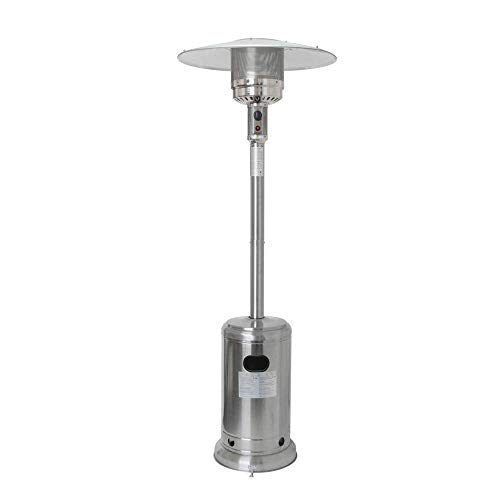
Hampton Bay 48,000 BTU Stainless Steel Patio Heater
Why These Options Stand Out
This freestanding propane heater is built for open decks where substantial heat and mobility matter more than compact storage. Its 46,000 BTU output and stated 9-foot heating radius suit broad seating areas, while wheels make repositioning easier as the sun moves.
Compared with the smaller Mr. Heater Buddy FLEX, this model offers greater output for a fixed outdoor gathering space. The water tank also supports operation with a refillable container rather than a small disposable cylinder, though that adds weight.
Why It Works Well
- The 46,000 BTU output targets larger patio zones without a permanent wall installation.
- One-touch ignition reduces the setup involved before dinner or a casual evening outside.
- Adjustable heat output lets you moderate the burner as seating areas fill or temperatures rise.
- Wheels improve movement across smooth deck surfaces and nearby patio space.
- A tilt-triggered shutoff stops the burner following a substantial tip-over.
Things To Consider
- Its 32.1-inch-square base and 91.3-inch height need clear deck space.
- The water-filled tank increases weight, so two-person lifting may be easier on level ground.
- Owners still need sensible clearance from railings, awnings, dry plants, and open traffic routes.
Feature Snapshot
Built With In Mind
This heater best fits households with a spacious, open deck and frequent evening gatherings.
Where Another Pick Suits Better
Choose the Mr. Heater Buddy FLEX for a smaller patio, garage, or camping setup where portability matters more.
Compact enough to move between a deck, garage, fishing site, or campsite, the Buddy FLEX favors radiant warmth in close quarters. It offers an adjustable 8,000 to 11,000 BTU range, giving you less blanket coverage than the Amazon Basics model but more flexibility for smaller gathering spots.
The fan-shaped fiber mesh burner distributes heat around the unit, which can be useful outdoors where one narrow direction of heat wouldn’t suit everyone. In our view, it serves casual patios well, though exposed, windy locations demand close attention to stability and clearance.
Where It Delivers
- The compact body suits decks with limited floor space or occasional camping use.
- Two-stage output adjusts the level of radiant warmth to the setting.
- The multi-direction mesh burner spreads warmth beyond a single narrow face.
- Wind-resistance design supports outdoor use in exposed recreational settings.
Practical Considerations
- Its 11,000 BTU maximum won’t match the broad reach of a 46,000 BTU patio heater.
- Rust and burner wear can develop with long-term outdoor storage, so a dry cover matters.
- Fuel and connection requirements may not suit every campsite or patio ruleset.
Made For
This model fits campers, tailgaters, and deck occupants who want portable radiant heat in a relatively compact area.
Consider Something Else When
Choose Amazon Basics B010VFKZEO for a stationary patio heater built around much greater output.
Infrared heating uses infrared energy to warm nearby people and surfaces rather than relying solely on warming the surrounding air. That approach makes this 5,000-watt model relevant to covered decks, patios, garages, and workshops where localized comfort is the goal.
The stated coverage of roughly 90 square feet makes it more substantial than the 2,000-watt Eurofase EF20240B2. Its 480-volt requirement is the decisive catch, so existing electrical service and model-specific installation guidance deserve attention before this becomes your choice.
A Strong Showing
- The 5,000-watt output offers useful capacity for medium-sized covered outdoor rooms.
- Infrared elements deliver targeted radiant warmth to nearby occupants and surfaces.
- An IPX4 rating indicates resistance to splashing water, which suits covered settings.
- Indoor and outdoor ratings provide flexibility across patios, garages, and workshops.
- Operating without propane removes the need to store or refill a fuel cylinder.
Points To Note
- Many household decks won’t have a 480-volt circuit available.
- Electrical mounting and clearances must follow the manufacturer’s instructions.
- Radiant heat falls off with distance, so seating placement directly affects comfort.
Quick Facts
The Right Fit
This heater suits owners with proper 480-volt service who want powerful radiant warmth without propane.
Reach For A Different Pick When
The Eurofase EF20240B2 is easier to consider for a smaller area using a standard 240-volt supply.
A compact outdoor dining area doesn’t always need a large freestanding tower. The EF20240B2 uses a 2,000-watt single element to create a focused radiant zone, with listed guidance for a space around six feet by six feet.
Its 39-inch length and decorative clover fascia suit covered walls, patios, and other spaces where appearance matters. Compared with the 5,000-watt Eurofase options, it makes more sense beside a compact table than across a broad seating area.
A Few Strong Suits
- The compact 2,000-watt output suits a focused dining or conversation zone.
- A black finish and decorative fascia coordinate with many outdoor fixtures.
- Electric operation avoids carrying a propane cylinder onto the deck.
- The 39-inch body supports wall- or structure-mounted use rather than floor space.
Worth Noting
- The 240-volt requirement still calls for compatible hardwired electrical service.
- Installation height is advised at no more than eight feet above the ground.
- The smaller output won’t match the 90-square-foot coverage stated for the EF50480B1.
Made For
This model fits a compact covered dining deck with 240-volt wiring and a carefully planned mounting point.
Not Your Match When
Choose Eurofase EF50480B1 for a larger covered area and considerably higher output.
The EF50277S1 combines 5,000 watts of output with a brushed-looking stainless steel exterior, making it a practical choice for a covered deck where fixtures already share a modern metal finish. Its 277-volt supply places it between the 240-volt EF20240B2 and the 480-volt EF50480B1.
Like other infrared heaters in this group, it aims warmth toward people and nearby objects instead of depending only on air temperature. Depending on your outdoor room, you may find the stainless finish easier to coordinate than a black unit, but electrical compatibility remains the deciding factor.
Positive Points
- 5,000 watts provides strong heating capacity for a dedicated outdoor comfort zone.
- Stainless steel construction gives the housing a coordinated outdoor appearance.
- Radiant infrared operation provides targeted warmth near the seated group.
- Electric fuel removes storage and refilling tasks associated with propane.
Possible Compromises
- A 277-volt circuit is less common than the 240-volt setup used by the compact Eurofase model.
- Outdoor exposure can leave marks on stainless steel, so routine wiping helps preserve the finish.
- Mounting location strongly affects how evenly a seated group feels the radiant heat.
Technical Highlights
Who Will Love This
This model appeals to homeowners with 277-volt service and a covered deck featuring coordinated metal fixtures.
Look Elsewhere When
The Eurofase EF20240B2 fits a smaller eating area and a more accessible 240-volt supply.
The Hampton Bay model brings 48,000 BTU of propane output to a familiar freestanding patio-heater format. Stainless steel gives the exterior a neutral appearance for conventional decks, and the control valve provides straightforward output adjustment for changing evening temperatures.
That places it beside the Amazon Basics heater in raw heating class, though this model lacks the listed wheels, water tank, one-touch ignition, and stated radius. The propane cylinder is also sold separately, so your setup cost includes that essential accessory.
A Favorable Mix
- The 48,000 BTU output targets a sizable open-air seating area.
- Stainless steel construction suits outdoor furniture with a neutral metal finish.
- A temperature control valve offers simple adjustment during cooler evenings.
Details To Watch
- The propane cylinder must be purchased separately.
- Without listed wheels, repositioning the full unit may be less convenient.
- Surface cleaning is important because outdoor moisture and grime can dull stainless finishes.
- Clearance from structures and combustible materials remains essential.
At A Glance
Who Should Grab It
This heater suits traditional patio owners who want high propane output and a simple temperature valve.
Another Choice May Suit
Amazon Basics B010VFKZEO offers easier movement through its wheels and a listed 9-foot heating radius.
Choosing the Right Heat for Your Deck
Match Power to the Space
BTU measures the heat output of a fuel-burning heater, while watts and volts describe an electric model’s electrical capacity. A 46,000- or 48,000-BTU propane tower suits broad, open seating areas, while a 2,000-watt electric unit is more appropriate for a compact dining zone. Your goal is useful warmth where people sit, not a number that sounds impressive on paper.
Check the Power Source First
Propane heaters offer flexible placement but require safe fuel handling and a cylinder. Electric heaters eliminate that fuel, yet their voltage dictates whether your existing deck circuit can support them. A model requiring 240, 277, or 480 volts calls for a qualified electrical assessment and compatible installation.
Plan Mounting and Clearance
Freestanding towers need a generous, level footprint and unobstructed airflow around the heater. Wall-mounted electric models conserve floor space, but placement affects radiant coverage and comfort. Review the supplied installation requirements carefully, particularly for mounting height and nearby combustible surfaces.
Think About Outdoor Exposure
A covered area is usually a more practical setting for an electric unit than an open deck exposed to wind and rain. For propane equipment, use a stable surface and proper clearance from structures, dry vegetation, and traffic routes. Seasonal storage also matters, as residual moisture can affect portable burners and exterior finishes.
Making a Practical Heating Choice
Common Shopping Slip Ups
The most common mistake is choosing by heat output while ignoring power requirements and placement. A large outdoor unit is not automatically suitable for a small deck, while an electrically demanding model can be impractical despite strong performance. Measure the area, identify the available power source, and check installation clearances before choosing.
What Separates Premium From Basic
Higher-output models often add larger radiant elements, refined housings, adjustable controls, or portable propane systems. Those additions can help with larger areas or frequent outdoor routines, but premium-style construction doesn’t replace proper electrical and safety planning. Choose the upgrade that solves a limitation in your deck.
Frequently Asked Questions
Are Electric Patio Heaters Better Than Propane Models?
Electric heaters provide targeted radiant heat without a propane cylinder, making them convenient near dining areas with suitable wiring. Propane models offer greater portability and can cover broader open spaces, but they require fuel handling and more clearance.
Can I Use an Outdoor Heater on an Uncovered Deck?
An uncovered deck exposes every heater to wind-driven rain and greater temperature variation. A covered space is generally easier to manage, particularly for electric equipment, and any model still needs suitable outdoor ratings and careful placement.
What Voltage Does My Patio Heater Need?
Propane heaters do not rely on household electrical heating circuits, although ignition and accessories may need power. Electric models in this roundup require 240, 277, or 480 volts, so you need to confirm the model’s specification and your installed electrical capacity.
How Much Patio Heater Output Do I Need?
Start with the size and enclosure of the seating area, then consider how close the heat source will be to occupants. Large propane towers suit broad spaces, while compact electric elements are more practical for a dining table or sheltered conversation corner.
Can Patio Heaters Be Used Indoors Too?
Only a heater explicitly rated for indoor use belongs inside your home or garage. Some patio heaters are designed for outdoor spaces only, and using an outdoor model indoors can create ventilation, fire, and carbon-monoxide concerns.
Final Verdict
Choose the heater that matches your deck’s usable space and existing utilities, not simply the highest output number. Portable propane towers suit open gathering areas, while properly wired infrared models concentrate heat around a table or covered seating zone. Measure first, confirm clearance, and choose the system you can operate comfortably season after season.
