

A dependable NOAA radio becomes most valuable when cellular service disappears or a storm cuts access to local information. I consider both dedicated weather receivers and GMRS vehicle radios, since the two categories serve different needs during power outages, severe weather, off-road travel, farm work, and remote fieldwork. Battery capacity, alert coverage, audio controls, and installation requirements matter more than a long feature list.
Compact emergency models suit an emergency kit, while higher-powered mobile units make more sense for trucks, tractors, and large properties. I favor clear NOAA reception, dependable charging options, practical controls, and equipment that remains understandable after several demanding days away from ordinary power.
A Closer Look At The Lineup

Midland MXT575 MicroMobile Radio
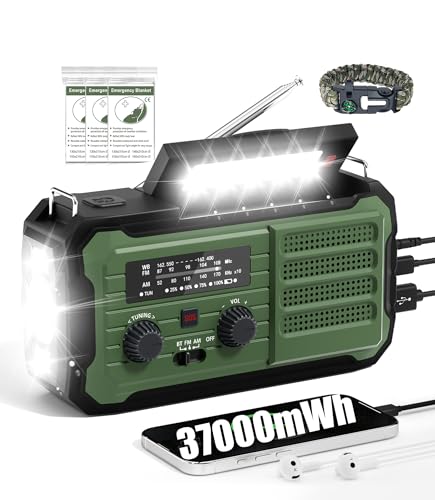
Vokida 10,000mAh Solar Emergency Radio

Raynic 5000mAh NOAA Weather Radio
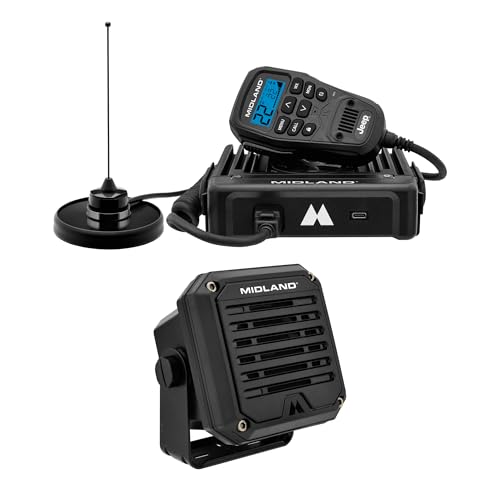
Midland MXT575 with SPK200 Speaker
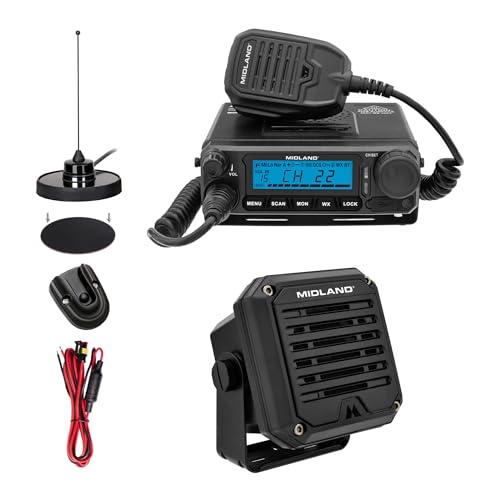
Midland MXT500 with SPK200 Speaker

MangePagar NOAA AM/FM Crank Radio

Midland MXT295 with Bluetooth Mic

SIYEGK NOAA/AM/FM Solar Crank Radio
Taking A Closer Look At The Options
The Midland MXT575 suits drivers who need more reach than a handheld radio can provide. Its 50-watt GMRS output is aimed at vehicles, open land, and work environments, making it a more specialized choice than the compact weather receivers later in this roundup.
For an off-road trip, farm vehicle, or long rural route, the mobile format gives the radio a clearer role. In my view, it works best as part of a planned vehicle installation rather than a grab-and-go emergency device.
Benefits That Matter
- The 50-watt output targets communication across larger outdoor areas.
- Mobile power is more suitable than handheld output for extended driving and rural work.
- The format leaves room for a permanent dashboard or vehicle installation.
Points To Note
- This is primarily a GMRS two-way radio, not a dedicated home weather receiver.
- Vehicle wiring and mounting require attention to placement and routing.
Key Specs
Built With In Mind
Off-road drivers, agricultural operators, and rural work crews gain the most from its higher-powered mobile format.
Another Choice May Suit
The Raynic 5000mAh NOAA Weather Radio makes more sense for a home emergency kit centered on automatic weather alerts.
The Vokida model centers on backup energy rather than vehicle communication. Its 10,000mAh internal battery, hand crank, and solar panel provide three charging routes, which makes it more flexible after a household outage or during a camping trip.
The larger battery should be the main reason to choose this version over the 5,000mAh kit. Although the charging methods add resilience, the limited radio details mean I would verify the final variant’s receiver bands before relying on it for a specific weather frequency.
The Helpful Details
- The 10,000mAh battery provides a larger energy reserve than the 5,000mAh option.
- Hand-crank charging remains available during a prolonged power failure.
- Solar charging supports extended camping and roadside use.
- Internal charging makes the unit less dependent on household electricity.
A Few Limitations
- The supplied details do not clearly identify dedicated NOAA reception.
- Crank charging may add labor during an emergency, so internal and solar charging still matter.
Who It Suits Best
Campers, households preparing for outages, and travelers carrying a compact multi-method power reserve fit this model well.
A Better Fit Elsewhere
The MangePagar NOAA AM/FM Crank Radio offers clearer NOAA positioning for weather-alert monitoring.
The Raynic 5000mAh NOAA Weather Radio brings several emergency functions into one portable unit. Automatic alert scanning can watch for weather warnings while the radio sits in standby, reducing the need to monitor broadcasts continuously through the day or night.
Compared with the Vokida, Raynic provides a clearer focus on NOAA alerts while also including shortwave reception, a phone-charging connection, a headphone jack, a flashlight, and an SOS siren. That makes it a broader household preparedness tool, though the smaller battery is the sensible compromise.
Where It Helps
- Automatic NOAA monitoring can surface warnings while the unit is in standby.
- The 5,000mAh battery gives it a portable power reserve.
- AM, FM, and shortwave reception add options beyond weather broadcasts.
- The flashlight, headphone jack, and SOS siren support several emergency routines.
- The phone connection offers a limited secondary charging option.
Worth Noting
- The 5,000mAh capacity is smaller than the Vokida 10,000mAh configuration.
- Owners should keep the unit charged periodically rather than treating the battery as permanent.
Feature Snapshot
Made For
Prepared households, campers, and residents in weather-prone regions benefit from its combination of alert monitoring and backup functions.
Look Elsewhere When
The Vokida 10,000mAh Solar Emergency Radio better fits travelers prioritizing larger battery capacity and three charging methods.
This bundle addresses a problem ordinary mobile radios can struggle to solve: making incoming messages audible inside a loud vehicle. The SPK200 amplified external speaker is intended for off-road vehicles, tractors, and construction environments where engine noise and wind can overwhelm a small radio speaker.
The MXT575 still supplies 50 watts of GMRS transmitting power, while the microphone places channel, volume, and menu controls within reach. Compared with the standalone Midland MXT575, the added speaker mainly benefits noisy work environments rather than increasing radio range.
Real Benefits
- Amplified incoming audio helps cut through engine, wind, and worksite noise.
- The 50-watt radio supports communication over larger outdoor spaces.
- Microphone-mounted controls reduce the need to handle the main radio unit.
- Built-in NOAA reception adds weather information to the vehicle radio.
Practical Considerations
- The external speaker adds another component to mount and route.
- Vehicle installation deserves careful attention to wiring, microphone placement, and control access.
Core Details
Who Will Love This
Farm operators, construction crews, and off-road drivers gain the most from amplified audio and microphone-based controls.
Reach For A Different Pick When
The Midland MXT295 with Bluetooth Mic is more convenient for operators who need to move away from the dashboard.
The Midland MXT500 bundle concentrates on rural and commercial communication, with 50 watts of GMRS power and a large selection of channels. It fits farms, long backcountry routes, and work areas where terrain, distance, or machinery can make ordinary communication difficult.
Its main distinction from the Midland MXT575 bundle is channel access: 15 GMRS channels, eight repeater channels, and 142 privacy codes. The SPK200 speaker carries over the same amplified-audio concept, making this model compelling for crews that value flexible channel selection as well as strong vehicle output.
The Upside
- Fifty watts supports long-distance communication across rural terrain.
- Fifteen GMRS channels support multiple group communications.
- Eight repeater channels can extend coordination where compatible infrastructure exists.
- The amplified speaker helps in tractors, work vehicles, and high-wind settings.
- NOAA reception adds weather updates during remote travel.
Potential Compromises
- Privacy codes reduce casual listening but do not create encryption.
- Reproater use depends on compatible stations and local operating rules.
- The full vehicle setup requires more planning than a portable NOAA receiver.
The Right Fit
Agricultural operators, rural contractors, and overlanders needing numerous GMRS channel options fit this configuration well.
Where A Sibling Pick Shines
The Midland MXT575 with SPK200 Speaker better serves drivers prioritizing microphone-mounted controls and severe-weather reception in noisy vehicles.
The MangePagar model keeps the core emergency-radio functions straightforward: NOAA weather reception, AM/FM broadcasts, and manual charging. Automatic scanning across seven NOAA channels makes it a practical choice for overnight storm monitoring when continuous listening would be inconvenient.
Compared with the feature-heavy Raynic, this radio places more emphasis on weather broadcasts and backup charging. A 4,000mAh power-bank function adds some flexibility, though the smaller battery makes the Raynic 5000mAh model a more natural fit for extended outages.
Positive Points
- Seven-channel automatic scanning supports unattended weather monitoring.
- AM/FM reception provides ordinary broadcast access during an outage.
- Hand-crank charging reduces dependence on wall power and sunlight.
- The 4,000mAh battery can also support limited phone charging.
Trade-Offs To Consider
- Its 4,000mAh capacity is the smallest stated battery in this roundup.
- The radio is designed for listening rather than two-way GMRS communication.
Right Fit For
Home preparedness kits, night-time storm monitoring, and campers wanting a direct NOAA and AM/FM receiver benefit from its focused design.
Another Choice May Suit
The Raynic 5000mAh NOAA Weather Radio suits households wanting a larger battery, shortwave reception, and more emergency functions.
Wireless control changes how a mobile radio can be used inside a large vehicle. The MXT295’s Bluetooth microphone is rated to operate as far as 100 feet from the radio unit, allowing the main hardware to remain mounted away from the operator.
The 15-watt setting offers a middle ground between a handheld radio and the 50-watt Midland bundles, with selectable 15-watt and 5-watt modes. Depending on terrain, that lower output may be sufficient for nearby farm buildings or trail groups, while the 50-watt options serve broader rural communication.
A Strong Showing
- Bluetooth control permits operation away from the mounted radio unit.
- The 100-foot control distance suits large trucks, tractors, and work areas.
- Compatibility with Bluetooth headsets and push-to-talk accessories broadens the control options.
- Selectable 15-watt and 5-watt modes accommodate different power needs.
Details To Watch
- The microphone and radio still need an appropriate power connection and secure placement.
- Bluetooth handles control functions but does not eliminate the need for compatible paired accessories.
Technical Highlights
Built For
Truck operators, farm workers, and field technicians who need to move around a large worksite benefit from wireless microphone control.
Swap It Out When
The Midland MXT500 with SPK200 Speaker better fits rural crews that prioritize 50-watt output and a wider channel selection.
The SIYEGK radio combines NOAA, AM, and FM reception with hand-crank and solar charging. A flashing alert light and SOS alarm add another way to notice warnings, which may be useful overnight or from another room. The reading lamp also gives the unit a practical role during extended household outages.
Compared with the MangePagar, SIYEGK places greater emphasis on visual and indoor lighting functions. The lack of a stated battery capacity makes it harder to compare endurance directly, so the MangePagar or Raynic offers clearer information for planning around longer outages.
Practical Pluses
- NOAA access supports local severe-weather monitoring.
- AM and FM reception adds ordinary broadcast coverage.
- The SOS alarm and flashing light provide visual and audible notice.
- A reading lamp adds useful illumination during an outage.
- Hand-crank and solar charging reduce reliance on wall power.
Small Caveats
- No battery capacity is stated, limiting comparison with the 4,000mAh, 5,000mAh, and 10,000mAh models.
- The phone connection is a secondary feature rather than a substitute for a full emergency power station.
Feature Facts
Whose Shelf It Belongs On
Home preparedness kits and households needing audible alerts, visual warnings, and basic lighting during outages suit this model.
Consider Something Else When
The Raynic 5000mAh NOAA Weather Radio fits households that prioritize a stated battery capacity and phone charging.
Matching Radio Features to the Intended Use
Power type determines how a radio fits into daily life. A compact NOAA receiver belongs near a home emergency kit, while a mobile GMRS unit needs a vehicle, secure wiring, and an accessible microphone. Battery capacity matters most for extended outages, but a larger number does not automatically make every feature more dependable.
NOAA alerts provide the weather-alert focus, while GMRS radios add two-way communication for groups. NOAA means National Oceanic and Atmospheric Administration weather broadcasts, while GMRS permits voice communication between compatible devices on selected channels. These functions complement each other but remain different categories.
Controls and audio deserve attention in noisy environments. Bluetooth control helps operators leave a vehicle cab, microphone-mounted settings reduce dashboard clutter, and an amplified speaker can preserve message clarity around tractors or construction equipment. The tradeoff is additional equipment and more complex installation.
Power planning should match the actual emergency. A unit carrying 10,000mAh offers a larger stated reserve than a 4,000mAh model, while crank and solar charging provide backup methods. Internal battery condition and realistic access to sunlight still determine how useful those reserves become.
Avoiding A Poor Radio Match
A common error is treating a GMRS mobile radio as a substitute for a dedicated NOAA receiver. Two-way communication and weather broadcasts serve different purposes, and neither category automatically covers every need.
Another mistake is focusing on battery numbers while overlooking controls, mounting, and alert behavior. A radio difficult to reach from a vehicle seat may be less useful than a simpler model with accessible settings.
What Higher-Power Models Add
Higher-tier mobile radios generally add stronger transmit power, expanded channel access, remote microphones, or amplified audio. Those features make sense across farms, work sites, and long rural routes, where terrain and vehicle noise affect communication.
For a bedside or kitchen emergency kit, a compact dedicated weather receiver may deliver the relevant features without a complex installation. The useful upgrade depends on the environment rather than on a single specification.
