

Cold evenings turn patios, balconies, and greenhouses into uncomfortable spaces before the rest of the home cools down. I compare electric infrared models with propane heaters and portable fan heaters, focusing on heating method, placement, power, environmental resistance, and control options. Several indoor heaters also appear because they work well in enclosed workspaces rather than exposed outdoor areas.
A Quick View Of The Lineup

1500W Portable Ceramic Space Heater

DAHTEC 1500W Portable Fan Heater

Sundate 1500W Wi-Fi Infrared Patio Heater

OLIXIS 42,000 BTU Pyramid Patio Heater

DAHTEC 1500W Ceramic Space Heater

Garvee 1500W Infrared Wall Patio Heater
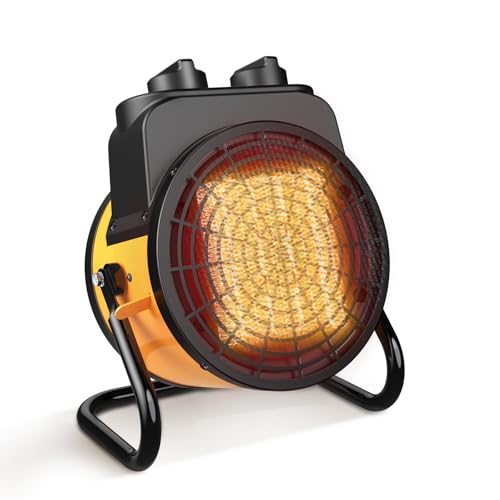
Air Choice 1500W Greenhouse Space Heater
Inside Each Recommended Option
DAHTEC’s portable ceramic heater serves an indoor role rather than a true outdoor one. Its three operating settings, including fan-only operation, make it practical for a home office, bedroom, or studio during cool shoulder seasons. For most apartments, a 15-degree tilt can direct airflow toward a desk or seating area without taking up floor space.
The PTC element is a positive-temperature-coefficient ceramic element whose output rises as it warms, providing fast convective heat. This is a sensible companion heater for an enclosed room, but it does not replace a weather-rated patio model. Compared with the later Sundate unit, this one prioritizes simple room heating rather than exposed outdoor use.
Advantages To Know
- High, low, and fan-only settings support seasonal use.
- The 1,500W maximum suits small-to-medium rooms.
- A 15-degree tilt improves directional airflow.
- Fan-only mode provides circulation during mild weather.
Things To Consider
- This model is designated for indoor use, not rain-exposed patios.
- Its fan-forced ceramic design warms air rather than using infrared radiation.
- Cleaning around the grille and controls remains necessary during heavier use.
Key Specs
Who It Suits Best
This model fits apartment residents and home workers who need focused indoor heat during cool mornings or evenings.
Another Choice May Suit
Garvee 1500W Infrared Wall Patio Heater better serves households needing a wall-mounted electric unit rated for outdoor exposure.
DAHTEC shifts the same fan-heater format toward greenhouses, grow tents, garages, and workshops. Its stated 5,120 BTU output suggests meaningful heat for a focused work area, while the fan-forced design helps distribute warmth through enclosed structures. In a greenhouse, that circulation can reduce the uneven pockets of air that often develop near the roof.
Two operating modes make it more adaptable than a basic cold-weather heater. Fan-only mode can move air during warmer periods, and the dedicated heat setting handles colder conditions. Unlike the Sundate infrared heater, this is a portable air heater rather than a mounted radiant system, so placement around plants or worktables needs more attention.
Positive Takeaways
- The 1,500W electrical rating supports compact-area heating.
- Stated 5,120 BTU output targets small work spaces.
- Fan-forced airflow distributes heat through enclosed areas.
- Two modes simplify seasonal ventilation and heating.
Small Caveats
- Greenhouse users must position it away from irrigation and damp surfaces.
- Unlike infrared units, it primarily heats surrounding air rather than people and objects directly.
- Portable placement can leave some corners less evenly heated in larger structures.
Made For
Small-scale growers and hobbyists who need focused circulation inside a greenhouse or workshop benefit most from this format.
Where Another Pick Shines
Sundate 1500W Wi-Fi Infrared Patio Heater is the stronger fit for a permanently mounted gazebo or covered balcony.
Sundate’s wall-mounted model is built around radiant carbon-fiber heating, which transfers energy toward nearby people and surfaces. That approach differs from DAHTEC’s fan heaters because it does not depend on moving room air across a larger space. For a fixed dining area beneath a gazebo or beside a balcony, that directional behavior is generally more useful.
Nine heat levels and a 24-hour timer provide finer control than the two-mode greenhouse option. Wi-Fi control adds another layer, although app convenience still depends on reliable network access. For most mounted installations, the combination of carbon-fiber elements, wall placement, and adjustable output makes this the most feature-focused electric unit in the group.
Where It Helps
- Nine output levels support gradual temperature adjustment.
- The 24-hour timer supports scheduled operation.
- Wi-Fi control suits permanently mounted spaces.
- Carbon-fiber elements deliver radiant heat directly.
Practical Considerations
- Wall structure and mounting-point placement require attention before installation.
- App-based control adds another system that must be configured.
- Its fixed placement offers less flexibility than a rolling patio heater.
Feature Snapshot
Right Fit For
Households with a permanent gazebo, balcony, or covered dining zone benefit from the mounted infrared design.
Reach For A Different Pick When
OLIXIS 42,000 BTU Pyramid Patio Heater better serves open patios that lack a suitable wall for electric mounting.
OLIXIS takes a different path from the electric models by using propane and a stated 42,000 BTU heating capacity. British Thermal Units measure heat output, so this figure can be compared more directly across fuel types than wattage alone. The pyramid format and wheels make it easier to reposition around an open deck or backyard dining table.
Pulse ignition simplifies startup, while temperature adjustment offers a practical response to changing outdoor conditions. Depending on wind exposure and patio size, radiant patio heaters can still lose effectiveness because moving air carries heat away. This model is most convincing for people seeking a mobile outdoor appliance rather than permanent wall-mounted electric heating.
Practical Pluses
- 42,000 BTU output targets open outdoor gathering areas.
- Built-in wheels improve mobility between storage and patio zones.
- Pulse ignition supports straightforward startup.
- Propane operation avoids a permanent electrical mounting point.
Worth Noting
- Propane equipment requires fuel-cylinder handling and outdoor storage awareness.
- Wheels and outdoor finishes require regular surface cleaning.
- Strong wind can reduce the useful radiant heat in exposed areas.
Quick Facts
Best Suited To
Large-deck households and outdoor hosts needing a movable heater without a permanent wall connection fit this model well.
A Better Fit Elsewhere
Garvee 1500W Infrared Wall Patio Heater better serves a fixed balcony with a suitable wall and electrical connection.
DAHTEC’s second ceramic portable is designed for rooms up to 160 square feet, giving it a more compact use case than the earlier 200-square-foot model. Three settings cover high heat, low heat, and fan-only airflow. That makes it useful for dorm rooms, studio flats, and compact offices where a larger appliance would dominate the available space.
The listed safeguards include overheat protection, tip-over shutoff, a flame-retardant housing, and a reinforced plug. These details add practical protection during daily indoor use, but they do not turn the heater into an exposed-outdoor appliance. Compared with the Air Choice model, this is a room-heating choice with a more compact stated coverage target.
What Earns Its Place
- Fast air movement suits compact rooms.
- High, low, and fan-only modes provide seasonal flexibility.
- Tip-over shutoff supports unattended indoor placement.
- Overheat protection adds a useful operational safeguard.
- The stated 160-square-foot target suits smaller rooms.
Room For Improvement
- Its coverage is limited compared with larger indoor-heating models.
- It cannot serve as a rain-exposed patio heater.
- Intensive seasonal use makes routine grille cleaning important.
Whose Shelf It Belongs On
Dorm occupants, studio residents, and compact-office workers benefit from the small stated room capacity.
Swap It Out When
Air Choice 1500W Greenhouse Space Heater is the better fit for grow tents and workshops needing adjustable airflow direction.
Garvee combines infrared heating with permanent wall mounting, giving it a cleaner outdoor profile than portable propane models. Infrared radiation transfers heat toward people and nearby objects rather than relying entirely on air circulation. That makes it a sensible fit for a covered balcony, patio wall, or sheltered dining area where occupants remain relatively stationary.
The IP65 rating means the enclosure is protected against dust and water under the standard’s defined conditions. That rating supports outdoor suitability, although sheltered installation remains the more sensible arrangement in severe weather. Compared with Sundate, Garvee offers a simpler feature set but fewer stated control options and no listed timer.
What Stands Out
- Infrared elements warm people and nearby surfaces directly.
- Wall mounting keeps floor space open.
- IP65 protection supports exposed outdoor placement.
- The 1,500W rating suits fixed patio zones.
Less Ideal Details
- Fixed mounting offers little adjustment for changing seating locations.
- Wall structure and electrical access need verification before installation.
- The exposed installation requires periodic surface and connection checks.
Technical Highlights
Who Will Love This
Balcony residents with a solid mounting surface benefit from infrared warmth without propane-cylinder handling.
Consider Something Else When
Sundate 1500W Wi-Fi Infrared Patio Heater better serves gazebo users who need nine levels, a timer, and app control.
Air Choice bridges indoor and outdoor utility with a portable 1,500W ceramic heater intended for patios, grow tents, garages, workshops, and indoor rooms. Its three modes provide more flexibility than a fixed heat setting, while a 90-degree tilt can redirect airflow toward plants, a workbench, or a seated area. That adjustability matters more in practical spaces than a headline heating figure alone.
Overheat protection and a thermostat support consistent operation, though exposed sites still need sheltered placement away from water and irrigation. Compared with DAHTEC’s greenhouse fan heater, this model offers finer directional adjustment through its tilt. Compared with the wall-mounted infrared models, it remains portable and better suited to temporary setups.
Useful Highlights
- Three modes cover heating and gentle air circulation.
- The 90-degree tilt redirects output toward work areas.
- A thermostat supports consistent temperature management.
- Portable placement suits temporary greenhouse setups.
Trade-Offs
- Outdoor suitability depends on shelter from direct water and weather exposure.
- It warms air rather than providing dedicated infrared heating.
- Its wide setting adjustment requires manual repositioning across a large space.
Core Details
Built With In Mind
Small-scale growers and workshop hobbyists benefit from portable heating with directional tilt and multiple settings.
Look Elsewhere When
OLIXIS 42,000 BTU Pyramid Patio Heater better serves open-air entertaining where propane output and mobility matter more.
What Matters Before Bringing Heat Outside
Infrared outdoor patio heaters use radiant elements that transfer heat toward people and objects, while fan heaters warm circulating air. That difference determines where each design works best: radiant models suit fixed seating areas, while portable fan heaters fit enclosed or temporary workspaces.
Placement and mounting
Infrared heat falls off with distance, so a wall-mounted unit belongs above or near the section where people sit. Gazebos, balcony walls, and covered patio structures provide practical mounting locations. A rolling heater makes more sense for open decks where seating moves frequently.
Heat output and area
BTU describes heat output, while watts describes electrical consumption. Neither figure alone establishes coverage because wind, insulation, ceiling height, and exposure all change the result. Small rooms and grow tents can respond to a 1,500W fan heater, while large exposed patios may need the greater air-moving capacity associated with a high-output propane patio heater.
Weather resistance and power
An outdoor electric model should have a meaningful water-resistance rating and a suitable mounting location. Propane models avoid extension cords and wall installation but introduce fuel-cylinder storage and maintenance. I compare both approaches because neither fuel type is automatically better for every patio.
Common Mistakes and Useful Upgrades
Mistakes Worth Dodging
The most consequential mistake is treating every 1,500W label as equivalent. Electrical watts, propane BTU, and radiant heat describe different operating systems rather than a single universal measure. Placement also matters: a heater too far from the seating area can leave its capacity underused.
What The Higher Tier Buys
Advanced models often spend that premium on finer output control, timers, remote management, and stronger outdoor housing. Sundate adds nine levels, Wi-Fi control, and a 24-hour timer, while Garvee emphasizes water resistance and simple wall mounting. The extra capability is worthwhile only when the installation and routines make it useful.
Frequently Asked Questions
Are infrared patio heaters suitable for open-air use?
Infrared patio heaters are intended for outdoor spaces, with exposure limits determined by their construction. Covered or sheltered placement generally reduces exposure to rain and wind.
Do infrared heaters warm people or air?
Infrared models transfer radiant heat toward people and nearby objects. Fan heaters instead move air across a heating element, making them more suitable for enclosed rooms and grow spaces.
Is propane better than electric for patios?
Propane offers high portable output without an electrical outlet. Electric models provide simpler remote control and wall-mounted operation but require a suitable power connection.
Can a greenhouse heater be used indoors?
Some greenhouse-rated portable heaters also support indoor spaces. Placement away from moisture, combustible materials, and high-traffic areas remains essential.
How far should a patio heater be mounted?
Heater placement depends on mounting height, seating distance, wind exposure, and model instructions. Keeping the radiant path unobstructed generally produces a more useful result.
Final Verdict
I favor Sundate for a fixed gazebo because its nine levels, timer, and Wi-Fi control provide the most complete management system. Garvee suits a simpler wall installation, while OLIXIS fits an open deck needing mobility and high propane output. DAHTEC and Air Choice models belong in greenhouses, garages, or indoor rooms rather than rain-exposed entertaining areas. Matching the heating method to the actual space matters far more than choosing by wattage alone.
