

A hydration belt lets you carry water, a phone, and small essentials without filling your hands during a run, hike, or long walk. The right choice depends on bottle placement, waist stability, storage access, and how closely the fit matches your body. These six options cover everything from lightweight running vests to larger waist packs for longer outings.
The Choices Worth Comparing

G-Run Hydration Running Belt with Bottles
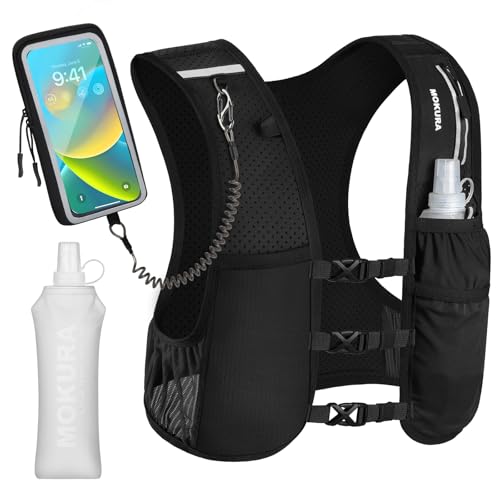
MOKURA Running Vest with 500ML Soft Flask

AiRunTech Running Hydration Belt with Bottle Holder

Number-one Running Belt with Two 175ML Bottles, Purple

SOLAWELL Running Belt with Water Bottle Holder, Black

Nathan Peak Hydration Waist Pack with 18oz Run Flask
What Each Pick Brings To The Table
The G-Run Hydration Running Belt takes a direct approach to carrying basics. Bottles sit with the belt rather than inside a roomy pouch, while the phone compartment is designed around a broad range of phone sizes, making it a practical choice for runners who want their screen close without juggling it.
For a daily jog or a brisk walk, that straightforward layout makes the G-Run easy to understand. You gain hands-free carrying, though the available information doesn’t identify materials, closure details, or exact bottle dimensions, so confirming those points matters for demanding workouts.
Strong Points
- Bottle placement supports hands-free movement during runs, cycling, and jogging.
- The phone-oriented design suits routes where navigation or quick music access matters.
- Its waist format keeps necessary items close without adding backpack bulk.
Things To Consider
- Check the listing dimensions and pocket layout before storing a large phone with a case.
- No material, capacity, or fastening details are provided, leaving the exact durability harder to assess.
Made For In Mind
This belt suits casual joggers and everyday exercisers who mainly need water and a phone within easy reach.
Where A Sibling Pick Shines
Runners wanting layered storage and two defined bottle positions may prefer the Number-one Running Belt with Two 175ML Bottles.
Where the G-Run uses a traditional belt format, the MOKURA moves into closer-fitting running-vest territory. Its 500ML soft flask, soft neoprene, and breathable mesh are designed to reduce the rigid feel associated with conventional bottle belts, which can be useful during longer jogging sessions.
Stretch waist panels and three adjustable chest straps give you several points to fine-tune the fit. In practice, that layered adjustability may help distribute the load more evenly, although the exact garment sizing isn’t provided and should be compared with your measurements before ordering.
Practical Pluses
- The 500ML flask offers more fluid capacity than a typical compact bottle belt.
- Soft neoprene and mesh target comfortable contact during sustained movement.
- Three chest straps allow fit adjustments beyond a single waist closure.
- Stretch panels can accommodate changing movement around the torso.
Small Caveats
- The vest-style construction may feel more involved than a simple two-piece belt.
- Owners should rinse the soft flask regularly and allow it to dry before storage.
Key Specs
The Right Fit
This vest is well suited to runners who value a close fit, flexible flask, and multiple adjustment points.
Another Choice May Suit
Walkers wanting a conventional belt with a removable bottle may find the SOLAWELL Running Belt simpler to manage.
AiRunTech broadens the waist-pack idea by placing a water bottle holder, phone storage, and wallet space into one running-focused format. That combination makes it relevant beyond road running, particularly for hiking, triathlon training, cycling breaks, and long walks where carrying only a bottle would leave essentials at home.
Compared with the MOKURA’s close-fitting vest, this looks like the more conventional alternative, though the supplied information doesn’t reveal its materials, dimensions, or adjustment points. The deciding question is whether your essentials are light enough for a waist pack and whether a familiar belt shape feels more natural to you.
Standout Benefits
- Phone and wallet storage keeps small personal items together during an outing.
- A dedicated water bottle holder supports hands-free hydration on the move.
- The format suits several activities rather than restricting use to running alone.
Worth Noting
- Exact compartment measurements are unclear, so larger phones may need careful fit checking.
- A light waist pouch feels most suitable for essentials rather than heavy equipment.
- Routine cleaning matters because sweat and skin contact can leave residue around elastic and storage areas.
Who Will Love This
This belt fits active walkers and runners who want phone, wallet, and bottle access in a single traditional waist format.
Reach For A Different Pick When
Long-distance runners prioritizing a larger flask and expanded stretch storage may favor the Nathan Peak Hydration Waist Pack.
The Number-one Running Belt brings more structure than the lighter AiRunTech option, with two 175ML bottles, elastic retention attachments, and a 20 by 11-centimeter storage section. Layered interior spaces let you separate your phone from keys, cards, money, and tissues, reducing the familiar problem of a phone collecting pocket debris.
That organization makes this a sensible fit for short-to-medium runs, especially on routes where a screen check may be needed at an intersection. The stretch waistband and rear bottle-pocket arrangement are designed to limit movement, though the purple variant is ultimately a style choice rather than a performance feature.
What It Does Well
- Two 175ML bottles provide a combined 350ML of fluid capacity.
- Elastic attachments help keep each bottle seated during movement.
- Layered pockets separate your phone from keys, cards, and small belongings.
- The 20 by 11-centimeter main section adds more defined storage than a minimal belt.
- An adjustable elastic waistband accommodates a range of waist sizes.
Practical Considerations
- Two separate bottles create more contact points and components to clean.
- Phone compatibility is described broadly, so a thick case may affect the fit.
Feature Snapshot
Who Should Grab It
This belt is a natural match for runners who want two removable bottles and organized storage for a phone and small items.
A Better Fit Elsewhere
Runners wanting one large insulated flask instead of twin bottles may prefer the Nathan Peak Hydration Waist Pack.
The SOLAWELL Running Belt focuses on one task: keeping a bottle accessible without allowing the holder to loosen during activity. Its double-zipper structure provides two points of closure around the bottle area, a more substantial approach than relying on a single retaining loop.
For a morning run, hike, or long walk, that emphasis can reduce the need to stop and rearrange your equipment. You can remove and replace the bottle more deliberately, although the supplied information doesn’t describe the storage capacity for a phone or other essentials, so this choice centers more on hydration than all-purpose carrying.
What Makes Sense
- Double zippers create a firmer, more adjustable bottle closure.
- The holder is designed to reduce shifting during runs, hikes, and walks.
- Direct bottle access supports hydration without unpacking the rest of the belt.
Details To Watch
- The source doesn’t state the bottle capacity or acceptable base diameter.
- Owners should inspect both zipper tracks regularly, since grit can interfere with small moving parts.
Quick Facts
Built With In Mind
This belt suits runners and hikers who mainly need a securely positioned, quickly accessible bottle.
Look Elsewhere When
Those carrying a phone, wallet, and multiple small items should consider the Number-one Running Belt with Two 175ML Bottles.
Nathan takes the hydration capacity up a step with an 18-ounce, or 535ML, flask paired with an angled holder that follows the waist. A push-and-pull race cap supports one-handed access, while the surrounding zippered stretch pocket keeps small essentials protected from bumps and movement.
Compared with the SOLAWELL’s single-bottle emphasis, the Peak offers more fluid and a defined storage zone, making it more suitable for longer runs, hiking, camping, and cycling. Its insulated flask is the substantial part of the setup, so carrying comfort will depend on tightening the waist securely and maintaining consistent hydration.
A Favorable Mix
- The 535ML flask provides substantial capacity for longer activities.
- Its angled holder follows the waist rather than standing away from the body.
- A push-and-pull race cap supports quick, low-interruption access.
- The expandable zippered stretch pocket organizes and protects small essentials.
Some Limits To Know
- A full flask creates more weight around the waist than a smaller bottle system.
- International listings may have different fit details, labels, or instructions, so local specifications deserve a close look.
- The removable flask needs regular washing and should be fully dry before storage.
At A Glance
Whose Shelf It Belongs On
The Nathan Peak suits distance runners and outdoor exercisers who value a large flask plus dedicated pocket storage.
Swap It Out When
Runners preferring a close-fitting soft-flask design and lighter waist profile may favor the MOKURA Running Vest.
What Matters Most Before Choosing
Bottle fit and access
A secure belt still fails at its basic task when the bottle rocks, catches on clothing, or is difficult to reach. Bottle holders differ from soft flasks, and the two approaches serve different preferences. Soft flasks flex with movement, while rigid bottles are often simpler to fill and clean.
Waist stability
A snug fit matters more than extra compartment space. The belt should remain centered through repeated steps, bends, and changes in pace. Look for adjustability around the waist, then consider whether the storage remains balanced once you add a full bottle, phone, and keys.
Storage volume
Phone size belongs near the front of the decision. A broad model claim may not accommodate a large handset with a protective case, and a narrow compartment can make daily access frustrating. Measure the device and compare it with the interior dimensions before committing.
Intended activity length
Short workouts may need less water and fewer pockets than long runs or hiking trips. A vest can work well for runners sensitive to bouncing, while a conventional belt suits anyone who prefers quick removal and straightforward storage. Match the setup to the outing, not simply the number of features.
Common Sense Before You Choose
Common Shopping Slip Ups
Ignoring bottle dimensions is a frequent source of disappointment, particularly with adjustable holders. Phone cases and filled pockets can also change the balance enough to produce movement. Check both measurements before placing an order.
What Separates Premium From Basic
A higher-tier option may add a larger flask, more structured storage, or a closer-fitting layout. Those improvements help during longer sessions, while a basic belt can serve shorter outings just fine. Pay for the additional capacity only when your activity demands it.
Frequently Asked Questions for Hydration Belts
How should a hydration belt fit?
It should sit securely around your waist without restricting breathing or hip movement. Test it with a full bottle and your usual phone before a long outing.
Can a hydration belt hold a large phone?
Possibly, but the device and case must fit inside the stated storage area. Measure both the phone and pocket, then keep soft items away from screen edges.
Are soft flasks easier to carry than rigid bottles?
Soft flasks flex with your stride and can feel less rigid during runs. Rigid bottles may be easier to fill and clean, so choose according to your training habits.
What should a hiking belt carry?
Water comes first, followed by a phone, compact snacks, keys, and a small first-aid item. Avoid overfilling a light waist pack with dense equipment.
How do I stop a bottle from bouncing?
A secure bottle holder and a snugly adjusted waistband are the main controls. Keep the load balanced and check the closure after the first few minutes of movement.
Final Thoughts
Your best hydration belt is the one that holds its contents without distracting you. Short routes and light errands may suit a simple single-bottle design, while long training days reward more capacity and better organization. Compare bottle fit, phone clearance, waist adjustability, and the amount of gear you actually carry before choosing.
