

A heavy-duty trampoline has to earn its space with more than a high capacity rating. The frame, jumping surface, enclosure, ladder, and installation process all shape daily use, especially in a busy family backyard where children may bounce often and adults need safe access. The six options below cover everything from compact indoor rebounders to oval and rectangular outdoor models, helping you match structure, scale, and safety features to your available space.
A Quick View Of The Lineup
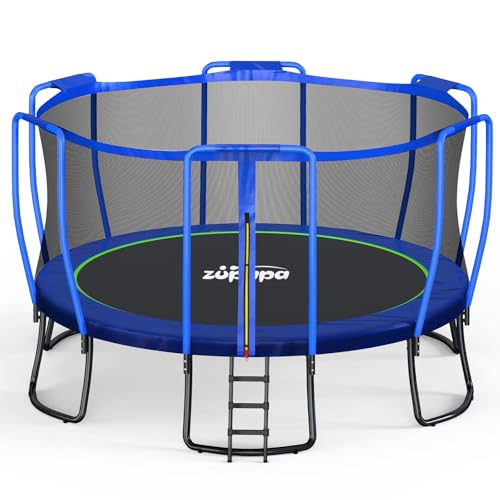
Zupapa 1800LBS No-Gap 10FT Trampoline with Safety Net and Ladder
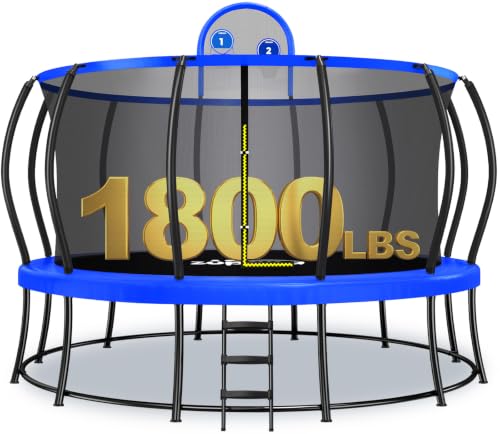
Zupapa 1800LBS Dual-Frame Trampoline with Safety Net

ORCC Oval Outdoor Trampoline with Safety Net and Steel Frame
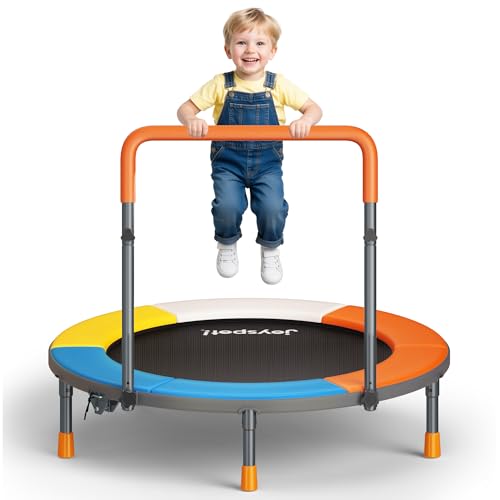
JOY SPOT! 36-Inch Adjustable Toddler Mini Rebounder

Zupapa 4X6FT Rectangle Trampoline with Hoop and Net

Jumpzylla Outdoor Kids Trampoline with Net
A Breakdown Of The Leading Choices
The 10-foot format makes this Zupapa easier to accommodate than the larger models that follow, while the no-gap layout connects the mat and spring cover closely. For a family that wants backyard jumping without starting with a 14- or 16-foot circle, that combination feels practical.
Its enclosure and non-slip ladder support two different everyday needs: keeping the jumping area contained and giving smaller users a steadier entry point. The 1,800-pound capacity is useful for multiple users, though adults should follow the manufacturer’s one-at-a-time guidance and avoid loading it based solely on the number.
Bright Spots
- The no-gap mat and spring-cover connection reduces exposed openings around the perimeter.
- Multiple listed sizes let you compare 10-, 12-, 14-, 15-, and 16-foot options.
- The ladder makes entry more manageable for children than climbing onto the spring band.
- Listed protection includes parts, labor, and shipping for covered malfunctions, subject to plan terms.
Small Caveats
- The net still requires regular inspection, particularly after contact with branches or hard objects.
- A 1,800-pound rating describes total load, not permission for crowded jumping.
Core Details
Who It Suits Best
This model fits families with a moderate backyard who want a high capacity and a 10-foot footprint.
A Better Fit Elsewhere
Choose Zupapa 1800LBS Dual-Frame Trampoline with Safety Net when maximum jumping area matters more than compact access.
Where the first Zupapa emphasizes its 10-foot footprint, this model shifts attention toward structural support through a dual-frame layout. A smaller upper frame connects to a wider lower frame, lowering the center of gravity and giving the base a broader stance than a single-ring design.
That arrangement may feel settled during ordinary family use, particularly on level ground. The choice is less clear for very compact yards because the 12-, 14-, 15-, and 16-foot versions demand considerably more room and clear overhead space.
Notable Upsides
- The two-level frame distributes movement across a broader base.
- Thickened steel tubing supports frequent use under the stated 1,800-pound limit.
- The close-connected mat and spring cover limits perimeter gaps.
- A safety enclosure and non-slip ladder support routine family use.
Practical Considerations
- Uneven soil can undermine frame alignment, so level preparation is important.
- The larger listed diameters require a wide, open installation area.
Built With In Mind
This model suits active families with level outdoor space and room for a 12-foot-or-larger trampoline.
Consider Something Else When
Choose Zupapa 1800LBS No-Gap 10FT Trampoline with Safety Net and Ladder for a tighter yard and easier spatial fit.
The oval footprint changes the movement pattern compared with the round Zupapa models. A longer jumping area can support controlled forward or backward travel, making this shape appealing for older children practicing basic gymnastics positions.
Its galvanized steel frame provides a material advantage outdoors because zinc coating helps protect steel from corrosion. The manufacturer also states that the trampoline meets CPSIA and ASTM F381-16 requirements, useful context when comparing construction standards across the list.
Good Reasons To Consider
- The oval mat creates more directional space for movement drills.
- Galvanized tubing is suited to exposure to outdoor moisture.
- The 1,200-pound capacity offers room for varied family use within the limit.
- The enclosure helps separate the jumping surface from the surrounding yard.
Worth Noting
- An oval frame still needs a large level clearance zone, especially overhead.
- You may find the 1,200-pound rating less generous than the 1,800-pound Zupapa models.
- Spring tension and net attachment points need periodic checks during frequent outdoor use.
Feature Snapshot
Right Fit For
This trampoline fits families wanting a long, enclosed jumping area for children exploring movement skills.
Where A Sibling Pick Shines
The JOY SPOT! 36-Inch Adjustable Toddler Mini Rebounder is a tighter indoor option for a child still building basic jumping control.
At 36 inches, this rebounder serves a very different purpose from the outdoor models: short practice sessions for children ages one through six. The low jump height makes it more approachable for a toddler learning balance, though an adult should remain within arm’s reach.
The support bar adjusts from 23 to 32 inches, allowing the handhold to follow a child’s growth. That feature matters more than raw capacity in many playrooms, where a stable grip and compact storage usually determine whether the trampoline gets used often.
Everyday Perks
- The folding frame makes it easier to store between short play sessions.
- The adjustable bar supports toddlers at different heights.
- A nine-pound listed weight keeps the unit manageable for indoor movement.
- Rubber-capped, water-resistant feet help protect the floor surface.
Things To Consider
- The 100-pound limit is suited to toddlers rather than older children or adults.
- Its small mat offers less landing room than every full-size selection here.
Technical Reference
Made For
This rebounder suits parents of toddlers who want brief indoor jumping practice in a playroom or multipurpose space.
Not Your Match When
Choose the ORCC Oval Outdoor Trampoline with Safety Net and Steel Frame for older children and longer backyard movement sessions.
The 4-by-6-foot rectangle is large enough for structured play but small enough for a patio, playroom, or compact yard, subject to overhead clearance. Its basketball hoop turns bouncing into a more goal-oriented activity, which may help children stay engaged during short sessions.
This is the most specialized model here because it targets children ages three through six rather than a mixed-age family. The 220-pound limit and toddler positioning point clearly toward supervised early-childhood use.
Everyday Advantages
- The rectangular 4-by-6-foot surface makes productive use of limited floor space.
- A net and basketball hoop create a focused play setup.
- Galvanized steel tubing provides a corrosion-resistant outdoor frame.
- Weather-resistant materials allow indoor or outdoor placement within the product’s intended conditions.
Possible Compromises
- The 220-pound limit excludes most adults and many older children.
- Rectangle edges demand more careful placement than a circular model.
- Outdoor mat and spring surfaces need regular cleaning to remove dirt and moisture.
Who Will Love This
This model fits families of toddlers seeking a compact trampoline and basketball activity in one small-footprint unit.
Reach For A Different Pick When
Choose the Jumpzylla Outdoor Kids Trampoline with Net when older children need several listed diameter choices and a larger backyard jumping area.
Jumpzylla gives you the broadest stated size range, covering 8- through 16-foot options in a single listing. That makes it easier to compare jumping area against your yard, although the enclosure and support structure still need generous clearance beyond the frame.
Curved enclosure poles help move the upright supports away from the main landing area. Compared with the fixed 4-by-6-foot Zupapa rectangle, this model suits an outdoor space that can grow with your children.
What Stands Out
- Six listed diameters provide meaningful flexibility for backyard planning.
- Curved poles keep more of the support structure beyond the central jumping zone.
- The net supports outdoor family use while separating jumpers from the yard.
- The manufacturer states that the product meets ASTM F381-16 requirements.
Details To Watch
- You must verify the selected diameter against the product page and available clearance.
- Outdoor net seams and spring attachments need inspection after heavy use or bad weather.
Quick Facts
Whose Shelf It Belongs On
This trampoline fits families comparing several outdoor sizes while prioritizing a netted play area for children.
Another Choice May Suit
The Zupapa 1800LBS Dual-Frame Trampoline with Safety Net better serves households prioritizing a stated 1,800-pound capacity and a two-tier base.
What Matters Before You Choose A Backyard Model
Match the Diameter to the Full Footprint
Measure more than the frame itself. Your setup needs level ground, manufacturer clearance around the enclosure, and enough overhead space away from branches, wires, and rooflines. A 10-foot listing can still need a broad usable area once safety clearances are included.
Capacity Is Only One Part of the Load Story
A higher rating reflects the structure’s stated load limit, not unlimited jumping. Check the manufacturer’s age, occupancy, and usage instructions, and never translate pounds into permission for several people to jump together.
Inspect the Enclosure as an Ongoing System
Net fabric, support poles, attachment points, ladder placement, and the gap between mat and springs all affect daily safety. Inspect these areas after repeated use, severe weather, or contact with trees and hard objects, then follow the listed cleaning guidance.
Pick a Shape for Your Play Space
Round models suit general jumping, while an oval trampoline offers more directional room. Rectangular models fit compact spaces and activity-focused play, but their straight edges deserve careful clearance planning. Confirm that the enclosure and ladder have enough working space before assembly.
Avoiding Common Backyard Trampoline Mistakes
Wrong Turns To Avoid
Do not start with diameter alone; access, overhead clearance, and ground preparation affect daily use. Capacity also does not replace supervision, and an enclosure cannot compensate for overcrowding the mat.
Where The Extra Money Goes
Higher-priced models may add wider tubing, multi-level framing, denser netting, or corrosion protection. Those upgrades can matter for frequent jumping and outdoor exposure, but a smaller family may get better value from a correctly sized model.
Frequently Asked Questions
Is a higher trampoline capacity better for children?
Not automatically. Match the capacity to the manufacturer’s age and usage guidance, and keep the number of jumpers within the stated limits.
How much space should surround a trampoline?
Follow the listing’s clearance requirements and allow room for the enclosure, ladder, and overhead movement. Measure the complete area before selecting a diameter.
Are round or oval trampolines better for gymnastics?
An oval mat provides more length for directional movement. A round model works well for general bouncing and may feel more familiar to children.
Can small trampolines be used outdoors?
Only when the manufacturer lists outdoor use. Check weather, surface, and corrosion resistance, and keep indoor-only mini rebounders on a suitable floor.
Who should supervise trampoline use?
Young children need direct adult supervision, and older users still benefit from clear one-at-a-time rules. Keep the enclosure and landing area visible during every session.
Final Thoughts
The right heavy-duty trampoline fits the space, user, and routine more closely than a larger model does. Zupapa covers several full-size configurations, ORCC brings a long oval format, and JOY SPOT! handles compact toddler practice; choose the one that makes supervision and access straightforward.
