

A properly sized fire pit ring can contain logs, encourage airflow, and turn an ordinary backyard into a warmer gathering place. The right fit depends on your enclosure, available floor space, fuel type, and how often you plan to use it. Compact propane setups suit mobile routines, while steel inserts make more sense for permanent wood-burning pits. Measure first, check local fire rules, and choose construction that suits your space.
The Picks In Brief
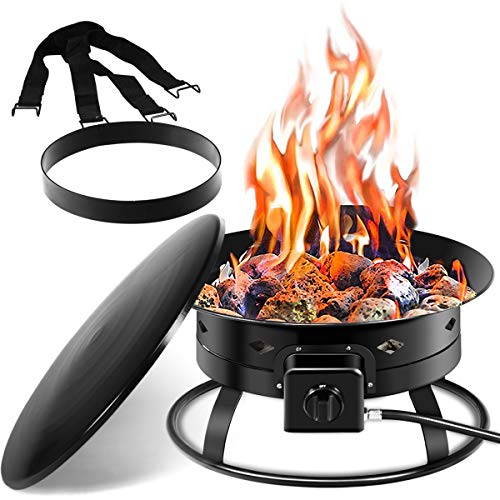
Giantex Portable Fire Pit 19-Inch

Iron Forge Tools 36-Inch Round Fire Pit Ring

Iron Forge Tools 30-Inch Round Fire Pit Ring

Iron Forge Tools 42-Inch Round Fire Pit Ring

Iron Forge Tools 36-Inch Square Fire Pit Ring

Iron Forge Tools 48-Inch Round Fire Pit Ring
Taking A Closer Look At The Options
The Giantex option favors mobility over permanent installation, giving you a 19-inch propane bowl for campgrounds, RV trips, or a backyard gathering. Its open shape adds visible flame without requiring a masonry enclosure, although outdoor placement and local restrictions still matter.
The listed 58,000 BTU output means substantial heat output, so you’ll want clear space around it and a stable, noncombustible surface. Compared with the steel rings that follow, this is a complete fuel-burning setup rather than an insert, which makes it more convenient for changing locations.
Everyday Perks
- Lightweight iron construction supports easier lifting between outings.
- Propane operation avoids carrying a separate wood supply.
- The smooth bowl surface wipes down more easily than a textured steel liner.
- Its compact profile suits RV storage, patios, and temporary setups.
Small Caveats
- Propane equipment adds fuel and connection considerations that a wood ring does not.
- The bowl can retain residue, so ash and debris need regular removal after cooling.
At A Glance
Made For
You’ll appreciate this setup most as a camper, RV traveler, or host who wants a portable fire source.
A Better Fit Elsewhere
Choose the Iron Forge Tools 36-Inch Square Fire Pit Ring instead for a permanent wood-burning installation with a defined footprint.
A 36-inch circle is a practical middle ground for many enclosed pits, giving logs a defined boundary without consuming an entire patio. That makes this Iron Forge Tools ring more useful for a recurring backyard setup than the portable Giantex bowl.
The ring is designed to promote cleaner-looking combustion by supporting airflow within the surrounding fire pit. Smokeless results still depend on fuel moisture, pit depth, air gaps, and how the fire is built, so treat that feature as a design goal rather than an automatic result.
Where It Delivers
- Round geometry fits naturally into circular pit surrounds.
- The 36-inch scale balances usable fire area with manageable dimensions.
- Its raised edge helps keep split wood inside the designated burning zone.
Practical Considerations
- Confirm your pit’s internal measurements before ordering.
- Wood residue and ash can collect along the ring and need periodic attention.
- Smoke control also depends on the surrounding enclosure.
Quick Facts
Who Will Love This
This ring suits homeowners with a medium-sized circular pit and enough clearance around the wood-burning area.
Another Choice May Suit
The Iron Forge Tools 30-Inch Round Fire Pit Ring suits tighter patios where six inches of extra diameter would reduce useful walking room.
The 30-inch round profile makes this a sensible fit for patios where a 36-inch ring would crowd nearby furniture. It retains the core purpose of an insert, providing a defined boundary that helps organize logs and airflow within the surrounding pit.
For most compact installations, the smaller footprint matters more than maximum burning capacity. Those hosting larger groups may find the 36-inch round option more comfortable, but tight outdoor rooms benefit from preserving circulation space.
What Stands Out
- The 30-inch diameter supports a compact backyard layout.
- A circular ring simplifies placement in round enclosures.
- Its smaller boundary helps keep shorter wood loads organized.
Factors To Consider
- The smaller fire area suits modest fuel loads rather than large gatherings.
- Internal pit dimensions and wall clearance need checking before installation.
The Right Fit
You’ll find the dimensions most useful on a compact patio, rental property, or backyard with limited clearance.
Look Elsewhere When
Choose the Iron Forge Tools 42-Inch Round Fire Pit Ring for an open patio built around larger fires and more seating.
Moving up from 36 to 42 inches gives the fire noticeably more room, which matters for family gatherings and a less constrained seating layout. The round shape still works well with circular surrounds, keeping the visual design straightforward.
That extra diameter offers roomier fuel placement, but it isn’t a benefit in a confined courtyard. Measure the complete installation, including clearance around the ring, rather than focusing on the diameter alone.
Standout Benefits
- Extra diameter supports a larger and more visually substantial fire.
- The round profile complements circular stone, gravel, or brick surrounds.
- Broader spacing suits patios with roomier seating arrangements.
- It provides a practical middle ground between 36 and 48 inches.
Things To Weigh
- It requires more patio space than the 30- and 36-inch choices.
- Larger inserts can gather more ash and unburned bark.
Best Suited To
This diameter works well for families with a generous patio and frequent outdoor gatherings.
Reach For A Different Pick When
The Iron Forge Tools 36-Inch Square Fire Pit Ring offers a comparable outer width with a more architectural layout.
The square profile gives this 36-inch ring a stronger geometric presence than the round models. It suits straight-edged patios, modern landscaping, and anyone who wants the fire area to become a visible design feature.
Corten steel is weather-resistant steel designed to develop a stable oxidized surface over time. Here, a high-temperature black coating handles the initial appearance and is intended to resist rust, but surface condition still depends on drainage and exposure.
Reasons It Performs
- Thick-gauge corten steel provides a substantial exterior wall.
- The square shape creates clean lines around a rectangular pit.
- A 36-inch outer diameter contains wood within a 30-inch inner opening.
- Documented air gaps can support secondary combustion, where incoming oxygen helps burn smoke-producing gases.
Possible Compromises
- A square ring requires compatible clearance within the pit walls.
- Improved smoke control still depends on airflow and dry fuel.
- Steel can collect ash along corners where cleaning takes extra attention.
Feature Breakdown
Built With In Mind
Modern patios and homeowners focused on clean geometry will find the square shape especially fitting.
Where A Sibling Pick Shines
The Iron Forge Tools 36-Inch Round Fire Pit Ring is the easier match for a circular enclosure with curved edging.
At 48 inches, this round ring creates a generous central feature for open patios and frequent gatherings. It offers more room for logs than the 42-inch version, making it a natural choice for properties where the surrounding enclosure was planned around a large fire area.
That scale brings trade-offs in clearance, fuel handling, and ash maintenance. For most large installations, the added space outweighs the extra housekeeping, but compact yards gain little from such a broad diameter.
Strong Points
- The 48-inch diameter supports a substantial wood-burning layout.
- Round geometry naturally directs attention toward the center of a patio.
- Ample space makes larger gatherings easier to accommodate.
Where It May Fall Short
- It demands a large enclosure and generous surrounding clearance.
- More fuel can mean more ash, bark, and debris to remove.
Details At A Glance
Whose Yard It Belongs On
Large properties and hosts planning frequent, spacious gatherings get the most benefit from this diameter.
Consider Something Else
The Iron Forge Tools 30-Inch Round Fire Pit Ring fits small patios where clear walking space matters more than fire size.
Choosing a Ring That Fits Your Fire Pit
Measure the internal space
Measure the usable width and depth inside your enclosure, not merely the outer footprint of the surround. A ring that sits too closely against the walls may restrict airflow, while a diameter larger than the pit can interfere with the intended layout.
Match the shape to the enclosure
Round inserts suit circular gravel, stone, or brick surrounds. Square designs create sharper lines and often pair well with rectangular patios. Choose the geometry that naturally fits the space instead of forcing the surrounding materials to accommodate the insert.
Consider the fuel and air gaps
Secondary combustion refers to burning smoke-producing gases after flames begin, typically with more oxygen. A ring may support that process, but results also depend on dry wood, an open bottom, and adequate space between the ring and surrounding walls.
Plan for upkeep
Wood rings collect bark, ash, and residue along their inner edges. Allow access for removal, use a stable noncombustible installation, and follow local fire restrictions. A larger ring adds visible capacity but also creates more material to clean.
Fire Pit Setup Details Worth Checking
Common Shopping Slip Ups
The easiest mistake is selecting by exterior diameter without measuring the pit interior. Also pay attention to wall clearance, nearby surfaces, and available storage space before ordering.
What The Upgrade Payoff Means
A larger ring adds burning capacity rather than better materials by itself. It costs more to purchase and may require more fuel, ash removal, and surrounding space, but that expansion can suit frequent gatherings.
Frequently Asked Questions
Are larger fire pit rings better?
Larger rings provide more room for logs and suit spacious patios, but smaller models conserve floor space. The best diameter matches your enclosure and typical fuel load.
Do fire pit rings reduce smoke?
They can support airflow and more complete burning, but fuel moisture and pit construction also affect smoke. Dry wood and proper air gaps remain important.
Are round or square fire pit rings better?
Round rings pair naturally with circular surrounds, while square rings suit rectangular layouts. Choose the shape that fits the existing patio and placement.
What clearance should a fire pit ring have?
Clearance varies with the pit and local rules. Leave the space specified by the manufacturer, keep combustible materials away, and confirm any outdoor fire restrictions.
Can a fire pit ring move with you?
Only when it is designed for transport and the installation can be dismantled safely. Larger steel inserts may be too heavy for casual moving.
Final Verdict
Your best choice starts with accurate measurements, not flame size. Portable propane setups suit changing locations, while steel rings serve recurring wood fires. Match diameter and shape to the enclosure, plan for airflow, and account for the cleanup each design creates.
