

Family trips get easier when everyone can reach the group without relying on cellular service. Walkie talkies suit campgrounds, theme parks, ski weekends, and neighborhood walks, but the right set depends on range, battery life, size, and how easily children can carry each radio. These options cover everything from lightweight park units to more capable outdoor models.
How The Shortlist Stacks Up

Rocky Talkie Mountain Radio 2 Pack
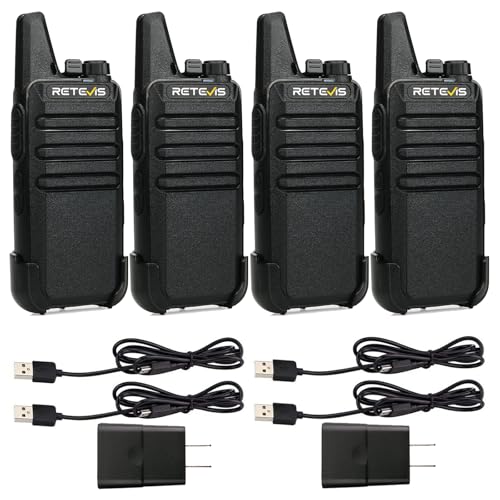
Retevis RT22 Compact FRS Radios 4 Pack

Rocky Talkie Mountain Radio 1 Pack

Rocky Talkie Expedition 5 Watt Radio

Midland GXT1030VP4 GMRS Radios 2 Pack

Motorola T100TP Talkabout Radios 3 Pack
The Picks, Examined More Closely
Built for a weekend where batteries may go unused for hours, the Mountain Radio pair prioritizes endurance over pocketability. Its rechargeable lithium-ion battery is specified to run beyond four days, including in cold conditions, which makes it a solid fit for camping, hiking, and roadside travel where charging access can be unreliable.
The radio transmits at the legal FRS limit of 2 watts. Although the listed maximum reaches beyond 35 miles, that figure represents an open, unobstructed scenario, so terrain commonly produces a more realistic 1-to-5-mile range. Compared with the compact Retevis RT22, this pair takes up more bag space but makes more sense for a group that spends full days outdoors.
Advantages To Know
- The four-day battery target reduces charging interruptions during multi-day camping trips.
- The waterproof hand microphone adds useful reach around campsite vehicles and gear.
- A shatterproof LED offers a durable visual feature for low-light use.
- Two units provide enough hardware for a pair without requiring a larger bundle.
Small Caveats
- Ranges of 1 to 5 miles are more likely than the maximum figure around mountains or dense trees.
- The included support coverage varies by plan, so check the details before relying on repairs or replacement service.
Quick Facts
Built With In Mind
Campers and hikers who value long battery life and rugged handling will appreciate this two-pack.
A Better Fit Elsewhere
Retevis RT22 Compact FRS Radios 4 Pack suit families who prioritize a shorter antenna, USB-C charging, and easier pocket carry.
Short antennas and a separate clip make the RT22 easy to wear during walks, playground visits, and crowded attraction days. The shorter antenna is also less likely to catch on clothing or bump into people than a long protruding design, which is a meaningful benefit for children and active travelers.
Its specified battery life is about 10 hours, so the set works best for day trips rather than a week away from power. You can also recharge through USB-C, reducing the need to organize proprietary cables. The four-radio count gives a family or small group direct access to a dedicated channel, though the Radio Transmission System still separates FRS from GMRS devices.
What Works In Its Favor
- The compact body slides into a pocket or clips securely to a belt.
- USB-C charging adds convenience for trips with a shared power bank.
- Four units support a family, caregiver group, or two pairs traveling together.
- The thumb-length antenna reduces snagging compared with taller designs.
Things To Weigh
- Roughly 10 hours of battery life may require a midday charge on long outings.
- The smaller antenna and lower output category can reduce range through wooded or hilly terrain.
Feature Snapshot
Who It Suits Best
Families visiting parks, playgrounds, and busy family attractions benefit from the compact shape and four-unit bundle.
Another Choice May Suit
Rocky Talkie Mountain Radio 2 Pack better serves campers who need multi-day battery life and stronger transmission power.
A single Mountain Radio can still play a useful role for solo hikers, travelers, or a family split into separate activity groups. Its more-than-four-day battery specification is a clear advantage for cold-weather hiking and multi-day camping, while the 2-watt FRS transmission provides a useful balance of output and license-free operation.
You may reach 1 to 5 miles in typical backcountry conditions, although the stated maximum above 35 miles requires an unusually clear path. That distinction matters when families expect phones to work across steep terrain or wooded valleys. The one-pack format also gives you flexibility to buy a matching unit later, though buying two at the same time helps ensure compatible channels and batteries.
What Pays Off
- Extended battery life supports overnight trips and cold-weather use.
- Two-watt output offers more reach than many compact entry models.
- The single-unit format is convenient for individual travel or staged purchases.
Practical Considerations
- One radio cannot create a complete family communication set by itself.
- Terrestrial range can shrink sharply between mountains, forests, and developed areas.
- You need a second compatible device to benefit from two-way conversation.
Made For
Solo hikers and families already equipped with a second compatible radio will find the single format economical and adaptable.
Look Elsewhere When
Motorola T100TP Talkabout Radios 3 Pack offers a more complete setup for casual neighborhood outings and playground visits.
The Expedition model steps beyond the basic family-radio use case with 5-watt GMRS transmission. GMRS carries more power than the 2-watt FRS models here, and eight repeater channels can extend communication through a relay where terrain blocks a direct signal. That makes it a sensible choice for remote hiking routes, ski areas, and larger outdoor groups.
The waterproof hand microphone, IP67 water-resistance rating, removable antenna, and five-day battery target all add practicality in wet or cold conditions. NOAA weather alerts help you monitor changing conditions, though the radio remains a communications tool rather than a substitute for a dedicated weather receiver. You will need another compatible GMRS unit to establish a useful exchange.
A Strong Showing
- Five-watt power supports demanding outdoor terrain better than the 2-watt Mountain Radio.
- Eight repeater channels offer a route around hills or blocked line-of-sight paths.
- NOAA weather alerts keep official updates close during exposed trips.
- The waterproof hand microphone and IP67 housing suit wet environments.
Details To Watch
- GMRS radios cannot communicate with FRS-only sets, including several picks in this roundup.
- Repeater coverage depends on a compatible relay signal in the area.
- The 2-to-8-mile typical range still varies with elevation and vegetation.
Core Details
Right Fit For
Experienced hikers and family groups traveling through remote, uneven terrain will gain the most from its transmission power.
Where A Sibling Pick Shines
Rocky Talkie Mountain Radio 2 Pack is simpler for families that only need direct FRS communication and fewer advanced radio features.
The bright yellow-and-black housing makes the Midland pair easy to spot on a picnic table, event field, or crowded work area. Its 50 channels and 142 privacy codes provide multiple combinations for separating groups, a useful feature for large family reunions or coordinated activities where several teams may be talking nearby.
Headsets add another layer of hands-free convenience, and the rechargeable batteries support use throughout a work shift. That makes this set less purely travel-focused than the smaller family options, yet it can work well for campground staff, event volunteers, or families managing a busy outdoor gathering. Owners commonly report keeping the radios simple by assigning one channel to everyone.
What Earns Its Place
- High-visibility housing reduces the chance of leaving a radio behind.
- Fifty channels and 142 privacy codes offer broad configuration options.
- Headsets support hands-free communication in noisy or active settings.
Room For Improvement
- Two units are limited for families larger than four people.
- The accessories and full-size design can add bulk to a travel bag.
- Chargers require planning during trips away from an outlet.
Whose Shelf It Belongs On
Event groups, volunteer teams, and families attending large outdoor gatherings will appreciate the visible design and headset support.
Consider Something Else When
Retevis RT22 Compact FRS Radios 4 Pack offer a lighter, four-unit alternative for families walking through parks or attractions.
Playground visits, park walks, and neighborhood outings sit comfortably within the T100TP’s stated 16-mile maximum range. A three-radio set gives two children and one adult a direct channel without the complexity of a larger multi-unit package. Its simple controls also make it easier for younger travelers to learn channel selection and call tones.
The channel scanner identifies active channels, while the keypad lock helps prevent accidental changes to personalized settings. A flashing low-battery indicator provides a useful prompt before a long outing. For open areas this setup is convenient, though wooded trails and long highway stretches can reduce the practical range, so it is best suited to nearby family activities rather than remote expeditions.
Well-Handled Touches
- The three-pack supports a parent-and-children outing without excess radios.
- Call tones provide an audible signal before a message is spoken.
- Channel scanning helps locate activity quickly in busy areas.
- The keypad lock protects settings from accidental changes in a bag.
Minor Gripes
- The stated 16-mile maximum reflects favorable conditions rather than everyday terrain.
- The low-battery warning is helpful, but carrying spare cells avoids interruptions.
Quick Technical Notes
Who Should Grab It
Families visiting playgrounds, parks, and neighborhood recreation areas will appreciate the straightforward three-unit setup.
Swap It Out When
Rocky Talkie Mountain Radio 2 Pack makes more sense for cold-weather camping and trips that need longer battery life.
What Matters Before You Pack
Match The Radio To The Terrain
Advertised maximum ranges assume a clear path with few obstructions. Mountains, buildings, and dense forest can reduce actual coverage substantially, so consider the locations your family will visit rather than relying on the largest stated number. A model specified for 1 to 5 miles may suit a state-park trail better than one promising greater distance but sharing the same real-world limitations.
Keep Radio Standards In Mind
FRS and GMRS belong to different radio systems and cannot communicate across those categories. Several compact family-friendly models use FRS, while the Midland and Rocky Talkie Expedition options use GMRS. Choose the standard first, then buy enough matching radios for everyone who needs one.
Battery Life Depends On The Trip
A specification measured in hours works well for a day at an amusement park or a neighborhood walk. Multi-day hiking and camping trips benefit more from models designed around several days of battery life. Rechargeable batteries, charging cables, and spare cells each affect packing, so match the power setup to the length of your itinerary.
Comfort Matters More Than Specifications
Small children benefit from lightweight bodies, belt clips, and antennas that are less likely to snag. Larger handsets may feel easier to operate but can disappear into backpacks more readily. Color also matters, since a bright housing can help prevent a radio from being left at a campsite or attraction.
Before You Choose Your Set
Mistakes Worth Dodging
The most common mistake is treating maximum range as a guaranteed distance. Walls, hills, water, and crowds all affect signals, so a smaller specification may be more honest for your usual setting. Another mistake is buying a large family bundle without confirming that every unit uses the same radio standard and channel system.
The Case For Spending Up
A higher-tier radio may add transmission power, repeater channels, weather alerts, water resistance, or longer battery life. Those features matter most on remote trips, wet weather, or multi-day outings. For a local park afternoon, a compact set can provide the communication you need without extra equipment or complexity.
Frequently Asked Questions
How far do family walkie talkies actually work?
Range depends on terrain, obstacles, and transmit power. The stated maximum assumes a clear path, while local conditions may produce a much shorter working distance.
Can FRS and GMRS radios communicate?
No. FRS and GMRS are separate radio systems, so every unit in a family group must use the same standard and compatible channels.
Are walkie talkies allowed at theme parks?
Rules vary by location. Check venue policies before arrival, as some parks restrict radios, while others permit them as an alternative to cellular service.
Which radios work best for hiking?
Choose a model with a rechargeable battery, durable housing, and adequate output for the terrain. Wet or remote trips benefit from water resistance and longer battery life.
Do children need long antennas?
No. Shorter antennas can make radios easier to carry and less likely to snag, although range may be lower in heavily obstructed locations.
