

A cellular trail camera lets you check game activity without walking back to a remote property. That convenience matters on long hunting trips, busy family weekends, or wooded acreage where frequent battery changes would be inconvenient. The catch is that cellular service, power demands, and subscription requirements can add cost or complexity, so the right camera depends on where you place it and how closely you need to monitor movement.
The Picks In Brief
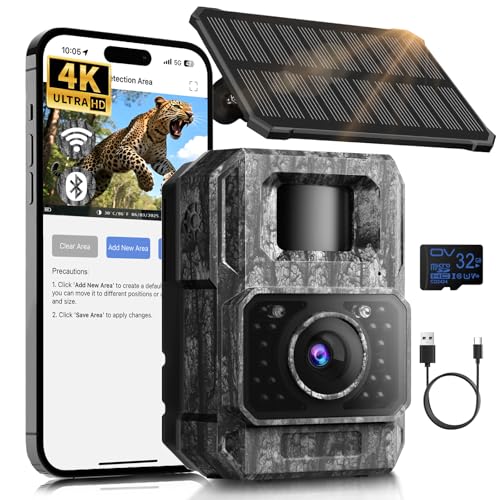
MAXDONE Solar 64MP Camera
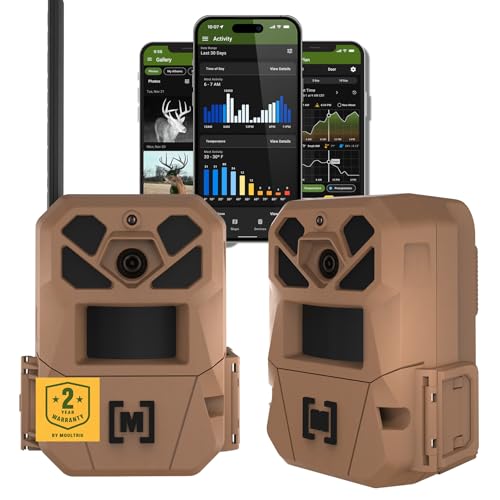
Moultrie Edge 3 Cellular 2-Pack

Moultrie Edge 3 Camera

Moultrie Edge 3 Solar Camera

GardePro X50S Solar Camera

GardePro E5S Trail Camera
The Details Behind The Selections
Remote cabins and thick woods can lack dependable cellular reception, making a locally connected camera more useful than another cellular model. The MAXDONE creates its own short-range Wi-Fi hotspot for setup and file transfers, so you can review captures while standing near the camera.
Its 64MP still images and 4K video make it appealing for documenting trails, feeding areas, or backyard visitors. For most off-grid properties, that flexibility may matter more than remote viewing, though it places the burden of walking to the camera on you.
Key Advantages
- Local Wi-Fi transfers avoid dependence on cellular coverage.
- Solar power suits extended stays away from electrical outlets.
- Bluetooth supports convenient nearby device connections.
- Detailed stills help identify distant animals and landscape features.
Practical Considerations
- This model does not provide cellular transmission or remote push notifications.
- Its stated Wi-Fi reach of roughly 33 to 50 feet suits open areas, but dense foliage can shorten that distance.
Feature Snapshot
Built With In Mind
This camera suits people monitoring off-grid land who can retrieve files while standing near the unit.
Where Another Pick Suits Better
Choose GardePro X50S Solar Camera instead for remote monitoring through a cellular connection and shared data plan.
Two cameras solve a problem one unit cannot: separating coverage across a field entrance, trail, and nearby water source. This Moultrie 2-Pack combines 40MP still images with a 0.5-second trigger, meaning it aims to record movement quickly while sending images through cellular service.
Automatic connection across four major U.S. carrier networks also reduces the need to manage SIM cards manually. You’ll still need suitable cellular reception at both placements, which can be the deciding factor on heavily wooded land.
What Makes Sense
- Two units provide broader coverage without separate model choices.
- The quick trigger suits animals crossing a trail at speed.
- Four-network selection eases carrier coverage across many locations.
- Remote cellular viewing reduces unnecessary property walks.
Worth Bearing In Mind
- Signal strength and tree cover can affect image delivery.
- Two locations mean two mounts, batteries, and cellular connections to maintain.
Quick Facts
Who It Suits Best
This pack fits hunters and wildlife watchers who need coverage at two spots with dependable cellular reception.
Another Choice May Suit
Moultrie Edge 3 Camera is the simpler choice for one carefully selected location without solar hardware.
Where deer cross a driveway or smaller animals dart through a backyard, trigger delay becomes more noticeable than it does on broad woodland trails. Moultrie’s 0.5-second trigger is designed for that fast movement, while 40MP images provide enough detail for careful review.
Compared with the Edge 3 2-Pack, this single camera is easier to deploy and maintain. Its automatic connection across four carrier networks can improve convenience, though cellular reception remains an installation concern.
What Stands Out
- Rapid triggering benefits short, unpredictable animal movements.
- Automatic network selection simplifies cellular setup.
- One-camera placement keeps mounting and maintenance focused.
- Remote transfer makes frequent property checks easier.
Small Caveats
- Cellular reception becomes less reliable behind dense trees or terrain obstructions.
- Regular battery changes may be necessary without a solar panel.
Made For
This model fits people monitoring active backyard crossings or one high-traffic section of a hunting property.
Consider Something Else When
Moultrie Edge 3 Solar Camera better suits remote placements where routine battery maintenance would be inconvenient.
Solar power changes the practical side of remote camera ownership, especially on land that is difficult to reach. The 3.4W panel reduces how often you handle the batteries, while the Edge 3 keeps 40MP stills and a responsive 0.5-second trigger.
The honest trade-off is placement. A shaded tree or a north-facing position may produce less useful charging, so this setup works best with clear exposure. Its cellular connection also allows you to monitor activity without collecting the camera each time.
Bright Spots
- Solar charging supports long deployments away from power.
- Fast capture suits animals moving through open crossings.
- Cellular transfer reduces physical visits to the camera.
- Four-network selection simplifies coverage across many U.S. locations.
Details To Watch
- Panel orientation and surrounding foliage affect solar charging.
- Initial placement still needs enough cellular signal for remote access.
Technical Highlights
Right Fit For
This camera fits hunters who place equipment in open, sunny locations and want cellular access with less battery maintenance.
A Better Fit Elsewhere
Moultrie Edge 3 Cellular 2-Pack better serves people who prioritize two monitoring locations over solar charging.
Families watching more than one property may prefer a shared data arrangement to separate cellular allowances. The GardePro X50S includes a 5,200mAh rechargeable battery and solar panel, creating a package designed for remote monitoring with fewer battery changes.
That makes it useful at a family cabin, leased land, or several feeding areas under one plan. In wooded locations, the cellular component still needs usable reception, and panel placement should receive direct sun.
Useful Strengths
- A shared plan can simplify monitoring several cameras.
- The solar panel reduces routine battery replacement work.
- Remote image access supports frequent property checks.
- The rechargeable battery provides a reusable power source.
Factors To Consider
- Plan rules and cellular requirements can affect ongoing ownership costs.
- Solar performance depends on weather, panel angle, and shade.
- Tall grass around the mount can trigger unnecessary recordings.
Who Will Love This
This model suits households coordinating cameras across several sunny outdoor locations under a shared cellular plan.
Look Elsewhere When
GardePro E5S Trail Camera is a cleaner fit for local recording without a cellular plan or remote transmission.
Local trail monitoring doesn’t always require cellular transmission. You can mount the GardePro E5S near a garden path, cabin, or backyard feeding area, then retrieve its memory card during your next visit. That keeps ownership focused on camera placement and battery care.
Its 64MP photos and 1296P HD video can document small details in daylight, while the optical lens provides a sensible alternative to cameras offering only basic resolution. You won’t receive live images, though, which separates it from the cellular options above.
Everyday Perks
- Memory-card retrieval keeps the system free from cellular plans.
- High-resolution stills aid close visual inspection.
- The 1296P video setting captures moving backyard subjects.
- Simple local operation suits fixed observation points.
Where It May Fall Short
- You must physically retrieve the card for recorded files.
- Regular card removal can increase wear on the compartment seal.
Core Details
The Right Fit
This camera fits people who want detailed local recordings and can visit the camera when it’s time to review the card.
Reach For A Different Pick When
Moultrie Edge 3 Solar Camera better suits remote users who need cellular images and solar charging from a single unit.
What Matters Before You Choose
Coverage and Connectivity
A trigger speed, the delay between detecting movement and taking a picture, matters most around crossings where animals rarely pause. The Moultrie Edge 3 models list a 0.5-second trigger, while cellular reception remains a separate concern. Check coverage at the exact mount location, especially between thick trees, hills, or low-lying ground.
Power and Placement
Solar panels can reduce battery maintenance, although shade can make the real benefit much smaller than the specification suggests. Open panels receive stronger charging, and tree growth can gradually block them. Consider the mount height, nearby grass, and how often you can inspect the unit.
Plans and Local Storage
A cellular camera offers convenient remote viewing but brings service requirements and possible plan costs. Local card-based models keep operation simple and place file retrieval on your schedule. The GardePro E5S fits that latter approach well for a nearby backyard or cabin.
Practical Decisions That Matter
Common Shopping Slip Ups
Don’t assume a cellular camera will transmit from every wooded location. Confirm service coverage and compare it with the camera’s network behavior before mounting. Also avoid placing the lens over tall grass, which can create constant motion recordings and unnecessary power use.
What The Higher Tier Buys
Higher-cost setups often add solar power, faster triggers, higher-resolution sensors, or multiple-camera flexibility. Those additions help in remote placement, quick animal movement, or broad property coverage. A simple local camera remains more practical for a fixed backyard where you can retrieve files regularly.
Frequently Asked Questions
Are Cellular Trail Cameras Suitable For Remote Land?
They work well where cellular coverage is dependable and regular visits are difficult. Local Wi-Fi or card-based models suit remote areas without usable service.
Do Solar Trail Cameras Need Direct Sunlight?
Direct sunlight improves panel charging, while heavy shade can reduce its usefulness. Keep the panel clear of foliage and orient it toward the available light.
Is A Two-Pack More Economical?
It can be for two active monitoring locations, but a single camera is simpler to mount and maintain. Choose the pack only when both sites have suitable cellular reception.
Do You Need Cellular Alerts?
You need cellular transmission for remote viewing and motion notifications. You don’t need it for local recording from a memory card.
What Resolution Matters Most For Wildlife?
Still-image resolution supports close identification, while video resolution determines motion footage detail. Placement, lighting, and a clean lens can influence results as much as the stated resolution.
Final Verdict
The Moultrie Edge 3 Solar Camera offers the most balanced cellular setup for remote placement, while the two-pack suits properties with two strong monitoring zones. For off-grid land without cellular service, the MAXDONE provides a more practical local connection, and the GardePro E5S keeps things simple for nearby observation. Match the camera to your coverage, power, and viewing habits before making the final call.
