

A 75-quart cooler sits in the practical middle ground for camping, boating, tailgates, and weekend gatherings. I focus on usable capacity, ice retention, portability, drainage, and cleaning rather than treating every large cooler as interchangeable. The right choice depends on how the cooler will move, who needs access to food, and whether a rigid or soft-sided design better fits the trip.
The Shortlist At A Glance
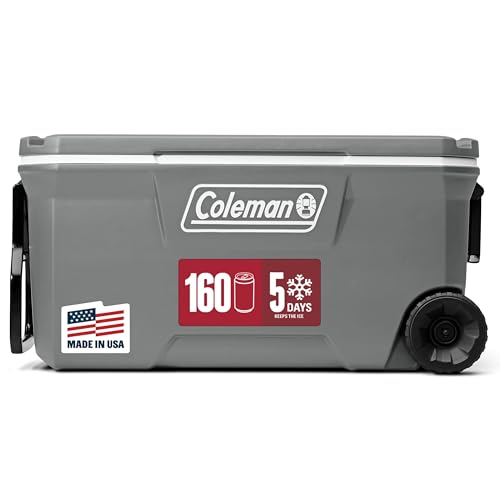
Coleman Classic Series Insulated Rolling Cooler with Wheels

Coleman Marine Cooler with UV Guard and Wheels
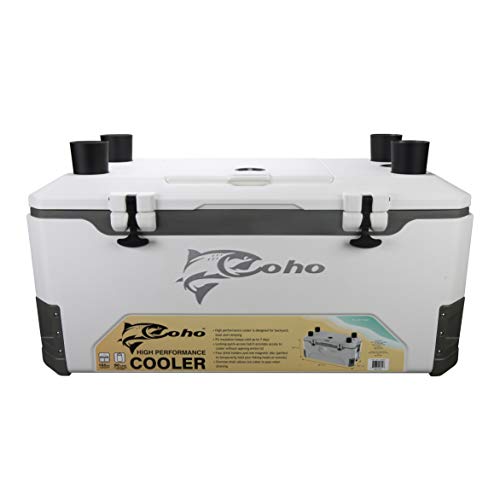
COHO 165QT Insulated Hard Cooler with Tie-Down Loops

Igloo Maxcold Commercial Insulated Cooler

Coleman Classic Series Portable Hard Cooler

Blue Coolers Ark Series 110-Quart Roto-Molded Cooler

KEDSUM 84-Can Rolling Cooler with 7-Inch Wheels
More Details On Our Top Picks
The rolling format makes this Coleman more practical than a basic hard cooler for campsites reached by uneven ground. Its 6-inch all-terrain wheels and dual tow handles help move a heavily loaded cooler across grass, gravel, or pavement, while the insulated body and lid target ice retention of up to five days in hot conditions.
Capacity favors group outings: the stated loading figures reach 167 cans without ice or 80 cans with 50 pounds of ice. That makes it useful for tailgates and multi-family camp meals, though the 75-quart positioning still depends on the capacity variant selected from the listing.
What Stands Out
- Six-inch wheels reduce the need to lift a fully loaded cooler.
- Insulated lid and body support multi-day cold storage.
- Large interior capacity suits group provisions and drinks.
- Dual handles offer different towing and steering positions.
Things To Consider
- Large capacity becomes a storage concern after the trip.
- Wheels add weight and bulk compared with a carry-only model.
Quick Facts
Made For Large Camp Groups
This cooler fits campers, tailgate hosts, and family gatherings that need meaningful capacity without manually carrying every drink.
A Better Fit Elsewhere
The KEDSUM 84-Can Rolling Cooler offers a softer, compartmented alternative for events where flexible packing matters more than a rigid body.
Marine use gives this Coleman a more specific identity than the general-purpose rolling model. A UV-resistant exterior coating helps limit sun damage, while rust-resistant stainless-steel hardware addresses the damp, salty environments encountered on the water.
Unlike the first pick, which emphasizes sheer loading volume, this model focuses on durability around a boat, dock, or fishing site. Fully insulated construction is stated to preserve ice for as long as five days near 90°F, although direct sun and frequent lid access will affect actual performance.
Useful Strengths
- UV coating provides sensible protection for exposed use.
- Stainless hardware resists corrosion-prone marine conditions.
- Six-inch wheels support movement over rough access routes.
- Tow and swing-up handles provide flexible handling.
- A lid designed for seating adds a practical campsite surface.
Worth Noting
- Multiple capacity options require careful selection from the listing.
- Hardware needs drying after salt spray to reduce surface residue.
Feature Snapshot
Who Will Love This
Boaters, anglers, and waterfront campers gain a cooler whose exterior and hardware are designed for sun and moisture exposure.
Consider Something Else
The Blue Coolers Ark Series fits longer remote trips better through its stated 110-quart capacity and longer ice-retention target.
This is the expedition-scale option, not a normal trunk cooler. Its exterior measures 43.40 by 20.28 by 20.15 inches, so transportation becomes a major ownership consideration even before the cooler is filled.
Capacity is the attraction: up to 90 cans fit alongside a recommended two-to-one ice-to-contents ratio. For large camping groups, that volume reduces resupply runs, while tie-down loops, removable cup holders, and the magnetic disc add useful control around a busy camp.
Good Reasons To Consider
- Large storage volume consolidates provisions for a big group.
- A small access hatch limits repeated full-lid opening.
- Threaded drain holes support controlled water release.
- Fish ruler markings help organize a successful catch.
- Tie-down loops support vehicle or campsite transport.
Practical Considerations
- The 165-quart body needs substantial vehicle space.
- Removing the interior partition makes cleanup more involved.
- Owners commonly dry threaded drains after draining to prevent residue.
Core Details
The Right Fit
Large families, fishing groups, and expedition-style campers benefit most from consolidating supplies into one high-capacity cooler.
Swap It Out When
The Coleman Classic Series Insulated Rolling Cooler is easier for groups needing moderate capacity and frequent movement between vehicles or sites.
The Igloo Maxcold line brings a commercial-influence design to outings that repeatedly depend on cold storage. Roller-based transport and elevated cooler-body positioning help manage the two common problems with large coolers: moving a loaded unit and losing cooling efficiency from contact with a hot surface.
That makes it a natural fit for sports sidelines, volunteer events, and work crews. Compared with the COHO 165QT, the available listing offers less clearly documented volume, so I would verify the selected capacity before committing an entire vehicle to it.
Notable Gains
- Rollers support repeated transport between storage and events.
- Elevated body placement can reduce heat transfer from hot ground.
- Commercial-style insulation suits high-use outdoor schedules.
Details To Watch
- The listing spans several capacities, so dimensions require confirmation.
- Commercial-style parts may cost more to replace after heavy wear.
Built With In Mind
Organizers and active outdoor groups gain useful mobility and insulation in a cooler designed to move between events repeatedly.
Reach For A Different Pick
The Coleman Marine Cooler offers clearer marine-specific hardware and sun protection for anglers working around docks and open water.
The traditional Coleman formula works because it concentrates on insulation, handling, and straightforward cleanup. Fully insulated construction targets up to five days of ice retention near 90°F, while swing-up handles make the selected capacity easier to lift from a vehicle or picnic area.
Several lid details add more value than a plain box would. The closed lid supports up to 250 pounds, molded recesses accommodate tumblers up to 30 ounces, and the recessed rim eases opening, though the cup holders remain exposed whenever the lid is shut.
What Makes Sense
- The lid becomes a stable surface for camp tasks or tailgate organization.
- A stain-resistant liner simplifies wiping away food and condensation.
- Swing-up handles support carrying without a long tow handle.
- Several capacities let shoppers match storage to the trip.
Small Limitations
- Molded cup holders occupy lid space continuously.
- Absent wheels, long moves across rough ground become tiring.
- The liner still needs drying before storage to discourage mildew and odors.
Right Fit For
Campers and backyard hosts who value lid utility, simple cleaning, and flexible capacity choices benefit most from this design.
A Better Fit Elsewhere
The Coleman Classic Series Insulated Rolling Cooler better serves gatherings where moving a heavily loaded cooler is a regular task.
Roto-molding forms a thick, continuous insulated shell, giving the Ark Series a durable profile suited to hunting trips, remote camps, and long weekends away. The stated ice-retention figure reaches 10 days, which is compelling for places where resupply opportunities are limited.
Its 110-quart capacity is smaller than the COHO 165QT, but that difference can make storage and daily handling more manageable. Wheels add mobility, while a rigid body generally presents fewer fabric seams and fewer places for moisture to collect than a soft-sided cooler.
Practical Pluses
- Long retention reduces dependence on nearby stores.
- Roto-molded construction avoids a loose outer shell seam.
- Wheels help with packed ground and uneven campsites.
- The 110-quart format balances capacity and storage burden.
- A hard body protects food from punctures during transport.
Possible Compromises
- Full days in hot weather still depend on opening frequency and shade.
- Hard shells take more room when empty.
Technical Highlights
Made For Remote Weekends
Hunters, remote campers, and families traveling beyond frequent supply stops gain strong cold retention in a rigid wheeled format.
Another Choice May Suit
The COHO 165QT Insulated Hard Cooler better fits exceptionally large groups that value capacity and organized drainage above compact storage.
The KEDSUM takes a different route from every rigid model here. Its soft-sided body includes two main insulated compartments, a front insulated pocket, and two side mesh pockets, making it easier to divide drinks, snacks, utensils, and small supplies before an event.
Seven-inch rubber wheels help manage uneven pavement and grass, and the stated load limit reaches 250 pounds. For sports sidelines, large picnics, and tailgates, that flexibility can be more useful than a rigid tub, assuming the fabric remains dry and organized.
Practical Advantages
- Separate compartments reduce crushed cans and loose-item clutter.
- Seven-inch wheels ease movement over mixed outdoor surfaces.
- The stated 250-pound capacity supports heavily provisioned events.
- Side mesh pockets keep frequently used supplies accessible.
Trade-Offs To Consider
- Mesh openings can admit dust, insects, and spilled crumbs.
- Soft insulation may compress under tightly packed loads.
- Fabric liners need thorough drying after rain or melting ice.
Quick Technical Notes
Whose Shelf It Belongs On
Event hosts, sports families, and casual tailgaters gain flexible packing and large wheels in a cooler built for frequent access.
Look Elsewhere When
The Blue Coolers Ark Series fits remote trips where puncture resistance and long rigid-body insulation matter more than flexible compartments.
What Matters Before Bringing Home a Large Cooler
Capacity should reflect the trip, not merely the largest option. A 75-quart cooler suits substantial groceries, drinks, and camp meals, but frequent lid access and heavy ice loads reduce the space available for contents.
Ice Retention and Insulation
Insulation in the body and lid slows heat transfer, keeping food colder for longer. For hot-weather outings, shade, prechilled contents, and limited opening matter nearly as much as the stated retention period.
Wheels and Handling
Large wheels make uneven paths easier to cross, while a rigid shell protects contents from punctures. Soft-sided designs fold more readily for storage but require careful drying before being packed away.
Organization and Drainage
Cup holders, divided compartments, and small access hatches keep a busy group from repeatedly opening the main lid. Threaded drain holes simplify emptying melted ice, especially after a warm day outdoors.
Practical Lessons Before the Lid Opens
Mistakes Worth Dodging
Ignoring loaded dimensions can make a capable cooler impossible to carry or store. I also avoid judging capacity by drink count alone, since food, ice, dividers, and required headspace quickly consume the available volume.
The Upgrade Payoff
Higher-tier models often add thicker insulation, reinforced hardware, better wheels, or more organized storage. Those upgrades matter most for frequent trips, remote outings, and long days where a basic cooler would require extra ice or repeated handling.
Frequently Asked Questions
Is a 75-quart cooler large enough for a family camping trip?
For many families, 75 quarts provides useful room for drinks, meals, and snacks over several days. Larger parties may need more capacity, especially after allowing for ice.
How much ice should a large cooler contain?
The useful amount depends on weather, trip length, and access frequency. A commonly recommended starting point uses more ice than packed contents, particularly in hot conditions.
Are wheeled coolers easier to move over grass?
Wheeled models reduce strain across dirt, grass, and gravel. Larger wheels usually handle uneven ground better than smaller casters.
Are soft-sided coolers as durable as hard models?
Hard shells generally resist punctures and compression better. Soft-sided models offer flexible packing and lighter storage, provided they are kept reasonably dry.
Does opening the lid affect ice retention?
Yes. Warm-air exposure raises the internal temperature each time the lid remains open. A small access hatch can reduce the need to open the main compartment.
Final Verdict
The Coleman Classic Series Insulated Rolling Cooler with Wheels serves as the most balanced general choice here, balancing capacity, insulation, and mobility. Marine days favor the Coleman UV Guard model, while remote trips call for the Blue Coolers Ark Series and very large groups may need the COHO 165QT. Match the cooler to the trip rather than simply choosing the biggest one.
