

Like choosing the right compass for a long voyage, picking a 100W panel sets the course for your off-grid plans. You’ll want a balance of efficiency, durability, and portability that fits how you actually use power. This list zeroes in on panels that mix modern cell tech, robust warranties, and mobile-friendly features-so you can compare real-world tradeoffs and find the model that won’t slow you down.
| HQST 100W 12V Monocrystalline Solar Panel | Reliable Workhorse | Power Rating: 100 W | Voltage / System Compatibility: 12 V system | Cell Type / Technology: Monocrystalline (9-busbar) | VIEW LATEST PRICE | Read Our Analysis | |
| JJN 100W N-Type High-Efficiency 12V Solar Panel | 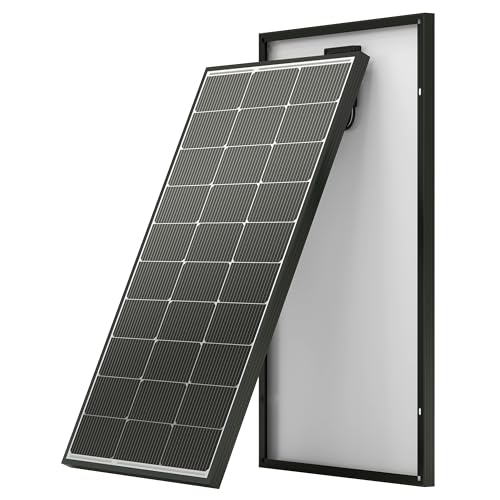 | High-Efficiency Pick | Power Rating: 100 W | Voltage / System Compatibility: 12 V system | Cell Type / Technology: N‑type (16BB, half-cut) | VIEW LATEST PRICE | Read Our Analysis |
| 100W Monocrystalline All-Black Solar Panel with Connectors | 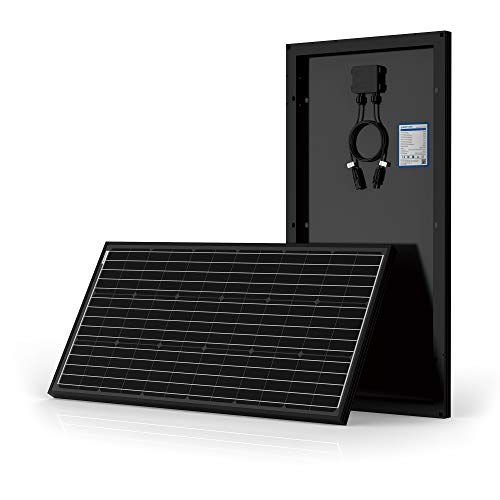 | Sleek & Premium | Power Rating: 100 W | Voltage / System Compatibility: 12 V (can be wired for 24/36/48 V) | Cell Type / Technology: N‑type monocrystalline | VIEW LATEST PRICE | Read Our Analysis |
| Renogy 100W 12V Monocrystalline Solar Starter Kit |  | Best Starter Kit | Power Rating: 100 W | Voltage / System Compatibility: 12 V system | Cell Type / Technology: Monocrystalline | VIEW LATEST PRICE | Read Our Analysis |
| GRECELL 100W Foldable Portable Solar Panel Charger | 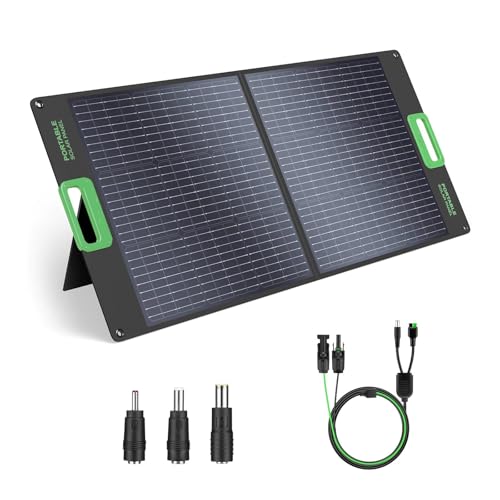 | Best for Portability | Power Rating: Up to 100 W | Voltage / System Compatibility: 20 V output (for portable power stations; compatible with common systems) | Cell Type / Technology: Monocrystalline cells | VIEW LATEST PRICE | Read Our Analysis |
| 12V 100W High-Efficiency Monocrystalline Solar Panel |  | Best Value Performance | Power Rating: 100 W | Voltage / System Compatibility: 12 V system | Cell Type / Technology: Monocrystalline (A+ cells) | VIEW LATEST PRICE | Read Our Analysis |
More Details on Our Top Picks
HQST 100W 12V Monocrystalline Solar Panel
If you need a compact, reliable panel for charging batteries on boats, RVs, or small off-grid systems, the HQST 100W 12V Monocrystalline is a solid choice - it uses high-efficiency A+ monocrystalline cells and 9-busbar technology to deliver up to about 500 Wh/day from five hours of sun while resisting shading losses and weather exposure. You’ll get 25% conversion efficiency, reduced module temperature (~2°C lower than 5-busbar designs), and bypass diodes that cut shading losses and prevent hot spots. IP65 junction box, corrosion-resistant frame, strong snow/wind tolerance, pre-drilled holes, and bracket compatibility simplify durable, secure installations.
- Power Rating:100 W
- Voltage / System Compatibility:12 V system
- Cell Type / Technology:Monocrystalline (9-busbar)
- Efficiency (approximate):~25% (grade A+)
- Weather / Mechanical Ratings:Wind 2400 Pa, Snow 5400 Pa; IP65 junction box
- Mounting / Connectors:Pre-drilled holes; compatible with Z/tilt brackets; MC4-style connectors (IP65)
- Additional Feature:9-busbar design
- Additional Feature:Generates ~500 Wh/day
- Additional Feature:Corrosion-resistant frame
JJN 100W N-Type High-Efficiency 12V Solar Panel
For anyone needing a compact, high-performance panel for mobile or small off-grid systems, the JJN 100W N-Type is a top pick thanks to its N-type cells and 16-busbar, half-cut design that boosts efficiency up to 25%. You’ll get 100 watts at 12 volts, lower operating temps, reduced power loss, and better shade tolerance. A 25-year transferable output warranty protects production over time. The corrosion-resistant frame endures 2400 Pa wind and 5400 Pa snow; IP65 junction box and IP67 MC4 connectors resist weather. Pre-drilled holes and common mount compatibility make rooftop, caravan, boat, and off-grid installation straightforward.
- Power Rating:100 W
- Voltage / System Compatibility:12 V system
- Cell Type / Technology:N‑type (16BB, half-cut)
- Efficiency (approximate):Up to 25%
- Weather / Mechanical Ratings:Wind 2400 Pa, Snow 5400 Pa; IP65 junction box, IP67 MC4
- Mounting / Connectors:Pre-drilled holes; compatible with ABS corner, Z, tilt mounts; IP67 MC4 connectors
- Additional Feature:16 busbar (16BB)
- Additional Feature:Transferable 25-year warranty
- Additional Feature:IP67 MC4 connectors
100W Monocrystalline All-Black Solar Panel with Connectors
Choose this 100W N-type monocrystalline all-black panel when you need a compact, high-efficiency charger that fits lightweight mobile systems like RVs, boats, trailers, or small off-grid cabins. You’ll get 100W peak, 24V max, 5.72A, and roughly 500Wh daily under good sun. At about 40.2″ x 26.4″ and 16.5 lb, the lightweight anodized frame and 3.2mm anti-reflective glass balance durability and portability. It tolerates 2400 Pa wind and 5400 Pa snow. The IP65 junction box, pre-drilled holes, and 90cm 12AWG cable with MC4 connectors simplify installation. PowerECO backs it with 25-year output and 5-year workmanship warranties.
- Power Rating:100 W
- Voltage / System Compatibility:12 V (can be wired for 24/36/48 V)
- Cell Type / Technology:N‑type monocrystalline
- Efficiency (approximate):~25%
- Weather / Mechanical Ratings:Wind 2400 Pa, Snow 5400 Pa; IP65 junction box
- Mounting / Connectors:Pre-drilled mounting holes; includes 90 cm 12 AWG cable with MC4 connectors
- Additional Feature:All-black aesthetic
- Additional Feature:Includes 90 cm MC4 cable
- Additional Feature:Lightweight 16.5 lb
Renogy 100W 12V Monocrystalline Solar Starter Kit
The Renogy 100W 12V Monocrystalline Solar Starter Kit is ideal for vanlifers and weekend RVers who need a compact, reliable power source that’s easy to expand. You’ll get about 500 Wh/day on average, thanks to 22.5% cell efficiency and EL-tested panels that avoid hidden cracks. The kit includes a Wanderer 30A PWM controller with RS232 Bluetooth support; add the BT-1 module and Renogy DC Home app to monitor voltage, current, and protective warnings. It’s UL/IEC/CSA certified, built for 2400 Pa wind and 5400 Pa snow, uses IP65/IP67 connections, supports multiple battery types, and expands to 400W.
- Power Rating:100 W
- Voltage / System Compatibility:12 V system
- Cell Type / Technology:Monocrystalline
- Efficiency (approximate):22.5%
- Weather / Mechanical Ratings:Wind 2400 Pa, Snow 5400 Pa; IP65 junction box, IP67 connectors; UL/IEC certified
- Mounting / Connectors:Pre-drilled holes; kit includes charge controller; IP67 connectors
- Additional Feature:Includes 30A PWM controller
- Additional Feature:Bluetooth monitoring module
- Additional Feature:Expandable to 400W
GRECELL 100W Foldable Portable Solar Panel Charger
If you need a portable, high-output charger for weekend trips or emergency backup, GRECELL’s 100W foldable panel delivers up to 100 W at 20 V with a smart chip that maximizes charging and protects your gear. You’ll connect it to most portable power stations using included adapters (8mm, 5.5×2.5mm, 3.5×1.35mm, 5.5×2.1mm) or an Anderson cable, and the 25 A-capable connector handles high current. Monocrystalline cells reach 23.5% conversion, ETFE lamination extends lifespan, and waterproof Oxford cloth boosts durability. The bifold briefcase design, kickstands, grommets, and series/parallel pairing make it ideal for camping, RVing, boating, and outages.
- Power Rating:Up to 100 W
- Voltage / System Compatibility:20 V output (for portable power stations; compatible with common systems)
- Cell Type / Technology:Monocrystalline cells
- Efficiency (approximate):Up to 23.5%
- Weather / Mechanical Ratings:Weather-resistant exterior (Oxford cloth), ETFE lamination; designed for outdoor use
- Mounting / Connectors:Foldable with grommets, kickstands; includes multiple DC adapters and Anderson cable
- Additional Feature:Foldable briefcase design
- Additional Feature:Multiple DC adapter set
- Additional Feature:Built-in kickstands
12V 100W High-Efficiency Monocrystalline Solar Panel
Ideal for off-grid RVs, vans, and small cabins, the Callsun 12V 100W monocrystalline panel delivers true 100W output and high efficiency so you’ll get more usable power from a compact, lightweight module. You’ll appreciate A+ monocrystalline cells, tempered low-iron glass, and an anodized aluminum frame that keep weight to 10.58 pounds and dimensions to 42.13 x 22.68 x 1.18 inches. Rated at 5.41A, it claims up to 25% more power than typical panels, is IP67 waterproof, and resists snow, rain, and heat. Mounting’s quick with four pre-drilled holes; warranties cover 10 years support and 30-year output.
- Power Rating:100 W
- Voltage / System Compatibility:12 V system
- Cell Type / Technology:Monocrystalline (A+ cells)
- Efficiency (approximate):Claimed ~25% (or “up to 25% more” vs typical)
- Weather / Mechanical Ratings:IP67 waterproof; corrosion-resistant frame; designed for weather resistance
- Mounting / Connectors:Four pre-drilled mounting holes; compatible with series/parallel wiring; standard connectors
- Additional Feature:IP67 waterproof rating
- Additional Feature:~10.58 lb lightweight
- Additional Feature:30-year linear output guarantee
Factors to Consider When Choosing a 100 Watt Solar Panel
When choosing a 100 watt panel, you’ll want to check the efficiency rating and the cell technology to make sure you’re getting the best output for the space. Also compare weather durability specs and mounting/size constraints so the panel fits and lasts where you’ll install it. Don’t forget to inspect connector types and wiring compatibility with your system before buying.
Panel Efficiency Rating
Efficiency matters: it tells you how much of the sun’s energy a 100 W panel actually turns into electricity, so a 25% panel will produce noticeably more power in the same footprint than an 18% panel. You’ll want higher-efficiency panels when roof or mounting space is limited because they deliver greater wattage per square foot. In real-world conditions, a ~25% panel typically yields more daily Wh than a ~20% panel under identical sunlight. Remember efficiency isn’t the whole story: temperature-related performance (temperature coefficient) changes effective output as panels heat up, so compare both metrics. Also note that efficiency results from cell design improvements that reduce resistive losses and heat, boosting practical output for the same rating.
Cell Technology Type
Beyond efficiency numbers, the type of solar cell inside a 100 W panel shapes real-world performance, durability, and footprint. You’ll usually choose monocrystalline for the best space-to-power ratio-typical efficiencies sit around 20–25% or higher-while polycrystalline gives a lower-cost, lower-efficiency alternative (about 15–18%) that needs more area for the same output. Consider N-type cells if you want reduced light-induced degradation and stronger long-term performance versus conventional P-type. Look for half-cut and multi-busbar layouts (9–16 busbars) to improve shading tolerance, cut resistive losses, reduce hotspot risk, and boost low-light output. If budget and availability allow, tandem or heterojunction designs can push efficiency beyond single-junction silicon, though they’re rarer and pricier in 100 W consumer panels.
Weather Durability Specs
Because your panel will face wind, snow, rain, and heat year-round, you should prioritize specific durability specs rather than assume any 100 W module will hold up. Check wind load ratings (commonly around 2400 Pa) to make certain panels resist gusts at your site and verify snow load capacity (often ~5400 Pa) so accumulation won’t cause structural failure. Look for IP ratings for the junction box and connectors (IP65–IP67) to confirm resistance to spray, splashes, and brief immersion. Confirm tempered, low-iron or anti-reflective glass plus a corrosion-resistant aluminum frame for long-term protection. Finally, consider operating temperature and heat-management features-busbar or half-cell designs and reduced hotspot risk keep cell temps lower, preserving performance and longevity in hot climates.
Mounting And Size
Weather and structural ratings only matter if the panel fits where you want to mount it, so next check size, weight, and attachment points before buying. Measure available roof, rack, or vehicle surface against typical 100 W panel dimensions (~40–42″ x 22–26″) and weights (≈10–17 lb). Verify pre-drilled hole locations and frame design to confirm compatibility with Z-brackets, tilt mounts, corner mounts, or foldable stands. Make sure your chosen mounting system meets local wind and snow load requirements (common ratings: wind ~2400 Pa, snow ~5400 Pa) and can be securely fastened. Allow clearance for airflow behind the panel and enough tilt for seasonal optimization-use adjustable mounts if your roof slope’s fixed. For mobile setups, favor low-profile or foldable panels with vibration-resistant attachments.
Connector And Wiring
When choosing a 100 W panel, pay close attention to its connectors, cable quality, and wiring since mismatches or undersized wire cause frustration and power loss. Make sure the panel’s output leads match your charge controller or power station input - MC4, Anderson, or specific DC barrels - to avoid adapters. Check cable gauge and current rating: a 100 W panel at ~12–20 V produces about 5–6 A, so use at least 14–12 AWG for runs over a few meters to limit voltage drop. Verify connector waterproofing and IP65–IP67 ratings for outdoor use. Confirm whether pre-attached leads or MC4s come with adequate length and UV-resistant insulation. Use blocking diodes or a proper controller and secure/crimp connections with heat-shrink or weatherproofing.
Warranty And Support
Although the panel’s wattage and build matter, warranty and support often determine your long‑term satisfaction, so you should check both carefully. Look for at least a 10‑year materials/workmanship warranty plus a 20–25‑year transferable power‑output warranty guaranteeing a specific percentage (commonly ~80–90%) at term end. Confirm whether output protection is linear-with an annual degradation rate (e.g., 0.7–1%/year)-and note the exact end‑of‑term percentage. Verify separate coverage for electrical parts (junction box, connectors) and any included electronics like charge controllers or inverters, with clear periods. Read exclusions closely: installation errors, physical impact, extreme weather, microcracks, shipping/return costs, and labor may be omitted. Finally, make certain responsive manufacturer support with documented claim steps, required proof, and stated repair/replacement turnaround times.
System Compatibility
Since your 100 W panel has to talk to the rest of your system, start by matching its electrical specs-nominal voltage, Vmp, Imp and Isc-to your battery bank, charge controller and inverter so you don’t under‑ or overcharge components. Then verify Imp and Isc fall within your controller’s and wiring’s ampacity to prevent overheating or nuisance trips. Confirm connector types (MC4 or otherwise) and that cable lengths and gauges minimize voltage drop; use adapters only when necessary. Make sure the panel can be wired in series or parallel to reach 24V/48V or higher currents without exceeding device ratings. Finally, match environmental ratings-IP, frame strength and wind/snow specs-to your mount and enclosure so the panel endures local conditions.
