

A saltwater pool still needs active sanitation, especially during warm weekends, heavy use, rain, and rapid algae growth. The confusion starts because “stabilizer” can describe chlorine tablets, supplemental shock, or an automatic chlorinator system that produces chlorine from salt. This guide sorts out those roles for in-ground pool owners who want dependable water care without turning every maintenance check into guesswork.
Salt chlorine generators handle routine sanitation, trichlor tablets provide stabilized dissolving chlorine, and dichlor shock offers a fast response for short-term correction. Their roles overlap, but they aren’t identical, so choose the type that complements your existing system and your weekly maintenance routine.
The Essentials At A Glance

EverCrystal Salt Water Pool Chlorinator System 25,000 Gallon
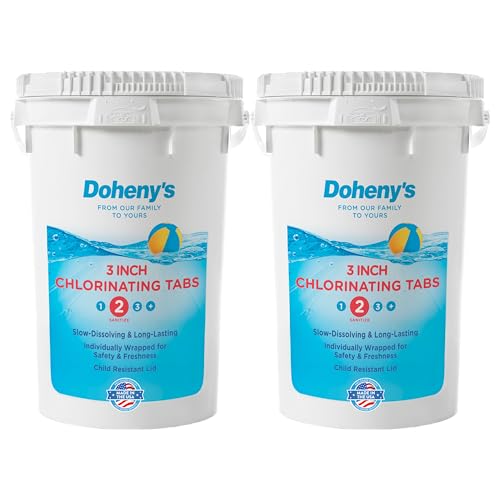
Doheny’s 3-Inch Stabilized Chlorine Tablets 90% Available Chlorine

Leslie’s Chlor Brite Dichlor Pool Shock

EverCrystal Salt Water Pool Chlorinator 40,000 Gallon System
EverCrystal Smart In-Ground Pool Chlorinator System
EverCrystal Salt Water Pool Chlorinator 25,000 Gallon System
More Details On Our Top Picks
EverCrystal’s 25,000-gallon system makes sense for an in-ground saltwater pool owner who wants routine chlorine production with fewer manual adjustments. A salt chlorine generator uses electrolysis, an electrical process that converts salt into chlorine, while the digital panel keeps key operating readings in view.
For most medium-size residential pools, the visible status information adds practical confidence during weekly checks. Unlike the tablets and shock in this roundup, this is equipment rather than a chemical treatment, so it serves a longer-term sanitation role.
Good Reasons To Consider
- The display reports salt level, voltage, amperage, and temperature, reducing the need for separate equipment checks.
- A self-cleaning cell is intended to reduce scale accumulation and routine cell care.
- Routine chlorine generation can lessen repeated manual sanitizer dosing.
Points To Note
- The stated capacity tops out at 25,000 gallons, so larger pools need a system sized for their volume.
- Installation and setup still matter; incorrect salt concentration or cell scale can reduce performance.
Quick Facts
Built With In Mind
This system fits in-ground saltwater pool owners up to 25,000 gallons who prefer digital monitoring over frequent tablet adjustments.
Another Choice May Suit
EverCrystal Salt Water Pool Chlorinator 40,000 Gallon System better serves owners of substantially larger pools.
Doheny’s tablets suit pool owners who prefer predictable, slow-dissolving sanitizer over an installed generator. Stabilization means the tablet carries a component that slows its breakdown under sunlight, making these more suitable for routine outdoor use than quick corrective shock.
The 3-inch format fits common pool feeders, and individual wrapping helps limit direct contact during storage. In our view, the 100-pound bucket works best for owners with steady demand who can store and handle the weight safely.
Bright Spots
- Slow dissolution supports a steadier feeding cycle through routine pool maintenance.
- The tablets contain 90% available chlorine according to the supplied product information.
- Individually wrapped tablets reduce loose dust and simplify storage after opening the bucket.
Small Caveats
- The 100-pound container is substantial, so storage space and safe handling deserve attention.
- Overfeeding can push combined chlorine higher, making water balancing and feeder control important.
The Right Fit
Homeowners seeking simple weekly sanitation will appreciate these tablets, especially with an automatic feeder.
Look Elsewhere When
Leslie’s Chlor Brite Dichlor Pool Shock is a better fit for rapid correction than slow, scheduled feeding.
Leslie’s Chlor Brite takes a different role from the three EverCrystal systems. Its dichlor formula dissolves rapidly, which makes it useful for short-term sanitation adjustments after heavy swimming, rain, or an unexpected dip in sanitizer readings.
Owners of saltwater pools can use it alongside a chlorinator, but doing so calls for careful reading of product directions and water-test results. The honest read is that fast shock solves a temporary problem; it does not replace routine control.
The Case For It
- Rapid dissolution makes it convenient for correcting sanitizer levels between normal maintenance cycles.
- The 12 one-pound bags are easier to divide and store than a large chemical bucket.
- Its listed use includes pools, spas, routine chlorination, and higher-level treatment.
Practical Considerations
- Dichlor adds stabilizer to the water, so repeated use may raise the balance adjustment you monitor.
- Handling and storage require attention because the product is sold as a hazardous-material item.
Feature Snapshot
Made For
This shock treatment fits saltwater pool owners who need a fast supplemental correction between routine sanitation checks.
A Better Fit Elsewhere
Doheny’s stabilized tablets suit owners who prefer ongoing slow dissolution instead of rapid shock treatment.
Larger pools create a different scale of routine demand, and the EverCrystal 40,000-gallon system is designed around that higher-volume scenario. Its clear housing lets you visually monitor the cell, while the self-cleaning cycle is intended to reduce scale-related upkeep.
The digital panel reports salinity, voltage, current, temperature, and cell operation, giving you a compact operational snapshot. Compared with the first EverCrystal system, capacity is the defining difference rather than a fundamentally different treatment method.
Where It Excels
- The 40,000-gallon rating gives larger in-ground pools a more appropriate equipment match.
- A transparent chamber makes visible cell condition easier to notice during maintenance.
- Cell-operation information supports routine troubleshooting without relying on a single reading.
Factors To Consider
- Cell scale still needs periodic inspection, especially in warm water or areas with hard water.
- Equipment output must remain aligned with actual pool volume and changing seasonal demand.
Technical Sheet
Whose Shelf It Belongs On
This model belongs with owners of larger in-ground saltwater pools who value digital and visual system monitoring.
Swap It Out When
EverCrystal Salt Water Pool Chlorinator System 25,000 Gallon is a more proportionate choice for smaller pools.
The EverCrystal Smart system is a practical choice for an in-ground pool owner who wants routine sanitizer production plus convenient status checks. Its digital display presents salt level, voltage, amperage, and temperature, which are useful signs of whether the system is operating within expected conditions.
That information doesn’t eliminate water testing, but it can make weekly maintenance more systematic. Compared with Doheny’s tablets, this equipment shifts from passive chemical dissolution to an installed chlorination system that requires power, cell care, and proper salt balance.
The Upside
- Digital readings make several operating conditions available from one panel.
- Automatic chlorine production reduces the need for constant tablet or shock additions.
Honest Caveats
- No pool-volume rating appears in the supplied information, so capacity needs confirmation before purchase.
- Installation space, electrical access, salt concentration, and cell cleaning all become ongoing ownership responsibilities.
- The panel cannot replace regular sanitizer and pH testing.
Best Suited To
This model fits in-ground owners who prioritize digital monitoring and automatic routine chlorination.
Where A Sibling Pick Shines
EverCrystal Salt Water Pool Chlorinator 40,000 Gallon System offers a clearly stated capacity for large pools.
A 25,000-gallon capacity makes this EverCrystal system relevant to medium-size in-ground saltwater pools. The clear cell housing offers a straightforward visual check, and the self-cleaning function is intended to reduce the buildup that otherwise increases routine maintenance.
Its digital panel tracks salinity, voltage, current, temperature, and cell operation, so the system serves as both equipment and monitoring hub. For many backyard pools, that combination offers a sensible middle ground between tablets that need feeding and a larger system designed for greater volume.
A Few Highlights
- Clear housing makes the cell easier to inspect during routine pool service.
- Self-cleaning operation helps reduce manual attention to scale accumulation.
- The 25,000-gallon target fits many residential in-ground installations.
Some Limits To Know
- Salt balance and water chemistry still need routine testing outside the equipment panel.
- The cell can accumulate scale in hard-water areas, making occasional inspection sensible.
Core Details
Built With In Mind
This model fits owners of medium-size in-ground pools who want visible cell access and digital operating information.
Reach For A Different Pick When
EverCrystal Smart In-Ground Pool Chlorinator System may suit you better when digital status access matters more than a stated capacity.
Choosing a System That Fits Your Pool
Start with the role you need. Salt chlorine generators produce routine sanitizer from salt, while stabilized trichlor tablets dissolve gradually. Dichlor shock is primarily a quick-response supplement, not a substitute for balanced daily sanitation.
Match the Equipment to Volume EverCrystal’s listed 25,000- and 40,000-gallon systems target different pool sizes. Choose based on actual water volume and seasonal demand rather than a rough visual estimate. A system intended for a larger pool may spend more of its time working harder in a smaller body of water.
Decide How You Want to Monitor A digital panel can show salt level, voltage, amperage, temperature, and cell operation, saving separate equipment checks. It still does not replace chlorine, pH, alkalinity, and calcium-hardness testing, so your weekly water-care routine should continue.
Weigh Chemical Handling Doheny’s tablets offer slow feeding and UV resistance, while Leslie’s dichlor is designed to dissolve quickly. Both require careful storage and dosing. Tabular chlorination adds stabilizer over time, which matters when you repeatedly check cyanuric-acid levels.
Think About Maintenance Access Clear housings make visual cell inspection easier, and self-cleaning cells can reduce scale-related work. That convenience still depends on correct salt concentration, electrical installation, and periodic cleaning, especially in warm climates or hard-water areas.
A Closer Look at Routine Upkeep
A saltwater pool’s salt level affects the generator’s operating condition, and seasonal use changes sanitizer demand. Visually clear water isn’t enough to confirm that chlorine, pH, and alkalinity remain balanced. Regular testing gives you the context needed to decide whether routine adjustment, tablet feeding, or shock is appropriate.
Choosing Between Tablets and Equipment
Doheny’s tablets are attractive for owners who want an established feeder routine and modest equipment involvement. EverCrystal generators suit households that prefer automatic production and digital status information, though those conveniences come with installation, electrical, and cell-care responsibilities. The practical choice is the system you’ll understand and maintain consistently, not simply the one with the longest feature list.
Avoiding Pool-Care Pitfalls
Mistakes Worth Dodging
Confusing a chlorine generator with a stabilizer can leave you duplicating treatments without a clear plan. Confirm the actual pool volume before choosing a stated capacity, and track existing sanitizer and stabilizer levels before adding tablets or dichlor. Treat equipment readings as helpful status data, not substitutes for water testing.
What The Extra Equipment Adds
A higher-capacity system may suit a larger pool without continually operating beyond its intended range. Digital monitoring and clear housings add visibility, while self-cleaning cells reduce routine cell attention. Those improvements are most valuable for owners who want less uncertainty, provided installation space, salt balance, and maintenance are handled correctly.
Frequently Asked Questions
Are salt chlorine generators and stabilizers the same thing?
No. A salt chlorine generator produces chlorine from salt, while a stabilizer slows the loss of certain chlorine products exposed to sunlight. A saltwater pool may use a generator, stabilized tablets, shock, or a combination.
Can stabilized tablets work in a saltwater pool?
Yes, because they can provide routine sanitizer, but they add stabilizer to the water. Monitor that level over time to avoid allowing it to climb beyond the range recommended for your pool.
Is dichlor shock better than trichlor tablets?
Dichlor dissolves rapidly, making it useful for short-term correction. Stabilized trichlor tablets dissolve more slowly and suit scheduled feeding, so the two products usually serve different parts of a maintenance routine.
How often should a salt cell be inspected?
Inspect the cell periodically for scale, debris, and visible damage. Warm water and hard water can increase scaling, while the self-cleaning function reduces but does not necessarily remove every inspection.
Can a digital chlorinator replace water testing?
No. The panel monitors equipment conditions such as salt level and electrical readings, while test kits assess the pool water itself. Regular sanitizer, pH, alkalinity, and hardness checks remain necessary.
Final Verdict
Choose EverCrystal equipment for automatic routine sanitation and digital monitoring, Doheny’s tablets for controlled slow dissolution, or Leslie’s dichlor for rapid supplemental correction. Match the option to pool volume, current water chemistry, and the maintenance routine you can realistically follow. A clear plan that fits your pool is more useful than an oversized or overcomplicated setup.
