

A dependable emergency whistle has to work when your phone battery dies, the trail grows dark, or noise from wind masks a call for help. This collection covers traditional mechanical models, electronic sports whistles, lightweight titanium options, and bulk packs for groups. You’ll also find compact choices for backpacks, kayaks, classrooms, camps, boating trips, and everyday emergency kits.
Your Options, Compared

Noopel Three-Tube Survival Whistles 2 Pack with Lanyard and Keychain
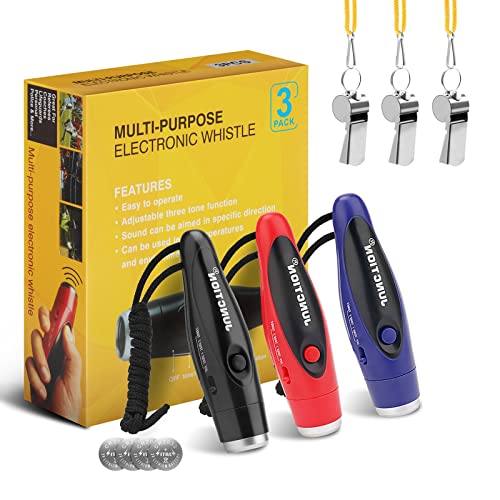
UNIWA Electronic Whistle 3 Pack with Three Tones

Frienda 35-Piece Aluminum Emergency Whistle Keychain Pack

Tibitdeer Titanium Emergency Whistle 120dB with Keychain

UST Hear-Me Whistle
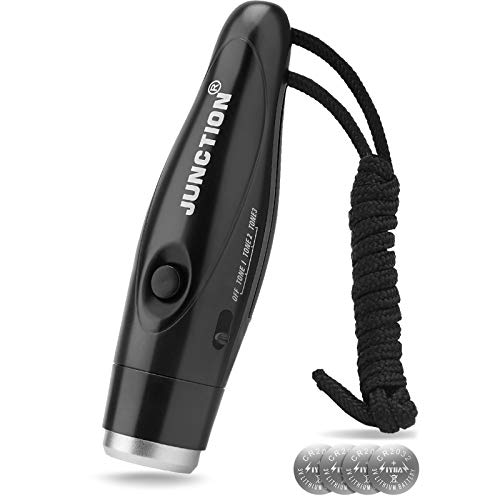
UNIWA Battery-Operated Electronic Whistle with Lanyard
A Breakdown Of The Leading Choices
Noopel’s three-chamber layout gives you a traditional whistle with more outlets for moving air than a single basic tube. During a hike, paddle outing, or lifeguard shift, that design favors a sharp, attention-grabbing signal, while the two-pack lets you place one in separate bags.
For most outdoor trips, this looks like the most balanced mechanical choice in the group. The listed output reaches about 120 dB, and the included lanyard and keychain make attachment straightforward, though the three-tube body takes more pocket space than the UST Hear-Me Whistle.
Points In Its Favor
- Three sound chambers support a strong signal without requiring electronics.
- Two whistles suit separate packs, households, or group activities.
- Lanyard and keychain options simplify everyday carrying.
- No batteries are needed on a trail or during an emergency.
Small Caveats
- The multi-tube shape uses more space than a compact single-tube whistle.
- Outdoor whistles can collect dirt around their openings, so occasional rinsing helps maintain airflow.
Key Specs
Built With In Mind
This model suits hikers, paddlers, lifeguards, and families assembling practical outdoor kits.
Another Choice May Suit
The UST Hear-Me Whistle is a better fit for hikers who prioritize a smaller, lighter pack footprint.
Moving from mechanical whistles to electronics changes the game for coaches and referees who need a consistent signal during running drills, gym classes, or crowded fields. The UNIWA set produces three distinct tones at a listed 125±5 dB, allowing you to vary the alert without changing whistles.
Three units make sense for a league, school, or coaching crew, and you can assign one to each bag. The catch is battery dependence, which makes this less attractive for remote emergency kits than Noopel’s mechanical option.
Notable Upsides
- Three tones help separate a stop signal from another attention cue.
- The stated output remains recognizable across noisy sports settings.
- Three whistles support league-wide distribution.
- Electronic operation avoids repeated mouth blowing.
Practical Considerations
- Battery condition matters during practices and outdoor events.
- Several devices can be excessive for one coach or referee.
Feature Snapshot
Who It Suits Best
Coaches, referees, teachers, and club organizers benefit most from the multi-tone set.
A Better Fit Elsewhere
Backpackers and campers gain more dependability from the battery-free Noopel Three-Tube Survival Whistles 2 Pack.
Thirty-five units turn the Frienda pack from a personal accessory into group equipment. Camps, classrooms, family outings, and event organizers can distribute one whistle to each person, eliminating the common problem of passing a single signal device across a crowd.
Each aluminum whistle includes a ring for keys, a bag, or a lanyard, while the listed output reaches 120 dB. The colorful assortment also makes the pack easier to organize by group, although many loose units can quickly become difficult to track.
The Good Stuff
- Thirty-five units cover sizable groups in one purchase.
- Attachment rings support keys, bags, or lanyards.
- Assorted colors make distribution and storage more organized.
- Up to 120 dB suits outdoor activities with background noise.
Room For Improvement
- The full pack may overwhelm small households or solo travelers.
- Loose whistles need labeled storage to prevent disappearing in communal gear.
- Aluminum units can show scratches during frequent shared use.
Made For
Large families, summer camps, classrooms, and event groups receive the most value from this quantity.
Reach For A Different Pick When
One hiker or a two-person trail team can carry less and choose Tibitdeer’s single titanium whistle instead.
Titanium gives the Tibitdeer a different material profile from the aluminum Frienda pack and the unspecified-body Noopel set. That construction is especially relevant beside a lake, on a fishing boat, or anywhere moisture and changing weather are part of the day.
The single 120 dB tube offers a focused signal, and the attached keychain keeps it close to keys or a pack zipper. For solo adventurers, it looks more refined than carrying a 35-piece bundle, though you give up the group quantity and the Noopel’s three-chamber layout.
A Few Strong Suits
- Titanium resists corrosion in exposed outdoor settings.
- The stated 120 dB output supports a penetrating call.
- Keychain attachment reduces the chance of leaving it behind.
- Waterproof construction suits boating and wet-weather activities.
Worth Noting
- Saltwater gear still deserves a freshwater rinse after boating trips.
- A single tube may offer less airflow flexibility than the Noopel design.
Technical Highlights
The Right Fit
Solo hikers, boaters, anglers, and backpackers appreciate the compact material choice.
Where Another Pick Shines
The Noopel Three-Tube Survival Whistles 2 Pack suits people who want two signal devices and a wider mechanical chamber design.
The UST Hear-Me Whistle is built around carrying efficiency, measuring 2.75 by 0.75 by 0.75 inches and weighing 0.3 ounces. Those dimensions make it easy to place in a small survival kit, and the included break-away lanyard offers a quick way to wear it around the neck.
Its pea-less design removes the loose ball found in many traditional whistles, reducing freezing, rusting, and clogging concerns in changing conditions. You give up the explicitly stated decibel ratings and titanium material of the Tibitdeer, so the UST relies more heavily on compact, weather-conscious construction.
Notable Gains
- The 0.3-ounce weight suits lightweight kits.
- A pea-less chamber avoids common moisture-related blockages.
- Waterproof construction supports all-weather use.
- The break-away lanyard allows quick neck carry.
Details To Watch
- No numerical sound output is provided for comparison.
- The lanyard can snag during fast activities unless adjusted or removed.
Quick Facts
Whose Shelf It Belongs On
Backpackers, hikers, and minimalist emergency-kit owners benefit from the tiny footprint.
Look Elsewhere When
Boaters who prioritize stated output and corrosion-resistant titanium may prefer Tibitdeer.
The single UNIWA electronic whistle gives coaches and teachers more control than a basic mechanical model. Adjustable volume lets you match the signal to a gym, outdoor field, or training session, while three sound choices provide useful separation between different types of calls.
Compared with the three-pack UNIWA Electronic Whistle 3 Pack with Three Tones, this model serves one person more directly. It also includes a lanyard, but its electronic operation introduces batteries and electronics that you would bypass with the Noopel or UST for remote trail use.
Useful Strengths
- Adjustable volume adapts to different environments.
- Three tones support varied coaching and training calls.
- The lanyard supports hands-free carrying.
- It suits referees, teachers, and sports instructors.
Trade Offs To Consider
- Batteries require routine checks before practices and events.
- Electronics add maintenance compared with a pea-less mechanical whistle.
- A single unit may be insufficient for a large team.
Who Should Grab It
Individual coaches, referees, teachers, and fitness instructors gain the most flexible sound controls.
A Better Fit Elsewhere
Teams needing several units at once may prefer the UNIWA Electronic Whistle 3 Pack with Three Tones.
What To Look For In A Signal Whistle
Start with the setting, since a sports field and a freezing trail create different demands. Electronic whistles suit repeated calls, adjustable volume, and group coaching, while mechanical models avoid battery concerns. Traditional outdoor users often value corrosion resistance, simple operation, and a signal loud enough to cut through wind and changing terrain.
Next, consider how the whistle travels with you. A compact model earns its place in a small survival kit, while a lanyard or keychain keeps a larger whistle accessible during hiking, boating, or camping. Electronic designs also need a charging or battery routine, so place one in your gear bag where you can check it before leaving home.
Key Details That Change The Choice
Buying a whistle for several people changes the equation. A 35-piece pack suits camps, classrooms, and events, but it can create a tracking problem in a busy household. Smaller two-packs or single units are easier to assign and maintain.
For outdoor use, material matters too. Titanium offers corrosion resistance and low weight, while a pea-less design reduces loose parts that can freeze or clog. Traditional aluminum can remain practical for general use, provided you rinse dirt and salt from the openings after exposure.
Common Mistakes Worth Avoiding
A whistle tucked into a rarely opened drawer does not help during a quick departure. Keep it with your keys, backpack, boating gear, or first-aid supplies, and rehearse the basic signal so it is familiar.
What The Higher Tier Buys
Higher-priced options may add titanium construction, multiple electronic tones, adjustable volume, or a coordinated set. Those upgrades help most in specialized settings, while a simple mechanical whistle can be the more sensible choice for a casual emergency kit.
Frequently Asked Questions
Are electronic emergency whistles suitable for hiking?
Electronic whistles are convenient for sports and training, but hiking routes with limited power access favor mechanical models. A battery-free option also avoids battery checks on remote trips.
Which whistle is best for children?
A light, simple mechanical whistle with an easy-to-manage lanyard can suit children. The Frienda pack is useful for large groups, while smaller models are easier for one child to carry.
Can an emergency whistle work in cold weather?
A pea-less design can reduce concerns about freezing and clogging found in whistles with loose parts. The UST Hear-Me Whistle has this construction, which makes it a practical cold-weather consideration.
Do emergency whistles need batteries?
Mechanical whistles do not, while electronic models do. Choose based on how often you need adjustable sounds and how reliably you can check or recharge the battery.
Are keychain whistles easy to carry?
A compact keychain whistle can fit comfortably on keys or a bag zipper. Larger multi-chamber models may need a pocket or dedicated attachment point.
Final Thoughts
The right emergency whistle depends on where it will live and how often it will be used. Choose a compact mechanical model for remote outdoor kits, a multi-pack for groups, or an electronic UNIWA for sports settings where volume and tone control matter. Whichever route you take, keep it accessible and practice the signal before you need it.
