

Choosing a telescope feels straightforward until a crowded eyepiece, unfamiliar mount, and confusing specifications appear at once. You may want the Moon’s craters, bright planets, colorful nebulae, or a setup that can guide you toward harder-to-find objects after dark. These Telescopes For Adults span phone-assisted beginner models, compact refractors, guided Newtonians, and larger Dobsonian and equatorial designs, giving you a practical place to begin without overspending on complexity you may never need.
A Fast Comparison Of The Options

Celestron AstroMaster 114 EQ Reflector Telescope
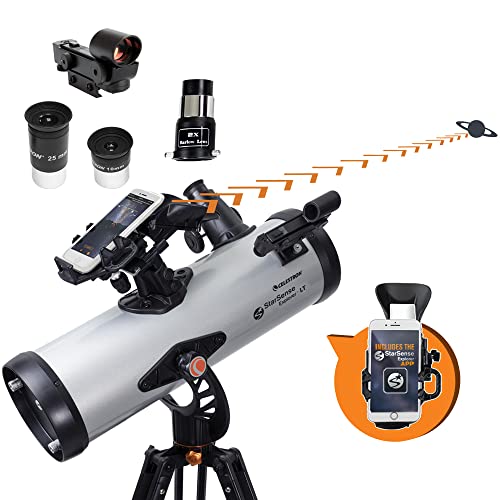
Celestron StarSense Explorer LT 114AZ Newtonian Telescope
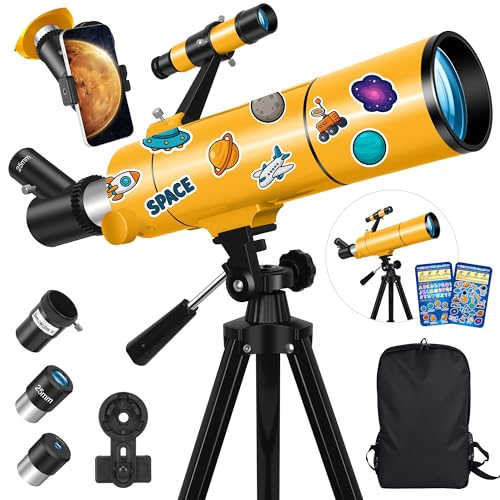
MEEZAA 80mm Aperture 500mm Refractor Telescope
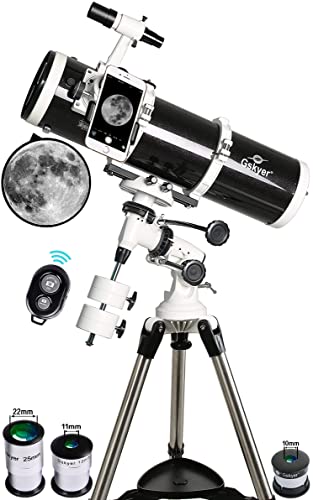
Gskyer 130EQ Professional Astronomical Reflector Telescope

Celestron StarSense Explorer 10-Inch Dobsonian Telescope
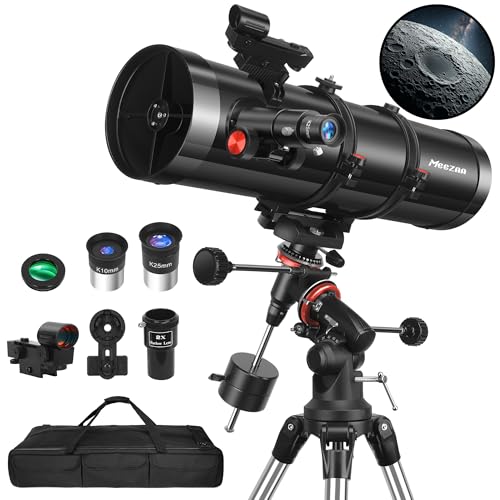
MEEZAA 150EQ Newtonian Reflector Telescope
More On The Choices That Made The List
The AstroMaster 114 EQ gives you a familiar reflector design with an equatorial mount, meaning the tube can track the sky more systematically than a simple straight-up setup. For backyard viewing, that extra control makes it easier to spend an evening with the Moon and planets instead of constantly adjusting a tripod.
Compared with the phone-guided StarSense model, this Celestron places more responsibility on you during setup. In our view, that trade suits someone ready to learn basic alignment rather than wanting the sky mapped automatically.
Real Benefits
- The no-tool assembly reduces friction during backyard setup.
- A permanently mounted StarPointer finder helps center larger targets.
- The 1.25-inch smartphone adapter supports eyepiece photos and video.
- Equatorial tracking offers useful control for longer planetary sessions.
Small Caveats
- Reflector mirrors commonly require careful handling and secure storage to protect the optical coatings.
- Initial equatorial alignment can feel less direct than phone-guided setup.
Key Specs
Made For
This model benefits backyard stargazers who want to learn manual alignment and planetary positioning.
Another Choice May Suit
New stargazers wanting phone guidance may prefer the Celestron StarSense Explorer LT 114AZ.
Learning where objects sit in the sky can stop a telescope from feeling useless, and that is where the StarSense Explorer LT 114AZ changes the experience. Your phone examines the night sky, calculates the telescope’s position, and provides directional guidance toward stars, planets, galaxies, and other targets.
For a first telescope, that assistance can outweigh the extra setup knowledge found in the AstroMaster 114 EQ. Depending on your sky, app guidance still benefits from a clear view and steady phone placement, but it removes much of the guesswork.
Useful Highlights
- Real-time phone guidance simplifies initial sky alignment.
- Guidance reduces frustration while locating dimmer targets.
- The compact Newtonian format suits simple backyard observing.
Practical Considerations
- Smartphone guidance requires a compatible phone, a clear sky, and steady alignment.
- Reflector optics commonly need careful storage to avoid damage during transport.
- Automatic guidance does not replace basic focusing and observing technique.
Who Will Love This
This telescope suits beginners who want guided targeting before learning manual sky coordinates.
A Better Fit Elsewhere
Aspiring visual observers seeking a larger aperture may favor the Celestron StarSense Explorer 10-Inch Dobsonian Telescope.
A refractor keeps its light path in a sealed tube, making the MEEZAA 80mm a straightforward choice for family observing and casual nature watching. The 80 mm aperture and 500 mm focal length give you a compact optical combination suited to the Moon, bright planets, and terrestrial scenes.
Unlike the heavier reflector options here, this design needs no mirror alignment. That low-fuss appeal makes it useful for shared use, although the modest aperture limits how much faint detail appears from demanding deep-sky targets.
A Strong Showing
- Fully multi-coated optics support clear, low-glare views.
- The sealed refractor design avoids Newtonian mirror alignment.
- Its 80 mm aperture gives young and new observers a manageable starting point.
- Versatility supports astronomy, Moon viewing, and distant landscapes.
Some Limits To Know
- The 80 mm aperture gathers less light than the larger reflectors in this list.
- Lens cleaning requires care to avoid smudges and accidental damage.
Feature Snapshot
Who It Suits Best
Families and absolute beginners benefit from a simple, collimation-free refractor for casual observing.
Consider Something Else When
Observers seeking stronger light gathering should consider the Gskyer 130EQ Professional Reflector Telescope.
The Gskyer 130EQ is built around a 5.1-inch reflector and an equatorial mount, a combination aimed at adults ready to look beyond a casual Moon session. The wider aperture gathers more light than the MEEZAA 80mm, making it a more capable platform for planets, brighter galaxies, nebulae, and star clusters.
Its short 24-inch optical tube also separates it from bulkier Newtonian reflectors, helping it fit more easily into storage and transport arrangements. The catch is the additional learning curve, particularly during collimation, which is the careful adjustment of the mirrors into alignment.
What Makes Sense
- The 5.1-inch aperture supports brighter views than an 80 mm refractor.
- Equatorial mounting encourages steadier sky positioning.
- Transmission coatings improve brightness and contrast.
- The compact optical tube simplifies storage compared with longer Newtonians.
Details To Watch
- Reflector mirrors commonly need periodic collimation and cautious handling.
- The equatorial head introduces more setup steps than an altitude-azimuth mount.
Technical Highlights
Built With In Mind
This model suits motivated beginners who want equatorial controls and more light gathering than a small refractor.
Where A Sibling Pick Shines
Families wanting fewer alignment steps may prefer the MEEZAA 80mm Aperture 500mm Refractor Telescope.
The StarSense Explorer 10-Inch combines substantial light gathering with guided setup, making it a persuasive step up for adults moving beyond smaller beginner scopes. Its Dobsonian design uses a stable base that rotates and tilts smoothly, so finding targets remains less technical than operating a traditional equatorial mount.
Phone guidance reduces the initial learning burden, while the 10-inch aperture offers more potential than the LT 114AZ for faint nebulae, galaxies, and clusters. For most backyards, the larger body becomes the main tradeoff, particularly during setup and storage.
What Stands Out
- A 10-inch aperture supports strong light collection for deep-sky observing.
- Smartphone guidance makes initial target alignment approachable.
- The smooth Dobsonian base avoids complex counterweight setup.
Less Ideal Details
- The large optical tube needs more storage space and careful movement.
- Reflector mirrors commonly require collimation and careful lens care.
The Right Fit
Serious beginners with a clear observing area benefit from guided targeting and a large aperture.
Swap It Out When
Traveling stargazers with limited vehicle and storage space may prefer the Celestron StarSense Explorer LT 114AZ.
Among these choices, the MEEZAA 150EQ arrives with the broadest supporting kit. A 150 mm reflector, 650 mm focal length, equatorial mount, tripod, phone adapter, Moon filter, eyepieces, Barlow lens, and carry bag give a new owner several useful pieces in one coordinated setup.
Its 2x Barlow lens doubles the effective magnification of the paired eyepiece, helping you inspect smaller lunar features and planetary detail. More equipment adds learning opportunities, but the larger reflector also demands more collimation and careful storage than the compact MEEZAA refractor.
Notable Upsides
- The 150 mm aperture offers strong light gathering for deep-sky targets.
- Two eyepieces and a 2x Barlow provide flexible magnification options.
- The equatorial mount supports systematic sky positioning.
- The phone adapter expands image and video possibilities.
- A Moon filter and carry bag round out the observing setup.
Possible Compromises
- Newtonian mirrors commonly need collimation and careful cleaning.
- The tripod, mount, and optical tube add more setup steps than a Dobsonian.
- The carry bag helps transport, but secure indoor storage still matters.
Core Details
Who Should Grab It
Patient beginners who want one substantial equatorial package benefit most from this accessory-rich setup.
Reach For A Different Pick When
Minimalist beginners may prefer the MEEZAA 80mm Aperture 500mm Refractor Telescope for fewer controls.
What To Prioritize In Your First Telescope
Aperture is the opening that gathers light, so a wider lens generally reveals fainter objects and finer detail. The 10-inch Celestron and 150 mm MEEZAA make sense for observers chasing nebulae and galaxies, while the 80 mm MEEZAA offers a simpler route into lunar and planetary viewing. Bigger isn’t automatically easier, though, since light-gathering power comes with size and handling demands.
Mount type controls how you point and follow objects. An equatorial mount, seen on the Celestron AstroMaster 114 EQ, Gskyer 130EQ, and MEEZAA 150EQ, supports systematic positioning but requires more setup. A Dobsonian base moves smoothly and stays intuitive, while an altitude-azimuth mount is the most direct option but offers less sophisticated tracking.
Portability and guidance deserve equal attention before you commit. A larger optical tube may demand a dedicated storage area, car space, and a steady setup surface. Phone guidance, found on the StarSense models and the MEEZAA 150EQ, can reduce early frustration, but the best first telescope is still one you can comfortably assemble, maintain, and use on the nights you actually have clear.
Small Details That Shape Stargazing
Mistakes Worth Dodging
Don’t choose by magnification alone. Higher magnification enlarges an image but does not add light, so it can simply make the view dimmer and shake more noticeable. Check the aperture, optical design, and included eyepieces together, and plan to begin with lower magnification.
Don’t underestimate setup and storage. Reflector mirrors commonly need collimation, lenses need careful cleaning, and larger tubes may not fit comfortably in a closet. Measure your storage and transport space before choosing.
What The Higher Tier Buys
Larger apertures gather more faint light, while guidance features can reduce the time spent locating targets. These improvements help most when you want to observe smaller lunar details, brighter planets, nebulae, and galaxies rather than simply exploring the Moon from a driveway. The added capability is useful only when your observing site and setup habits support it.
