

Packing fins shouldn’t dictate the rest of your dive bag, especially on a trip built around snorkeling, pool sessions, or spontaneous shore entries. The right pair balances blade response, comfort, adjustability, and luggage space without ignoring how you enter the water. These six options cover everything from compact travel fins to full-foot designs suited to divers who leave their boots on shore.
The Shortlist At A Glance

SCUBAPRO GO Travel Open Heel Fin
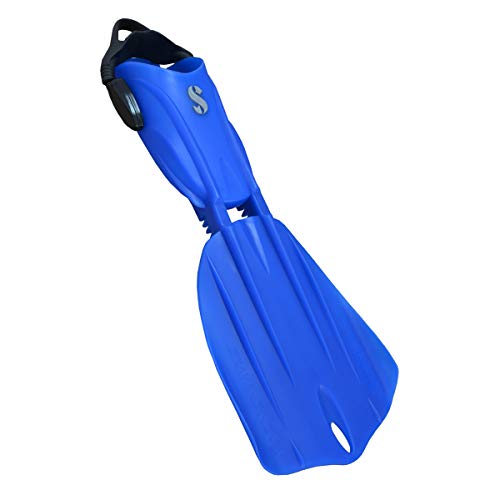
SCUBAPRO Seawing Nova Diving Fins

Atomic Aquatics Full Foot Split Fins

Scubapro GO Sport Diving Fins

SCUBAPRO Jet Sport Adjustable Diving Fin

QKURT Adjustable Open Heel Travel Fins
What Each Pick Brings To The Table
The GO Travel is designed around the moment a small case opens beside a hotel room or a gear trunk. Its barefoot-style layout eliminates the need for dive boots, while the open heel strap supports several users and keeps packing simple. For snorkeling, pool swimming, and warm-water travel, that flexibility often matters more than maximum thrust.
It also feels like a sensible middle ground beside the SCUBAPRO Seawing Nova. The Nova leans toward hydrodynamic performance, while the GO emphasizes portability and relaxed use. Depending on your itinerary, the lighter-duty travel approach may be more useful than a blade designed around a full day of repetitive kicking.
Useful Highlights
- The barefoot design saves space by removing the need for boots.
- An open heel strap makes the fins easier to share between compatible users.
- The compact approach suits snorkeling, swimming lessons, and warm-water trips.
Things To Consider
- Cold-water divers will usually want neoprene boots between the foot pockets and fins.
- Lightweight travel construction may offer less support than the Seawing Nova during demanding dives.
- Rinse the foot pockets and strap after seawater use, then dry them fully before packing.
Made For
You’ll appreciate this pair most as a warm-water traveler who alternates between snorkeling, swimming, and recreational scuba diving.
Another Choice May Suit
Scubapro GO Sport Diving Fins suit divers who need boots and frequently make rocky shore entries.
The Seawing Nova is built for divers who expect their fins to translate hard kicking cycles into controlled movement. Hydrodynamic shaping helps the blade move efficiently through water, making it more relevant to repeated descents, open-water navigation, and currents than a basic sightseeing fin. You may notice more response under load, especially compared with the travel-focused GO.
That performance bias brings a tradeoff: this looks and feels more specialized than a compact recreational pair. Divers new to neutral buoyancy may not need every ounce of blade response, but those refining their kick over a full dive will find the design purposeful. Fit and stroke control remain the deciding factors.
Positive Takeaways
- Hydrodynamic blade shaping supports efficient movement through the water.
- Strong kick response suits repeated propulsion demands.
- The performance focus is useful for open-water navigation and currents.
- Its directional stability can help divers refine finning technique.
Worth Noting
- Performance-focused construction may be unnecessary for casual pool sessions.
- Compared with the GO Travel, this model appears less oriented toward compact packing.
Feature Snapshot
Who It Suits Best
You’ll get the most from the Seawing Nova as a trained recreational diver who values blade response and control.
Where A Sibling Pick Shines
SCUBAPRO GO Travel Open Heel Fin makes more sense for warm-water trips centered on snorkeling and swimming.
A full-foot pocket wraps the entire foot, eliminating buckles and heel straps from the center of the fin. That makes the Atomic Aquatics model straightforward to step into, especially for pool practice and shore dives in warm conditions. Compared with the open-heel GO, it offers a visually cleaner, more traditional fit.
The open-toe construction can reduce contact around the toes, while the EZ-off buckles simplify adjustment. Semi-rigid battens guide the blade’s flex, and a rigid plate beneath the foot pocket adds support. You’ll get a connected feel, though the enclosed design has limits in cold water.
The Value In It
- The full-foot pocket stays visually and physically simple to use.
- Patented EZ-off buckles make on-water fit changes easier.
- Semi-rigid battens create controlled blade flex for steadier kicks.
- A rigid power plate adds support beneath the arch.
- Open toes leave room for reduced contact and better ventilation.
Small Caveats
- Full-foot fins are poorly suited to cold water without protective boots.
- Traditional pockets need careful drying to prevent trapped moisture and odors.
- The fixed-foot design offers less sizing flexibility than adjustable straps.
Technical Highlights
Right Fit For
Warm-water divers and snorkelers who prefer stepping directly into their fins will find this design refreshingly simple.
Reach For A Different Pick When
Scubapro GO Sport Diving Fins are the stronger fit for cold-water use or rocky entries that call for boots.
The GO Sport handles a very practical problem: getting into the water across rocks, shells, or an uneven entry. Its boot-fit design slips over dive boots, while a replaceable, self-adjusting bungee heel strap helps secure the connection. For shore entries, that arrangement is more reassuring than the barefoot SCUBAPRO GO Travel.
Durability is the central argument. The fins use 100% Monprene, a rubber-like material chosen for resistance to delamination, tearing, and long-term wear. You still need correct sizing, but the material should suit divers who keep the same fins through frequent trips rather than treating them as vacation-only gear.
The Helpful Details
- The boot-fit design supports protected feet during rough shore entries.
- A self-adjusting bungee heel reduces strap adjustment between entries.
- Replaceable heel components can extend practical ownership.
- Monoprene construction resists the separation that affects layered rubber fins.
Practical Considerations
- Monoprene is not as repairable as stitched or glued multi-part designs.
- Boot compatibility makes these bulkier than the travel-oriented GO.
- Inspect the bungee and heel area for grit before repeated use.
Core Details
Who Will Love This
You’ll value these fins most as a shore-entry diver who regularly wears boots and expects frequent use.
Not Your Match When
SCUBAPRO GO Travel Open Heel Fin is easier to pack for warm-water trips that rely on bare feet.
The Jet Sport is a practical middle ground between a compact recreational fin and a more performance-oriented blade. Its three-material construction balances flex, power, and stability, while vents in the blade reduce drag during both directions of the kick. That combination may help divers in currents who want control without an overly rigid fin.
The molded foot pocket follows the foot’s contours, and quick-release buckles make repeated entry adjustments straightforward. Compared with the full-foot Atomic Aquatics fins, the adjustable open-heel design accommodates boots more readily. It feels less bootless-simple, but more adaptable across water temperatures.
Noteworthy Benefits
- Drag-reducing vents support smoother movement on upstrokes and downstrokes.
- A large blade delivers a stronger response during powered kicks.
- Three-material construction balances flexibility, stability, and response.
- Quick-release buckles simplify repeated fit changes.
Trade Offs
- The larger blade takes more room than a short travel fin.
- Adjustable hardware requires occasional rinsing to prevent salt buildup.
- It may feel less minimal than the barefoot SCUBAPRO GO.
Feature Breakdown
Best Suited To
Recreational divers wearing boots and kicking through moderate current will appreciate the adaptable stance.
A Better Fit Elsewhere
QKURT Adjustable Open Heel Travel Fins suit families who prioritize short blades and shared sizing.
The QKURT pair centers on short-blade convenience, which makes it a natural fit for snorkeling, swimming, and occasional recreational dives. The open heel uses adjustable buckles, while the open-toe foot pocket can reduce contact around the toes. Shared trips become easier when a second set of fins can fit into the same luggage space.
Two listed size groups cover adult US shoe sizes 4.5 through 13, with S/M covering 4.5 to 8.5 and L/XL covering 9 to 13. Compared with the Seawing Nova, this is less about hydrodynamic response and more about access, sharing, and packing. Depending on kick intensity, a longer blade may feel more purposeful.
What Makes Sense
- Short blades fit more easily into luggage and mesh carry bags.
- Adjustable heel buckles allow a closer fit across shared equipment.
- Open toes can reduce contact during long recreational sessions.
- Two adult size groups simplify selection for families.
Potential Drawbacks
- Short blades generally offer less propulsion than longer performance models.
- The open-heel design requires close attention to strap tension.
- Salt residue around the buckles needs regular rinsing and drying.
Built With In Mind
Families, beginners, and casual swimmers benefit from the compact shape and straightforward sharing options.
Look Elsewhere When
SCUBAPRO Seawing Nova Diving Fins better serve divers who prioritize blade response over luggage space.
Match Your Fins to Your Water Time
Blade Length and Propulsion
A longer blade generally provides a stronger response because more surface moves through the water. It suits divers who kick frequently, navigate currents, or spend full sessions submerged. Short blades prioritize portability, making them useful for snorkeling, swimming, and warm-water vacations.
Foot Pocket Fit
Full-foot pockets create a direct, secure connection and suit warm-water use without boots. Open-heel models use straps and buckles for adjustment, which helps with varied sizing, boot compatibility, and easier sharing. Fit matters more than style here, because heel lift or pressure points can distract from every kick.
Blade Construction and Comfort
Flexible blades adapt more readily, while stiffer designs often create stronger feedback. Semi-rigid battens moderate flex without making the fin completely rigid. Molded foot pockets can feel secure, but divers should compare left and right feet, especially when sizing across different brands.
Entries, Travel, and Storage
Rocky shore entries favor boot-fit fins, while warm-water trips often favor barefoot designs. Short blades pack more easily into carry-on luggage or mesh bags. After use, rinse salt and sand from straps, vents, and foot pockets, then let the fins dry fully before storage.
Avoiding Common Gear Mistakes
Common Shopping Slip Ups
Choosing by appearance alone can leave you with poor heel retention or excess fin movement. A new fin also needs a snug fit without compressing your toes. Measure your feet and consider the water temperature before choosing full-foot or open-heel construction.
What The Higher Tier Buys
Advanced blade shaping, material combinations, and more structured foot pockets can improve control and kick efficiency. Those qualities matter most for repeated diving, currents, and practiced technique. Casual swimmers may receive more value from a simpler compact pair.
Frequently Asked Questions
Are full-foot fins suitable for scuba diving?
Yes, full-foot fins work well in warm water and with divers who do not wear boots. Cold-water divers normally need boot-compatible open-heel fins.
Which fin length is easiest for travel?
Short fins generally pack more easily because they occupy less luggage and carry-bag space. Their main tradeoff is less blade surface for stronger propulsion.
Can open-heel fins accommodate different foot sizes?
Adjustable straps and buckles allow a wider fit range than a molded full-foot pocket. The actual size range still varies by model, so compare the manufacturer’s sizing before ordering.
Are boot-fit fins better for rocky entries?
Often, yes. Boots protect your feet while the fins support a controlled entry. The bungee or strap system also keeps the boot and fin connected on uneven ground.
How should diving fins be stored?
Rinse away salt and sand, especially around buckles, vents, and foot pockets. Let every part dry fully, then store the fins away from direct heat and tightly compressed bags.
Final Thoughts
The right Diving Fins depend on where they’ll be used, not simply on blade size. Match the foot system to your boots and water temperature, then balance kick demands against packing space. A snug, properly sized pair will serve everyday diving and snorkeling far better than a complex design that doesn’t fit your feet.
