Regular mountain bike maintenance keeps your bike in top shape. It enhances performance and extends the bike’s lifespan. As a beginner, you should focus on a few essential tasks related to mountain bike maintenance. Start by checking tire pressure before every ride. Clean and lubricate the chain regularly. Inspect your brakes to ensure they work properly. These simple steps in mountain bike maintenance make a big difference in your biking experience.
Key Takeaways
Regular maintenance keeps your mountain bike in top shape. Focus on checking tire pressure, cleaning the chain, and inspecting brakes before every ride.
Invest in a basic tool kit for effective bike maintenance. Essential tools include hex tools, a chain tool, and a torque wrench.
Establish a routine maintenance schedule. Perform checks after every ride, every few rides, and every few months to prevent major issues.
Tools for Bike Maintenance
Basic Tool Kit
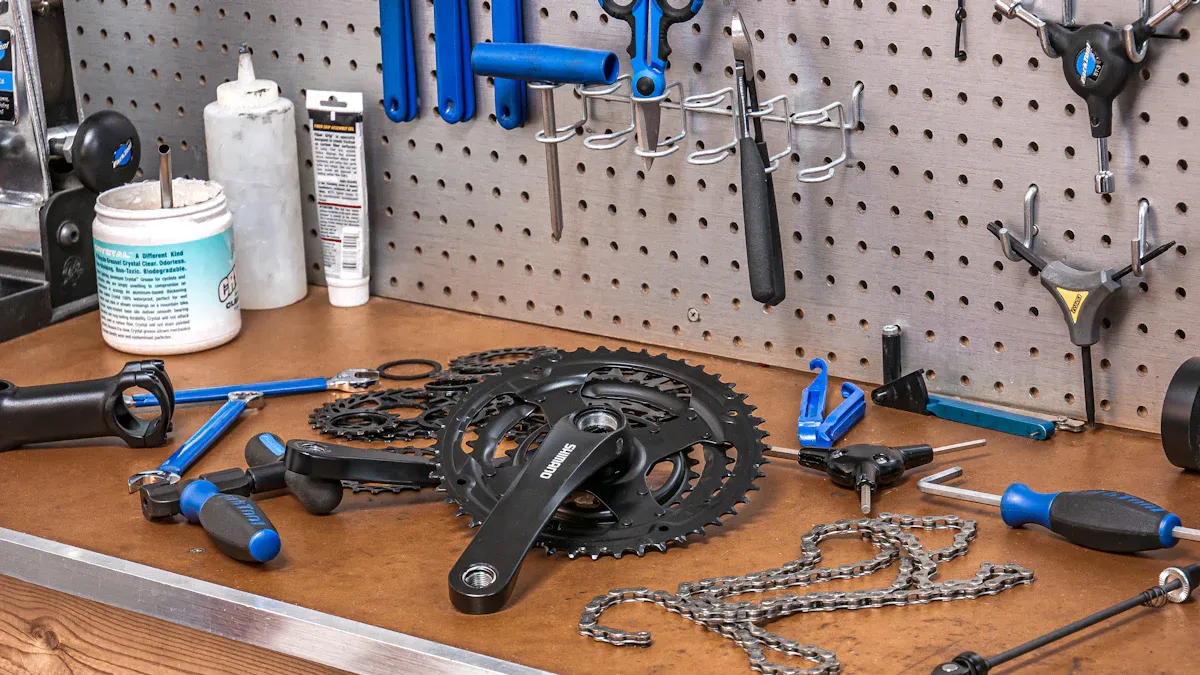
To keep your mountain bike in great shape, you need a basic tool kit. Here’s a list of essential tools you should have:
Tape measure
Calipers (digital)
Hex tools (2 mm to 10 mm)
Torx®-compatible tools (T10, T25, T30)
Screwdriver (#2 cross tip & 3 mm straight blade)
Torque wrench with bits
Hammer with mallet side
Adjustable wrench
Needlenose pliers
Scissors
Chain tool
Flashlight/headlamp
Floor pump
Repair stand
Grease (bicycle specific)
Chain lubricant
Electrician’s tape
Zip ties (mixed sizes and colors)
Clean cotton rags
Nitrile mechanic’s gloves
These tools will help you perform basic bike maintenance tasks effectively.
Cleaning Supplies
Keeping your bike clean is crucial for its performance. Here are some recommended cleaning supplies:
Product Name | Key Features |
|---|---|
Muc-Off’s Pink Cleaner | Biodegradable, safe on all surfaces, effective for road and mountain bikes, alkaline-based. |
Finish Line Ecotech Degreaser | Biodegradable, strong on metal parts, safe for rubber o-rings and seals, meets environmental regulations. |
Peaty’s LoamFoam | Creates a dry ceramic coating, excels in dry conditions, biodegradable, includes UV tracer dye. |
SKS WASH Your Bike | Biodegradable, effective on greasy components, can be diluted for lighter cleaning. |
Pedro’s Pig Juice | Highly efficient degreaser, safe for humans and the environment. |
Using eco-friendly products, like mountainFLOW’s Bike Wash + Degreaser, helps you clean without harming the environment. This product is non-toxic and petroleum-free, making it safe to use near natural water sources.
By having the right tools and cleaning supplies, you can ensure your bike remains in top condition, enhancing your riding experience.
Maintenance Tasks
Cleaning and Lubricating
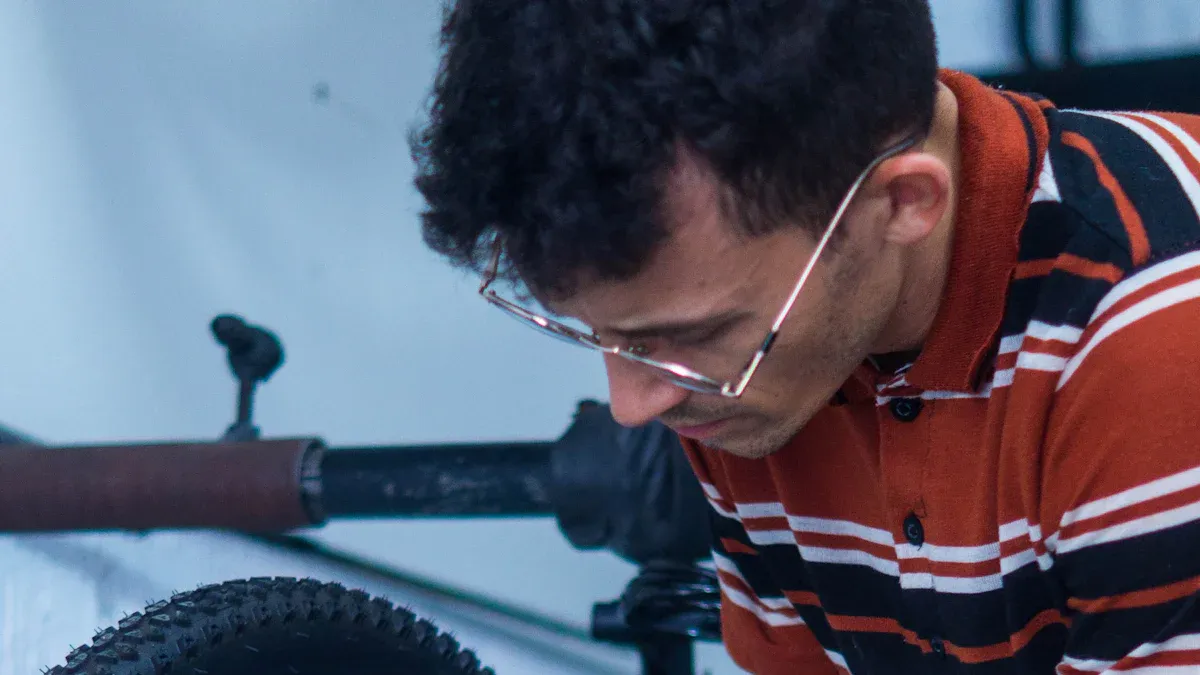
Cleaning and lubricating your bike is essential for maintaining its performance. Follow these steps to keep your mountain bike in top shape:
Rinse off the grit and grime. Use a sponge and a soap solution for a thorough clean.
Spray the entire bike down, focusing on areas with mud build-up, using a bike wash solution.
Scrub tires, rims, and tight spaces with a large soft brush.
Rinse and hand dry the bike with a microfiber towel.
Clean and lube your chain by ensuring it is dry, applying lube one link at a time, and wiping off excess.
You should clean your mountain bike after every hard ride or two. If you ride in muddy conditions, perform a deep clean after each ride. For electric mountain bikes, clean weekly if used in sand, snow, rain, or mud. Regular cleaning and lubricating help prevent wear and tear on the drivetrain and other components.
Pre-Ride Inspection
Before hitting the trails, conduct a pre-ride inspection. This quick check ensures your bike is safe and ready for the ride. Here’s what to inspect:
Air pressure: Check that your tires are inflated to the recommended PSI, which typically ranges from 30 to 50.
Brakes: Inspect brake pads for wear and ensure they are securely mounted. Squeeze the brake levers to check functionality.
Crankset/Chain/Cassette: Look for any signs of wear or damage. Check for chain wear and ensure the drivetrain operates smoothly.
Derailleur: Ensure that gears shift smoothly and that the derailleur is properly aligned.
Follow these steps during your pre-ride inspection:
Check that the quick-release levers or axle nuts are tight.
Spin the wheels to check for wobbles.
Examine tires for excessive wear.
Ensure the handlebar and stem are tight.
Test the headset for tightness.
Neglecting this inspection can lead to issues like flat tires or faulty brakes, which can end your ride unexpectedly.
Checking Brakes and Tires
Regularly checking your brakes and tires is crucial for safety. Here’s how to do it effectively:
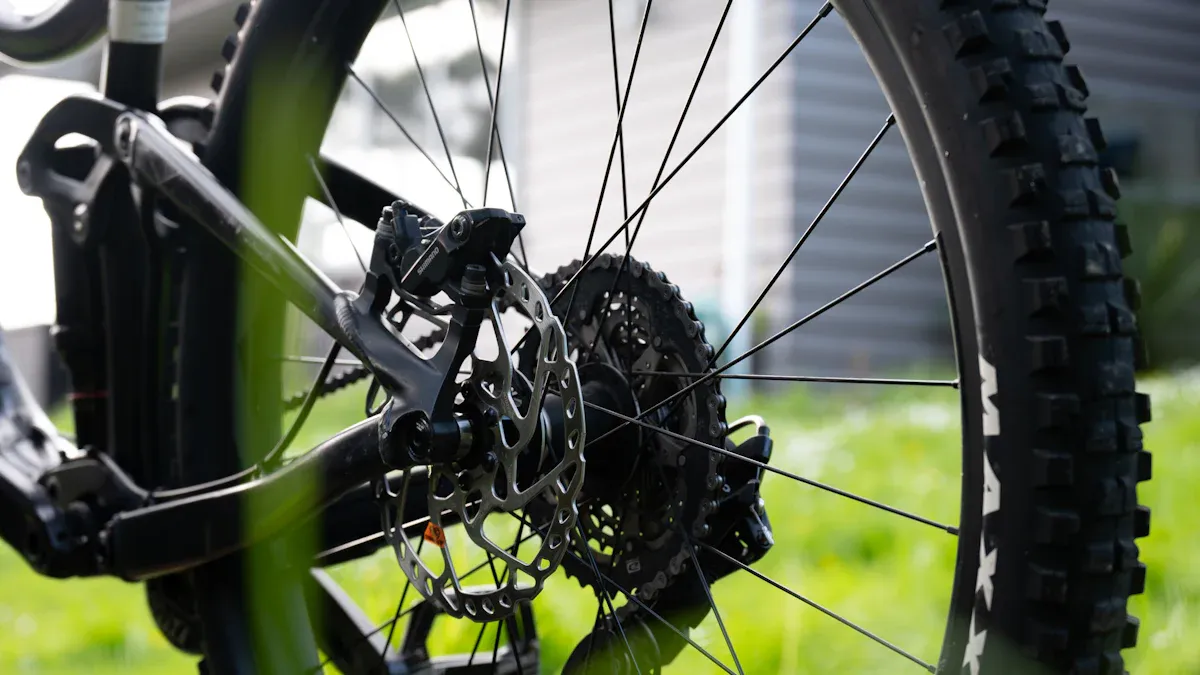
Brakes: Visually inspect calipers and ensure rotors are centered between brake pads. Adjust calipers by loosening bolts and repositioning them for even contact with the rotor. Clean brake pads and rotors with rubbing alcohol to remove contaminants. Regularly check brake levers for proper engagement and positioning.
Tires: Verify tire pressure before every ride. Lower tire pressure improves shock absorption and traction on rough terrain, while higher pressure is suitable for on-road riding. Inspect tires for excessive wear and replace them if necessary.
By following these maintenance tasks, you can enhance your mountain bike’s performance and ensure a safer riding experience. Regular service and inspections help identify problems before they escalate, keeping you safe on the trails.
Mountain Bike Maintenance Schedule
Routine Maintenance
Establishing a routine maintenance schedule is vital for keeping your mountain bike in excellent condition. Regular checks and tasks can prevent major issues and extend the life of your bike. Here’s a timeline for essential maintenance tasks:
After Every Ride:
Check tire pressure. Adjust according to the terrain using a tire pressure guide.
Spin the wheels to ensure they rotate freely without drag.
Wipe down the chain and apply a light lubricant.
Tighten axles and perform a quick rinse to remove dirt.
Every 3–5 Rides:
Inspect brake pads for wear. Replace them if they are too thin.
Check suspension air pressure to ensure optimal performance.
Measure chain wear to prevent drivetrain issues.
Torque bolts to maintain proper tightness.
Every 3–6 Months:
Service fork lowers to keep the suspension functioning smoothly.
Bleed brakes if necessary to maintain braking power.
Deep-clean the drivetrain to remove grime and improve efficiency.
Refresh tubeless sealant to prevent air loss.
Inspect tires for damage or excessive wear.
Every 6–12 Months:
Service the rear shock to ensure it operates correctly.
Conduct a full frame inspection, checking bearings, headset, and bottom bracket.
By following this routine maintenance schedule, you can enhance your mountain bike’s performance and safety. Regular maintenance ensures optimal performance, enhancing your overall riding experience.
Seasonal Checks
As the seasons change, so do the conditions in which you ride. Performing seasonal checks helps prepare your bike for different weather and trail conditions. Here are some key tasks to include in your seasonal maintenance:
Frequency | Tasks |
|---|---|
Spring | Inspect and clean the drivetrain thoroughly. Check for any rust or wear. |
Summer | Ensure brakes are functioning well, especially after wet rides. |
Fall | Check tire tread and replace if necessary. Prepare for winter conditions. |
Winter | Clean and lubricate components more frequently due to moisture and salt. |
During seasonal checks, look for signs that your bike may need a full overhaul. Indicators include worn bearings, unusual noises, difficulty shifting gears, and poor brake performance. Addressing these issues early can prevent major problems and ensure a safer ride.
By integrating these seasonal checks into your mountain bike maintenance schedule, you can maximize your bike’s longevity and performance. Remember, consistent maintenance not only enhances your riding experience but also saves you money on costly repairs down the line.
Regular maintenance keeps your mountain bike performing well and extends its lifespan. By taking care of your bike, you can save money. For example:
One user spends about $250-300 annually on self-maintenance.
Chain waxing reduces costs on cassettes and chainrings.
Start your maintenance routine today for a better riding experience!
FAQ
What tools do I need for basic bike maintenance?
You need a basic tool kit, including hex tools, a chain tool, a torque wrench, and cleaning supplies.
How often should I clean my mountain bike?
Clean your bike after every hard ride or every two rides, especially if you ride in muddy conditions.
What should I check during a pre-ride inspection?
Check tire pressure, brakes, crankset, chain, and ensure quick-release levers are tight before every ride.