

Emergency preparedness becomes tangible during a blackout, flood, wildfire evacuation, or long road trip. I focus on portable water, shelter, communication, lighting, and organized kits that remain useful between emergencies. My shortlist covers solo travelers, couples, families, campers, and households that need practical backup without building an oversized stockpile.
The Lineup, Simplified

LIMA-TANGO 48-Hour Solo Survival Kit

S.O.S Emergency Drinking Water 62 Packets

LIMA-TANGO 72-Hour Alpha Two-Person Survival Kit
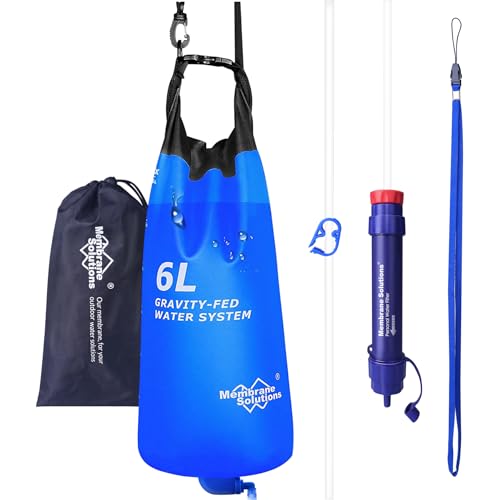
Membrane Solutions 6L Gravity Water Filter Pro

LifeStraw Peak Series Personal Water Filter Straw

Scepter 2.5-Gallon BPA-Free Water Container

FosPower NOAA Emergency Radio A1 7400mWh

FosPower NOAA Emergency Radio A3 14800mWh
Why These Options Stand Out
A single 45-liter backpack can remove a surprising amount of decision-making during a hurried evacuation. I see this kit as a sensible starting point for one camper, apartment resident, or road-tripping driver who needs shelter, food, hydration, lighting, first aid, and basic tools gathered in one place.
The 228-piece format makes organization more important than counting individual items. Compared with the later LIMA-TANGO two-person kit, this model is the leaner personal setup, though the 48-hour label represents a planning target rather than a guarantee that every disruption lasts precisely two days.
Points In Its Favor
- Groups 228 pieces in a 45-liter go bag for faster departure.
- Includes shelter, nutrition, hydration, lighting, and first-aid categories.
- Offers a shovel, hammer multitool, wire saw, compass, and fishing kit for varied field tasks.
- Duct tape, a sewing kit, foil, and a spork cover repair, food handling, and household needs.
- Works well as a vehicle kit, camping supplement, or solo evacuation pack.
Small Caveats
- A packed 45-liter bag may become burdensome on long walks without a properly adjusted strap system.
- The broad assortment can produce duplicate supplies that still need inventory and replacement checks.
Who It Suits Best
This kit best serves solo campers, drivers, and households establishing one flexible evacuation pack.
Where A Sibling Pick Shines
Couples need more capacity and a broader tool set from the LIMA-TANGO 72-Hour Alpha Two-Person Survival Kit.
Water occupies more space than most emergency planners initially expect, so 62 individually portioned packets solve a practical storage problem. I can divide them among a vehicle, hiking pack, home cabinet, or office without handling one heavy container.
The stated five-year shelf life makes rotation easier than short-duration fresh-water reserves, particularly for households that check supplies only once or twice a year. Each packet weighs 4.22 ounces, which keeps the total manageable; still, the total water quantity remains modest, so it supplements rather than replaces a full hydration reserve.
A Few Strong Suits
- Individual packets simplify portioning and reduce waste.
- The 62-count pack works across several emergency locations.
- A five-year shelf life supports planned inventory rotation.
- Flat packets fit cabinet, glovebox, and backpack gaps.
Worth Noting
- Sixty-two packets are not a complete water supply for a large household.
- Sealed packets need protection from moisture, punctures, and prolonged heat during storage.
Quick Facts
Made For
Lightweight packers and drivers benefit most from the portioned format and low-storage design.
A Better Fit Elsewhere
Group campers benefit more from the higher-capacity Membrane Solutions 6L Gravity Water Filter Pro.
Two adults need more than duplicated accessories, and the Alpha kit adds the field tools that make shared planning more workable. Its 291 pieces cover shelter, water filtration, food, lighting, hygiene, first aid, and repairs while staying within the same 45-liter pack size as the Solo model.
I favor this setup for couples, parents with older children, or two-person road teams that can divide weight. The larger inventory sounds impressive, yet the real benefit comes from assigning a place and purpose to every component before departure.
A Strong Showing
- Supports a 72-hour planning target for two adults.
- Includes 100 feet of paracord, a folding saw, shovel, wire saw, and full-tang cutting tool.
- Adds hygiene supplies beyond the Solo kit’s category mix.
- First-aid inventory includes a tourniquet, chest seal, burn gel, shears, dressings, and alcohol pads.
- The shared 45-liter format encourages two people to divide heavier items.
Practical Considerations
- A 45-liter pack may strain one person during a difficult evacuation.
- Owners still need scheduled checks for food, filters, batteries, and consumable first-aid materials.
Right Fit For
Couples, families, and two-person field teams receive the most balanced inventory in this roundup.
Reach For A Different Pick When
Solo travelers should consider the lighter planning focus of the LIMA-TANGO 48-Hour Solo Survival Kit.
A six-liter gravity filter makes more sense at basecamp than in a fast-moving hiking kit. I associate gravity filtration with water passing through a membrane under pressure created by gravity, so the system can process water while the group completes other camp tasks.
The stated three-to-six-person capacity suits a family campsite, cabin outage, or group preparing for a longer disruption. Unlike the LifeStraw Peak Series, which serves one drinker, this system centralizes collection and processing for an entire group.
Good Reasons To Consider
- The 6L capacity targets group water needs.
- Gravity operation avoids continuous powered pumping.
- Basecamp use allows collection and filtration to happen together.
- Group capacity reduces the number of personal filters required.
Where It May Fall Short
- The larger format takes more pack space than a personal straw filter.
- Used membranes and collection containers require care during cleaning and storage.
At A Glance
Best Suited To
Family campers and basecamp groups gain the most from its shared processing capacity.
Another Choice May Suit
Fast-moving backpackers should compare its bulk with the LifeStraw Peak Series Personal Water Filter Straw.
Personal filtration solves a narrower problem than the preceding group filter: one traveler needs water without carrying shared equipment. I see the LifeStraw Peak Series as a natural fit for day hikes, international travel, cycling commutes, and emergency go-bags where every gram matters.
The BPA-free construction keeps the drinking-contact component simple, while the straw format eliminates separate pumping hardware. In my view, owners should still treat it as backup hydration rather than a reason to avoid carrying enough water for a normal outing.
Bright Spots
- Personal format suits backpacks, desk kits, and travel bags.
- No separate pump is needed for each drinker.
- BPA-free construction supports regular personal use.
- Dark Mountain Gray color suits outdoor gear.
Honest Caveats
- The personal format cannot match the 6L capacity of a group filter.
- Owners commonly need to keep the drinking opening and filter housing clean.
Who Should Grab It
Backpackers, cyclists, and solo travelers benefit from the compact personal design.
Look Elsewhere When
Camping families need the shared capacity of the Membrane Solutions 6L Gravity Water Filter Pro.
Water storage and water treatment serve different stages of preparation, which is where this Scepter container earns a place. Its 2.5-gallon capacity holds enough for a campsite, vehicle reserve, or household buffer without reaching the size of a stationary container.
The food-grade, BPA-free construction is intended not to add taste, odor, or chemicals to stored water. Compared with 62 disposable packets, the container reduces recurring packaging but requires cleaning, secure transport, and a defined replacement schedule for stored water.
Everyday Advantages
- Holds a practical camping and vehicle-sized reserve.
- Reusable construction replaces repeated packet purchases.
- Food-grade, BPA-free construction suits drinking-water storage.
- Impact-resistant design suits outdoor handling.
Details To Watch
- Full capacity makes the container too heavy for many long-distance carry scenarios.
- Cleaning and sanitizing are essential recurring ownership tasks.
Core Details
Whose Shelf It Belongs On
Campers, RV travelers, and drivers need a reusable reserve they can transport and refill.
Consider Something Else When
Backpackers should favor the lower-bulk LifeStraw Peak Series Personal Water Filter Straw.
The A1 addresses a gap left by food and water kits: receiving official forecasts and operating a small device during an outage. I place it in a kitchen, vehicle, or bedside kit as a communication hub that does not depend on a wall outlet.
Its 7,400mWh power bank, solar panel, and hand crank provide three charging paths, while NOAA reception supports localized weather information. The orange housing is easy to locate in a dark cupboard, though the radio still needs routine battery and charging checks.
What Earns Its Place
- NOAA radio reception supports local forecast information.
- Solar, hand-crank, and stored power options add flexibility.
- The 7,400mWh bank can support small devices.
- Orange construction stands out in emergency storage.
A Few Limitations
- Solar charging depends strongly on available light and setup.
- Hand cranking adds manual work during extended use.
Built With In Mind
Small households and solo travelers gain a compact information and charging hub.
Swap It Out When
Longer outages and heavier device charging favor the FosPower NOAA Emergency Radio A3 14800mWh.
The A3 is the more substantial home-outage companion of the two FosPower radios. Its 14,800mWh power bank doubles the A1’s stated capacity, which matters for families managing several phones, lights, and radio functions over an extended disruption.
AM/FM reception, USB charging, solar input, hand-crank charging, an SOS alarm, and a flashlight consolidate several emergency functions in one orange unit. I would still distribute gear across locations because a single radio left at home cannot help someone sheltering in a vehicle.
Where It Excels
- The 14,800mWh bank offers a larger stated reserve than the A1.
- NOAA and AM/FM reception cover multiple listening needs.
- USB, solar, and hand-crank charging provide several paths.
- The flashlight and SOS alarm support everyday response routines.
Worth Bearing In Mind
- Its larger battery and feature set reduce space in a lightweight hiking kit.
- Charging states and flashlight readiness still require scheduled checks.
Feature Snapshot
Who Will Love This
Families managing several devices benefit from the A3’s larger power reserve.
The Right Fit
The FosPower A1 7400mWh is the more compact option for smaller kits and lighter travel loads.
Build a Plan Around the People and Risks You Face
I start with the hazards most likely to affect the household. A wildfire region needs evacuation supplies and transport readiness, while a flood-prone neighborhood benefits from raised storage and water protection. Camping adds a different set of needs than a prolonged urban outage.
Capacity matters next. A solo traveler can manage more easily with a personal filter and compact radio, while a couple should divide the weight of a two-person bag. Group campers may prefer a larger gravity filter, and families often need multiple water reserves stored in separate locations.
Maintenance determines whether the gear remains useful. I recommend dating consumables, checking water containers, cleaning filters, testing radio functions, and reviewing flashlight batteries on a recurring calendar. Inventory cards inside each box turn a general emergency plan into specific replacement tasks.
Common Mistakes in Emergency Kit Planning
Mistakes Worth Dodging
Buying only by piece count can hide weak coverage in food, water, lighting, or medical supplies. I prefer assigning each item a task before purchasing, then checking whether the kit supports the household’s actual evacuation time and mobility.
What Separates Premium From Basic
Larger power banks, higher water capacity, and fuller tool inventories serve demanding users better. A compact personal filter or radio can be more suitable for travel, even though it contains fewer features than a group-oriented setup.
Frequently Asked Questions
How much emergency gear does one person need?
I recommend beginning with water, food, lighting, first aid, communication, and a compact shelter. Local hazards and trip length determine the quantities.
Are large survival kits easier to use?
A larger kit offers more capacity but can become harder to carry. I favor smaller modular packs for people with limited mobility or children who may need their own gear.
How often should emergency supplies be checked?
I use a schedule to inspect batteries, radio controls, water containers, filters, and food dates. Quarterly checks are practical, with an additional review before storms or travel seasons.
What belongs in a vehicle emergency kit?
Water, a personal filter, flashlight, weather radio, first aid, tools, and seasonally appropriate clothing form a useful base. I also keep the vehicle kit separate from the household reserve.
Is a water filter enough for an emergency?
A filter handles available water, but clean stored water remains necessary. I carry both because treatment equipment cannot create hydration without a water source.
Wrap Up
The most useful setup is one that matches the household, the likely disruption, and the people responsible for carrying it. I would pair a compact go bag with distributed water, a communication radio, and a realistic maintenance schedule rather than relying on one oversized purchase. Preparedness works best when every item has a place and a purpose.
