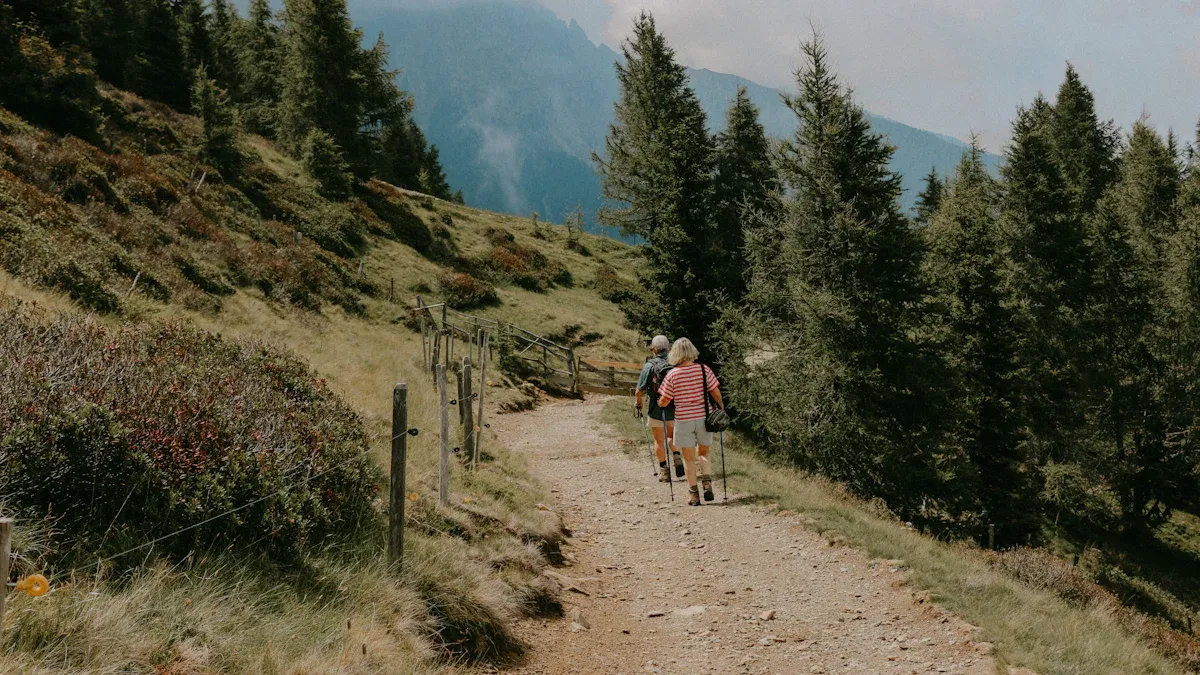
When you’re out hiking for hours, blisters can really ruin your adventure. Studies show that about 69.5% of hikers develop blisters, causing discomfort and pain. To enjoy hiking to the fullest, you need to prevent blisters. Proper footwear, the right sock choice, and good skin care are essential in keeping your feet happy on the trail.
Key Takeaways
Choose well-fitted hiking boots to prevent blisters. Shoes should hug your feet without being too tight or too loose.
Select moisture-wicking socks to keep your feet dry. This reduces friction and helps prevent blister formation.
Address hot spots immediately by taking breaks and applying blister prevention products. Quick action can stop blisters before they start.
Footwear
Fit and Material
When it comes to preventing blisters, the fit and material of your hiking boots play a crucial role. Research shows that ill-fitting shoes are a major contributor to foot blisters. If your shoes are too tight, they can create excessive pressure on bony areas, increasing friction. On the flip side, shoes that are too loose allow your foot to slide around, which can also lead to blisters. To avoid this, always choose well-fitted shoes that hug your feet without being constrictive.
Here are some materials to consider when selecting your hiking boots:
Leather: Durable and water-resistant, leather molds to your foot over time, providing a custom fit.
Synthetic Materials: Lightweight and breathable, these materials often dry quickly and help regulate moisture.
Mesh Panels: These enhance ventilation, keeping your feet cool and reducing sweat buildup.
Choosing the right materials can significantly reduce the risk of blisters during your hikes.
Lacing Techniques
Lacing your hiking boots correctly can make a world of difference in comfort and blister prevention. Here are some effective lacing techniques you should try:
Lacing Technique | Purpose | Benefits |
|---|---|---|
Heel-Lock (Lace-Lock) | Prevents heel slippage and keeps the foot in place during downhill hikes | Stops heel from rubbing, prevents toes from jamming, provides stability and support during descents |
Surgeon’s Knot | Secures the foot in heavy-duty boots during steep descents | Locks the foot in place, prevents forward movement, enhances stability on uneven terrain |
Using the Heel-Lock technique can help keep your heel from rubbing against the back of the shoe, which is especially important during downhill hiking. This method prevents your toes from jamming into the front of the boot, reducing the chances of blisters. The Surgeon’s Knot is another great option, as it locks your foot in place, preventing unwanted movement that can lead to discomfort.
By paying attention to the fit and material of your hiking boots and using effective lacing techniques, you can significantly reduce the risk of blisters on your next hiking adventure.
Socks
When it comes to preventing blisters, the right socks are just as important as your footwear. Proper fitting socks can help manage moisture and reduce friction, which are two key factors in blister formation. Here’s how socks play a vital role in keeping your feet comfortable on long hikes:
Moisture Management: Moisture-wicking socks draw sweat away from your skin. This helps keep your feet dry, reducing the damp environment that can lead to blisters.
Friction Reduction: Socks with lower friction levels allow your skin to move more smoothly against the sock material. This minimizes shear distortions that can cause blisters.
Double-Layer Socks: These provide a low-friction interface between the layers, further decreasing the risk of blister formation.
Sock Materials
Choosing the right materials for your hiking socks can make a significant difference. Here’s a quick comparison of some popular sock materials:
Sock Material | Moisture Management | Temperature Regulation | Odor Control | Quick Drying |
|---|---|---|---|---|
Merino Wool | Excellent | Good | Natural | Moderate |
CoolMax | Good | Fair | Poor | Fast |
Cotton | Poor | Poor | Poor | Slow |
Merino wool is often the top choice for hikers. It excels at moisture management and keeps your feet warm in cold weather while remaining breathable in warmer conditions. On the other hand, cotton socks can retain moisture, which is a recipe for blisters.
Liner Socks
Using liner socks can be a game-changer for blister prevention. Here’s why you might want to consider them:
Reduced Friction: Liner socks allow the outer sock to move independently, which helps prevent hot spots and friction zones. This reduces chafing and keeps your feet comfortable.
Moisture Wicking: They wick moisture away from your feet into the outer sock, helping to keep your feet dry. This is essential for preventing blisters during long hikes.
When selecting hiking socks, consider the thickness. Thicker socks provide more cushioning and shock absorption, which can protect against blisters during high-impact activities. However, if they create a tighter fit or increase friction, they might actually contribute to blister formation. Thinner socks can offer a snugger fit that reduces movement but may lack sufficient cushioning, potentially leading to blisters in high-impact scenarios.
By choosing the right socks and considering the benefits of liner socks, you can significantly reduce your chances of developing blisters on your next hiking adventure.
Skin Care
Pre-Hike Preparation
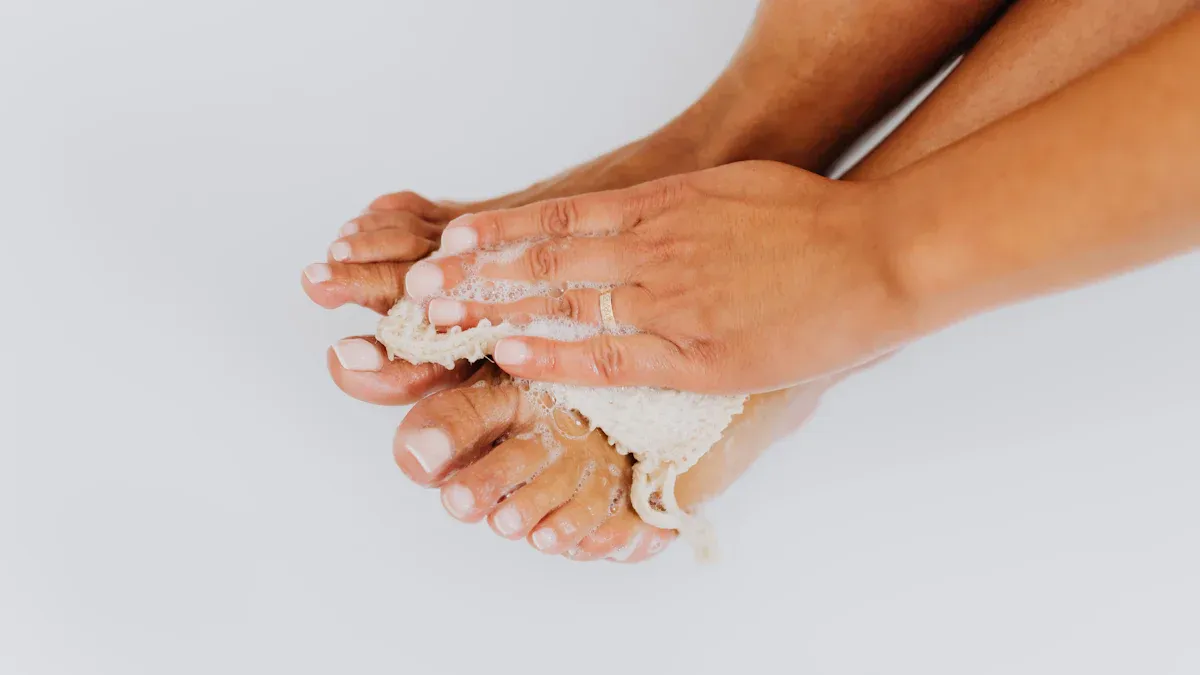
Before you hit the trail, taking care of your feet can make a big difference in preventing blisters. Here are some dermatologist-recommended tips to prepare your feet:
Clip your toenails to avoid painful blisters.
Keep your feet clean to reduce irritation.
Use a foot pampering kit to remove hard skin and moisturize cracked heels.
Soak your feet in warm water with Epsom salt to exfoliate dead skin.
Regularly massage your feet to improve blood flow and relieve stress.
Moisturizing your feet is essential, but be cautious. While hydration can make your skin more flexible, it can also increase the risk of blisters if your socks get wet. So, aim to keep your feet dry while ensuring they’re well cared for.
Blister Prevention Products
Using the right products can further enhance your blister prevention strategy. Here are some popular options among long-distance hikers:
Engo Blister Patches: These patches stick to your shoes and reduce friction on blister-prone areas.
Gel Toe Protectors: They absorb shear forces, making them great for preventing pinch blisters.
Hydrocolloid Blister Plasters: These waterproof dressings help heal blisters and are a must-have in your hiking kit.
Leukotape: Known for its strong adhesive, it prevents hotspots and can support joints.
Additionally, applying a lubricant like Body Glide® or Vaseline® on your feet before putting on socks can significantly reduce friction. Reapply it during breaks to maintain protection. By combining proper skin care with these products, you can enjoy your hike without the worry of blisters.
Prevention Techniques
Addressing Hotspots
When you’re hiking, you might notice some areas on your feet feeling uncomfortable. These are called hot spots, and they can lead to blisters if you don’t address them quickly. Here’s what you can do:
Stop: As soon as you feel a hot spot, take a break. Continuing to hike can worsen the situation.
Do Something: Apply blister prevention products or adjust your footwear. This could mean loosening your laces or changing your socks.
As Lucas Trihey, an experienced trekker, puts it, “When I’ve been able to work closely with a group of trekkers or runners… pretty much zero blisters due primarily to immediate hotspot taping.” This highlights the importance of acting fast to prevent blisters.
Protective Barriers
Using protective barriers can be a game-changer in your blister prevention techniques. Here are some common options:
Moleskin: This soft, adhesive material sticks to your skin and provides a cushion against friction. Studies show that hikers using moleskin prophylactically reported 73% fewer hot spots compared to those relying solely on lubricants.
Blister Pads: These pads can absorb pressure and reduce friction on sensitive areas.
Tape: Athletic tape can be used to cover hot spots before they develop into blisters.
Remember, investing in proper footwear and moisture-wicking socks is essential. Keeping your feet dry and comfortable will help you avoid those pesky blisters. By implementing these strategies, you can enjoy your hiking adventures without the worry of blisters.
To enjoy your hiking adventures blister-free, remember to implement the strategies we’ve discussed. Proper footwear, the right socks, and effective skin care are essential. Don’t forget to address hotspots quickly and use protective barriers. By taking these steps, you can keep your feet happy and focus on the beauty of the trail ahead!
FAQ
What causes blisters while hiking?
Blisters form due to friction, moisture, and pressure on your skin. Proper footwear and socks can help prevent them.
How can I treat blisters on the trail?
Clean the area, apply a blister pad, and cover it with tape. Keep it protected until you finish hiking.
Should I hike with wet socks?
No, wet socks increase friction and moisture, leading to blisters. Always keep your feet dry while hiking.