

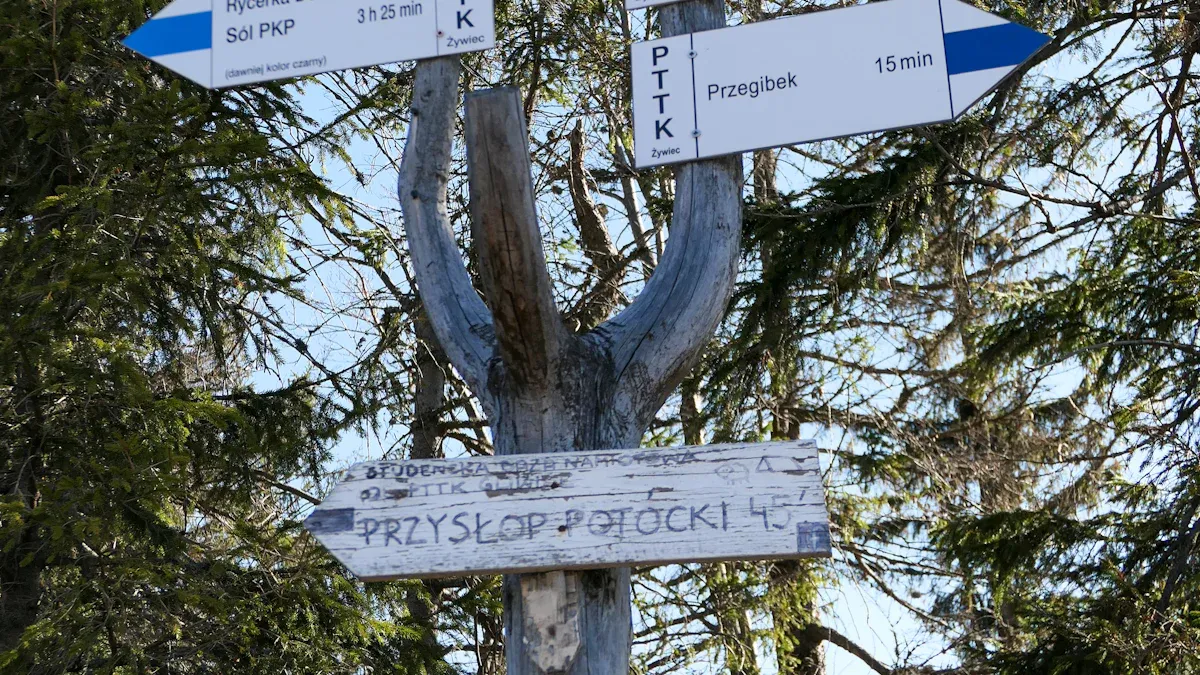
When you hike, trail markers and hiking signs play a vital role in guiding your journey. These markers help you stay on designated paths, significantly lowering the chances of getting lost. They also warn you about potential dangers, such as landslides or wildlife encounters. For less experienced hikers, understanding these signs is crucial. Clear signage not only enhances your safety but also reduces the need for search and rescue efforts on trails.
Key Takeaways
Trail markers, like blazes and cairns, guide hikers and prevent getting lost. Recognizing them is essential for safe navigation.
Always read trailhead signs before starting your hike. They provide important information about trail length, difficulty, and maps.
Pay attention to warning signs. They alert you to potential dangers, helping you make informed decisions and stay safe.
Follow regulatory signs to protect the environment. Adhering to rules helps preserve nature and ensures a safe hiking experience.
Use distance markers to track your progress. They motivate you and assist in emergencies by indicating your location.
Trail Markers
Blazes
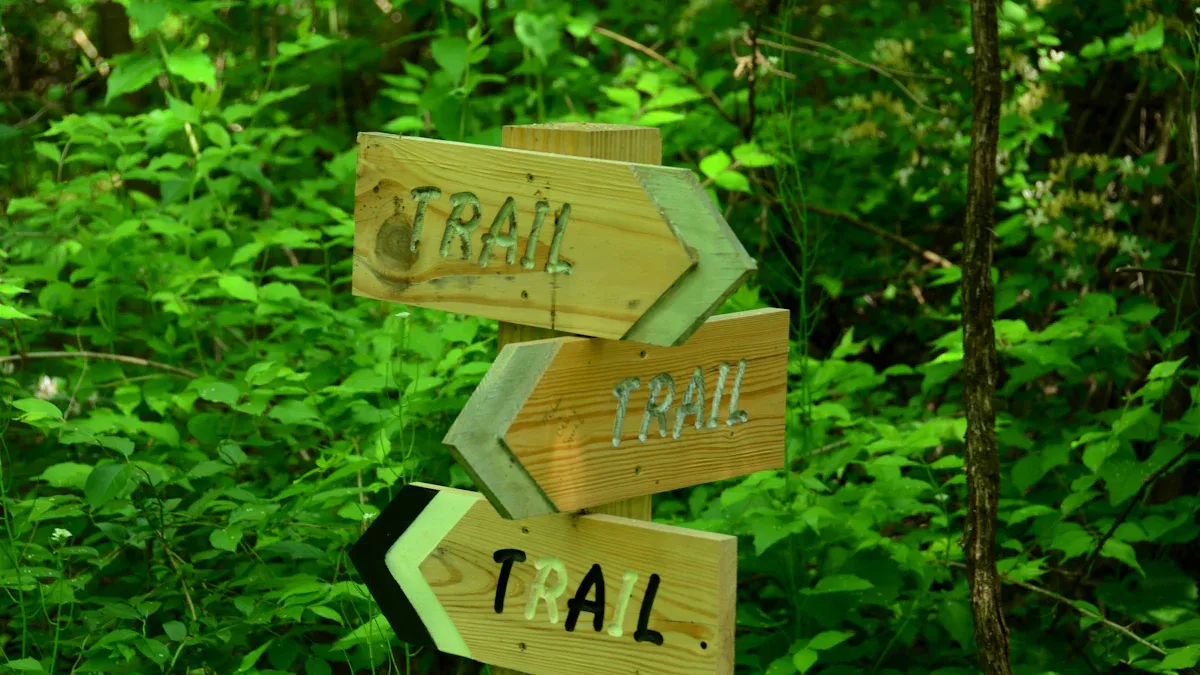
Blazes are one of the most common types of trail markers. You will often see them painted on trees or rocks along the trail. These markers help you stay on the correct path. A single blaze usually indicates the right direction, while two offset blazes signal a sharp turn.
Characteristic/Practice | Description |
|---|---|
Visibility | Blazes should be visible from both directions. |
Graded Sections | Require little or no blazing. |
Ungraded Sections | Should be carefully marked. |
Blazing Frequency | Only as needed to avoid waste and unsightliness. |
Timing | Blazing should occur as construction progresses. |
Specifics for Openings | Use posts or markers every 300 feet across meadows. |
Above Timber Line | Use small rocks (ducks) or monuments for marking. |
Doubtful Areas | Blazes and posts should be used for guidance. |
Recognizing blazes improves your navigation. They prevent you from getting lost or taking wrong turns. Blazes also confirm you are on the correct trail and provide distance and time estimates.
Cairns
Cairns are another type of trail marker, often found in rocky or alpine areas. These stone piles guide hikers through challenging terrain. You might see cairns in places where blazes are hard to maintain.
When building or encountering cairns, follow these best practices:
Avoid constructing unauthorized cairns to prevent environmental damage.
Do not tamper with existing cairns to maintain their navigational purpose.
Refrain from adding stones to prevent water accumulation and ice formation.
Stay on designated trails to minimize impact on the environment.
Cairns serve as important markers, especially in regions where other signs may not be visible. They help you navigate through difficult landscapes while respecting the natural environment.
Recognizing both blazes and cairns is essential for safe hiking. These trail markers guide you, ensuring you enjoy your outdoor adventures without getting lost.
Sign Types
Trailhead Signs
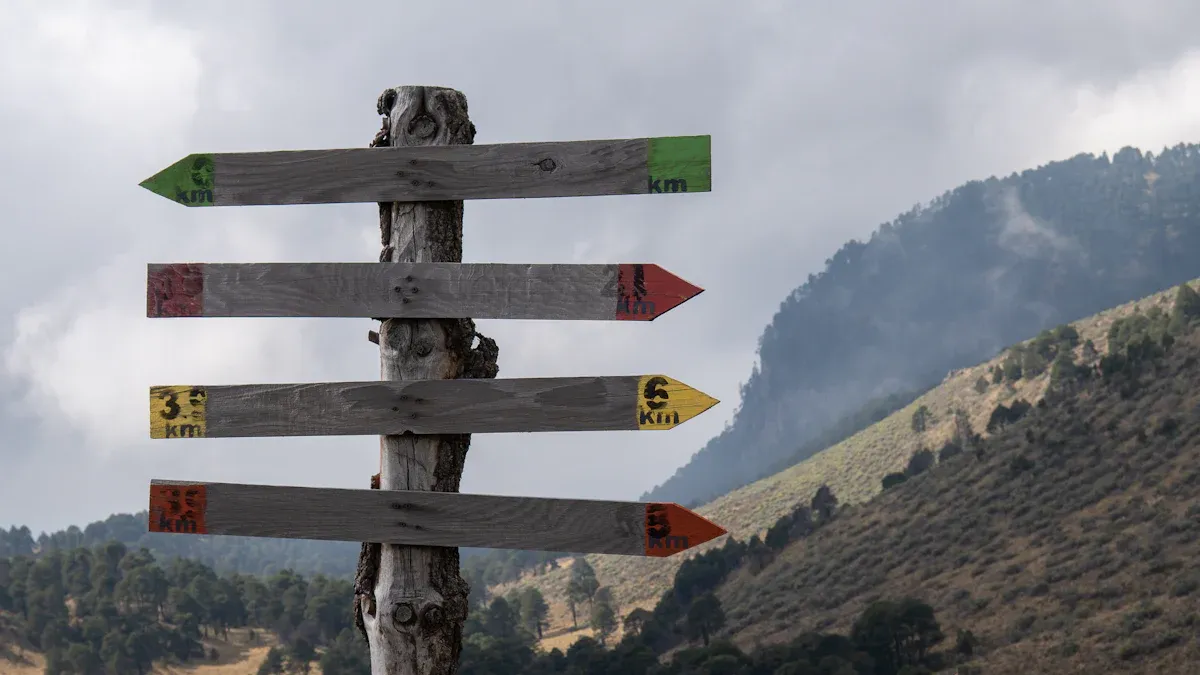
Trailhead signs mark the beginning of a hiking trail. These signs provide essential information to hikers before they start their journey. You will often find details about the trail’s length, difficulty level, and estimated time to complete it. Some trailhead signs also include maps that show the trail layout and nearby landmarks.
Tip: Always take a moment to read trailhead signs. They can help you prepare for your hike and set realistic expectations.
Directional Signs
Directional signs guide you along the trail. They help prevent you from straying off designated paths. These signs act as safety nets, keeping you away from potentially dangerous areas. By following directional signs, you also protect the environment. Staying on marked trails reduces erosion and preserves sensitive areas.
Here are some key benefits of directional signs:
They provide reassurance, especially for new hikers or those hiking alone.
They help you enjoy your experience without the fear of getting lost.
They often include symbols that indicate distances to various points along the trail.
Type of Marker | Description |
|---|---|
Paint Blazes | Rectangular marks on trees or rocks that guide hikers along the trail using simple symbols. |
Cairns | Stacked stone piles that serve as natural markers in areas where paint is ineffective. |
Upright Marker Posts | Posts used in open areas to guide hikers, often with reflective materials for visibility. |
Affixed Markers | Permanent signs that provide long-lasting guidance, often including distance markers or difficulty ratings. |
Reflective Tacks and Ribbons | Markers that shine in the dark, improving visibility for night navigation. |
Marking Flags | Temporary markers used during events or trail maintenance, easily visible and effective for guidance. |
Understanding these signs enhances your safety and navigation while hiking. They ensure you stay on the right path and enjoy your outdoor adventures.
Warning Signs
Warning signs play a crucial role in keeping you safe while hiking. They alert you to potential dangers and help you make informed decisions. By paying attention to these signs, you can avoid accidents and enjoy your outdoor experience.
Hazard Signs
Hazard signs indicate specific dangers you may encounter on the trail. Common types of hazards include:
Wildlife
Dangerous terrain
Potential hazards such as falling rocks
These signs serve as reminders to stay vigilant. For example, if you see a sign warning of falling rocks, you should be cautious and watch for loose debris.
Tip: Always heed the warnings on hazard signs. They can prevent accidents and keep you safe.
Wildlife Signs
Wildlife signs inform you about animals that may be present in the area. These signs often indicate the presence of bears, snakes, or other wildlife. Understanding these signs is essential for your safety. Here are some key points to remember:
Be aware of potential accidents by recognizing wildlife signs.
Take precautionary measures to reduce risk, such as making noise to avoid surprising animals.
Preparation, vigilance, and knowledge of basic safety measures are essential when hiking in areas with wildlife.
By following these guidelines, you can enjoy the beauty of nature while minimizing risks. Remember, being aware of your surroundings and the signs along the trail enhances your hiking experience.
Regulatory Signs
Regulatory signs play a crucial role in maintaining safety and protecting the environment on hiking trails. They inform you about rules and regulations that you must follow while enjoying the outdoors.
No Trespassing Signs
No trespassing signs mark property boundaries and notify you of restricted areas. These signs serve a legal purpose by enhancing the property owner’s rights. They provide clear evidence of the owner’s intent to limit access. If you ignore these signs, you may face penalties, which can vary by state. Penalties may include fines or even imprisonment, especially if you cause property damage.
Leave No Trace Signs
Leave No Trace signs promote responsible behavior among hikers. They educate you on minimizing your environmental impact while enjoying nature. Here are some key points about Leave No Trace principles:
They encourage you to pack out what you pack in, reducing litter on trails.
They remind you to stay on designated paths to protect vegetation and wildlife.
They foster a culture of conservation, urging you to be mindful of your actions.
While these principles focus on individual responsibility, they can sometimes overlook larger environmental issues. For example, personal actions like littering are important, but they should not distract from addressing broader conservation efforts.
Sign Type | Purpose |
|---|---|
Regulatory Signs | Enforce laws and rules on trails |
Informational Signs | Optimize flow and provide guidance |
Interpretive Signs | Invite reflection on nature and history |
Adhering to regulatory signs is essential for both your safety and the protection of natural resources. Staying on designated trails helps prevent damage to vegetation, rock formations, and water sources. By following these signs, you contribute to preserving the beauty of the outdoors for future generations.
Distance Markers
Mile Markers
Mile markers are essential tools for hikers. They help you track your progress along the trail. Knowing how far you have traveled can motivate you to continue your hike. These markers also provide important information in emergencies. If you encounter trouble, you can tell rescuers your location based on the nearest mile marker. This helps them find you quickly.
Mile markers are typically spaced according to specific standards. Here’s how they are usually placed:
Environment | Marker Spacing |
|---|---|
Dense Vegetation | Approximately 20 feet |
Open Fields | Up to 100 yards |
Markers should be visible and easy to spot. You can often find them every 100 feet to align with trail maps. This visibility is crucial, especially in areas with varying environments.
Progress Indicators
Progress indicators serve as additional guides on your hiking journey. These markers show how far you have come and how much farther you need to go. They can be simple signs or more detailed markers that indicate distances to specific points, such as campsites or scenic overlooks.
Here are some benefits of using progress indicators:
They help you manage your time effectively.
You can plan breaks based on how far you have traveled.
They provide reassurance, especially on longer hikes.
By keeping an eye on these markers, you can enjoy your hike without worrying about getting lost. Distance markers and progress indicators work together to enhance your hiking experience. They ensure you stay on track and reach your destination safely.
Understanding trail markers and hiking signs is essential for your safety on the trails. These markers guide you and help you stay on designated paths, which protects both you and the environment. Recognizing these signs can prevent you from getting lost, especially in unfamiliar areas.
Tip: Take time to learn about the different formats, shapes, and colors of blazes. Misinterpretation can lead to confusion and wandering off the trail, a primary reason hikers get lost.
Physical trail signs remain crucial, especially when technology fails. Developing your directional skills by learning to read trail markers ensures you stay safe while hiking.
By paying attention to these signs, you enhance your hiking experience and enjoy the beauty of nature without worry.
FAQ
What should I do if I get lost on a trail?
Stay calm and retrace your steps to the last known marker. If you can’t find your way, stay put and signal for help. Use your phone if you have service to call for assistance.
How can I prepare for a hike?
Check the weather, pack enough water and snacks, and wear appropriate clothing. Familiarize yourself with the trail map and understand the markers you may encounter.
Are trail markers the same everywhere?
No, trail markers vary by region and trail. Different colors and shapes indicate different trails or directions. Always familiarize yourself with local trail marking systems before hiking.
What is the purpose of Leave No Trace signs?
Leave No Trace signs educate hikers about responsible outdoor practices. They encourage you to minimize your impact on the environment, ensuring trails remain beautiful for future visitors.
How can I identify wildlife signs on the trail?
Wildlife signs often include warnings about animal presence, such as bears or snakes. Look for signs indicating animal tracks or droppings, and always be cautious in areas marked for wildlife.
