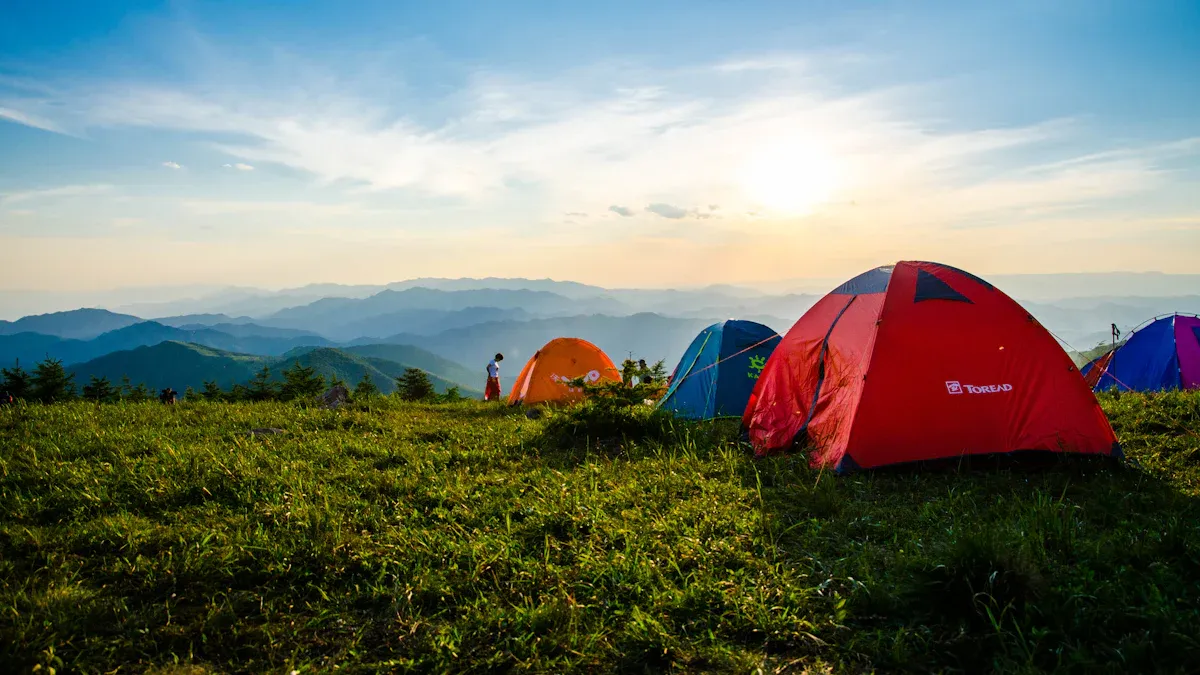
Choosing a campsite is crucial for a successful camping experience. You want to ensure that you select the perfect spot that fits your needs. The interplay between terrain, weather, and safety plays a significant role in this decision. When you take the time to prepare, you can enjoy your time outdoors with peace of mind. A well-chosen campsite location can enhance your adventure, making it more comfortable and enjoyable.
Key Takeaways
Choose level ground for your campsite. This ensures stability for your tent and comfort during sleep.
Set up at least 200 feet away from water sources. This distance protects wildlife and prevents water contamination.
Check the weather forecast before your trip. Being aware of conditions helps you stay safe and comfortable.
Be mindful of hazards like dead branches and steep slopes. Avoiding these risks enhances your safety while camping.
Prepare for emergencies by packing a first aid kit and informing someone about your plans. This ensures help is available if needed.
Terrain Considerations
Level Ground
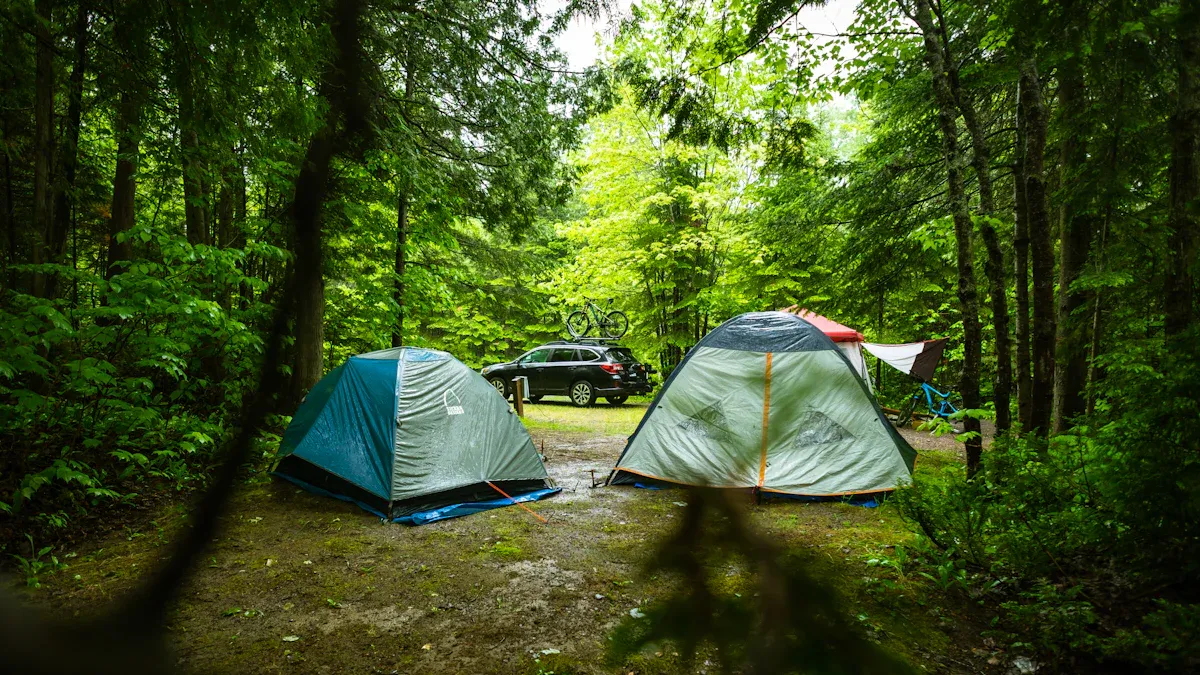
When you’re choosing a campsite, finding level ground is one of the most important factors. A flat area helps ensure your tent stays stable and comfortable. If you set up on a slope, you might find yourself rolling around in your sleep, which can lead to a restless night. Plus, uneven ground can cause issues with your camping gear. For example, appliances like refrigerators may not work properly if they’re on a tilt.
Here are some key points to consider about level ground:
Look for flat areas free from holes or debris. This enhances stability and reduces the risk of accidents.
Avoid sites near cliffs or steep slopes. These can be dangerous, especially during storms or high winds.
Check for natural drainage. You don’t want to wake up in a puddle after a rainstorm!
Choosing a campsite with these considerations in mind will help you enjoy your camping experience without unnecessary discomfort.
Distance from Water
Setting up your campsite too close to water can lead to several problems. While you might think being near a lake or river is convenient, it can actually pose risks. Here’s what you need to know:
Risk Type | Description |
|---|---|
Too Close to Water | Can lead to contamination of water with waste or soap, disturb habitats, and cause cooler temperatures. |
Too Far from Water | Results in challenges accessing water for essential needs like drinking, cooking, and cleaning. |
To minimize environmental impact, it’s best to maintain a distance of at least 200 feet from water sources. This distance helps prevent contamination and protects local wildlife. Here are some additional tips:
Always set up your campsite at least 200 feet away from lakes, rivers, or streams.
Avoid wildlife trails and areas with heavy vegetation to protect the environment.
Look for established sites to pitch your tent. This helps minimize damage to the surrounding flora.
By keeping these factors in mind, you can ensure a safer and more enjoyable camping experience while respecting nature.
Weather Awareness
Forecasting Conditions
Before you head out on your camping trip, checking the weather forecast is essential. Knowing what to expect can make a big difference in your comfort and safety. Here are some reliable sources to consider:
National Weather Service: This site offers detailed forecasts based on specific locations, even in remote areas.
Mountain-Forecast.com: If you’re planning to hike, this site provides weather forecasts by elevation, which is crucial for mountain trips.
NOAA Weather Radio: This broadcasts weather alerts 24/7, keeping you updated on any changes.
Being aware of sudden weather changes is vital. For instance, if you’re camping in coastal areas, strong winds can complicate RV parking and leveling. You want to avoid accidents, so understanding how weather impacts your setup is key. Here are some potential hazards to watch for:
Extreme temperatures
Lightning strikes
Flash flooding
Tornadoes
Hurricanes
Seasonal Impacts
Different seasons bring unique challenges and opportunities for camping. For example, summer weather often supports lake activities, while winter is perfect for cabin stays and cold-weather fun. Here’s how seasonal patterns can influence your campsite selection:
Spring and Fall: These seasons offer beautiful wildlife and foliage experiences, making them ideal for camping trips.
Temperature Variations: Moderate temperatures can affect your travel decisions and overall satisfaction with your camping experience.
Understanding these seasonal impacts helps you choose the best time for your activities. Remember, the right weather can enhance your camping experience, while the wrong conditions can lead to discomfort or danger. Always plan ahead and stay informed!
Ensuring Safety
Avoiding Hazards
When you’re out camping, safety should always be your top priority. You want to avoid hazards that could ruin your trip or even put you in danger. Here are some key points to keep in mind when choosing a campsite:
Check for Dead Branches: Look up! Dead branches, often called “widowmakers,” can fall unexpectedly. Make sure there are no overhanging branches that could pose a risk while you sleep.
Stay Away from Hills and Cliffs: Camping on a slope can lead to accidents. You might experience rockfalls or landslides if you’re too close to steep areas.
Avoid Dense Vegetation: Thick bushes can hide insects and other wildlife. Staying clear of these areas can help reduce encounters with bugs and other critters.
Additionally, always check your surroundings for potential dangers. Look for signs of wildlife activity, such as tracks or droppings, and steer clear of areas that seem risky. By being aware of your environment, you can find a safe location that enhances your camping experience.
Emergency Preparedness
Even with careful planning, emergencies can happen. Being prepared can make all the difference. Here are some steps you can take to ensure you’re ready for anything:
Pack a First Aid Kit: Include essentials like insect repellent, sunscreen, and any personal medications. This kit can help you handle minor injuries and discomforts.
Know Your Group’s Abilities: Understand the skill levels of everyone in your group. This knowledge helps you plan activities that everyone can safely enjoy.
Share Your Plans: Let someone know where you’re going and when you expect to return. This way, if something goes wrong, someone will know to look for you.
Bring Enough Food and Water: Pack nutritious snacks and plenty of water. Staying hydrated and well-fed keeps your energy up during your trip.
Dress Appropriately: Wear layers of lightweight clothing. This helps you adapt to changing weather conditions and stay comfortable.
In addition to these preparations, familiarize yourself with local wildlife and their behaviors. Store food properly in bear-resistant containers or hang it from trees to avoid attracting animals. If you encounter a bear, remember to stay calm. Speak firmly and back away slowly. If a bear charges, stand your ground and make yourself appear larger. Following these guidelines can help you minimize wildlife encounters and ensure a safer camping experience.
By taking these precautions, you can enjoy your time outdoors while keeping safety at the forefront of your camping adventure.
Choosing the right campsite is essential for a great camping experience. By considering terrain, weather, and safety, you set yourself up for success. Remember to look for level ground, stay informed about weather conditions, and prioritize safety to avoid hazards.
Planning ahead can lead to long-term benefits, such as a comfortable living space and improved mental well-being. Plus, it helps you build connections with fellow campers. So, take the time to prepare and make informed decisions. Your next adventure awaits!
FAQ
What should I look for when choosing a campsite?
Look for level ground, distance from water sources, and natural windbreaks. Ensure the area is free from hazards like dead branches or steep slopes to enhance your safety and comfort.
How far should I camp from water sources?
Aim to set up your campsite at least 200 feet away from lakes, rivers, or streams. This distance helps prevent contamination and protects local wildlife.
What should I do if the weather changes suddenly?
Stay informed by checking weather forecasts regularly. If conditions worsen, secure your tent, pack up valuables, and seek shelter if necessary. Always have a plan for emergencies.
How can I prepare for wildlife encounters?
Store food in bear-resistant containers and keep your campsite clean. Familiarize yourself with local wildlife behaviors. If you see a bear, stay calm and back away slowly.
What items should I include in my first aid kit?
Include essentials like adhesive bandages, antiseptic wipes, insect repellent, sunscreen, and any personal medications. A well-stocked first aid kit can help you handle minor injuries effectively.