

An at-home sauna can turn a spare patio, bathroom, or compact wellness corner into a dedicated heat-retention space without the trip to a commercial spa. I focus on capacity, exterior wood, footprint, EMF specifications, heating layout, and delivery requirements. The practical challenge is finding a room that fits the intended location while still giving each person enough space to sit comfortably.
A Snapshot Of The Selections

LTCCDSS Full Spectrum Outdoor Sauna 2 Person, Mahogany

Full Spectrum Outdoor Sauna 4-Person, Red Cedar

LTCCDSS Outdoor Sauna 4 Person, Carbonized Composite Wood

Dynamic Barcelona Elite DYN-6106-01 Infrared Sauna
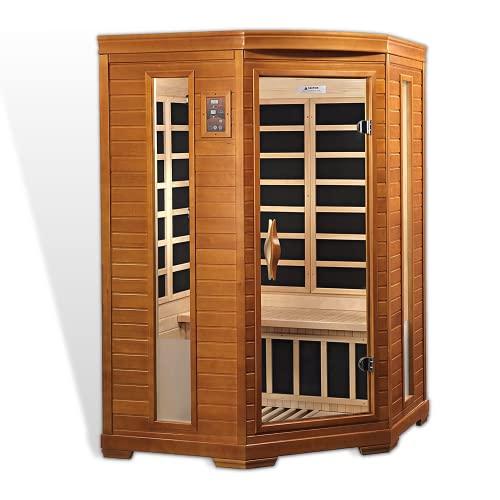
Dynamic Hemming 2 Person Infrared Corner Sauna

Kanlanth 1 Person Far Infrared Sauna
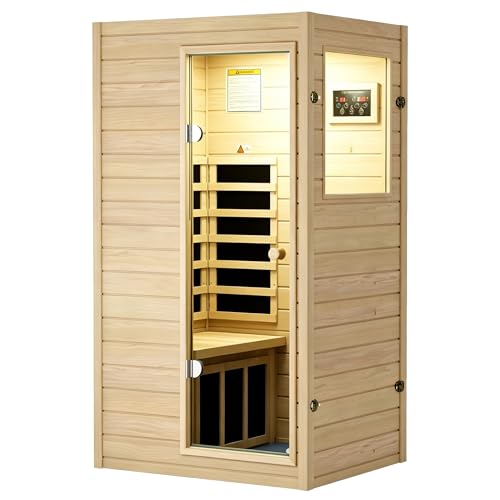
Kanlanth 1 Person Far Infrared Indoor Sauna, 905W
Inside Each Recommended Option
A two-person layout makes this LTCCDSS model more approachable for couples than the four-person rooms later in the list. Its mahogany exterior suits an outdoor relaxation area where appearance matters nearly as much as usable floor space.
The near- and mid-infrared panel, far-infrared heating, and listed 0.1–4 mG EMF range distinguish it from the indoor-only choices. For most patios, that combination is compelling, although the room still needs proper weather exposure, site preparation, and electrical planning.
Strengths Worth Knowing
- The two-person capacity supports shared sessions without the larger footprint of a four-person cabin.
- Near-, mid-, and far-infrared elements provide several heat-delivery formats in one room.
- Bluetooth and chromotherapy add familiar sauna controls for music and lighting preferences.
- Reinforced, thickened heating panels are designed to remain stable through outdoor temperature and humidity changes.
Things To Consider
- Exterior wood requires attention to moisture and seasonal weather exposure over time.
- Its 0.1–4 mG specification is less restrictive than Item 3’s listed 0.1–1 mG range.
Quick Facts
Made For Shared Patios
Couples with a level outdoor pad and enough clearance benefit most from this two-person configuration.
Another Choice May Suit
LTCCDSS Outdoor Sauna 4 Person suits larger families better than this more compact two-person room.
This four-person red cedar cabin answers a straightforward need: more seating without moving to a commercial spa. Compared with Item 1, its larger capacity suits families or small groups, while the red cedar exterior gives the patio structure a warmer natural character.
Near- and mid-infrared light sit alongside far-infrared panels, with dedicated lower-leg and foot heating mentioned in the available information. That focused arrangement may feel considerate during longer sessions, though an outdoor installation still depends heavily on the foundation, shelter, and local climate.
A Few Highlights
- Four-person seating avoids the cramped tradeoff common in a two-person cabin.
- Red cedar creates a familiar traditional sauna material profile.
- Full-spectrum elements add near-, mid-, and far-infrared heating formats.
- Bluetooth and chromotherapy simplify music and lighting adjustments.
- Reinforced panels are specified for stability across outdoor humidity and temperature shifts.
Points To Note
- The four-person format demands substantially more usable patio space than Item 1.
- Owners must account for cedar maintenance in rain, humidity, and seasonal temperature swings.
- The listed 0.1–4 mG range may be less important to shoppers focused on a narrower range than Item 3 provides.
Built With In Mind
Families sharing a generous backyard or dedicated outdoor room get the most practical benefit from this capacity.
Where A Sibling Pick Shines
LTCCDSS Full Spectrum Outdoor Sauna 2 Person, Mahogany fits couples with less patio space.
The carbonized composite exterior gives this four-person room a darker, more architectural finish than the natural red cedar used by Item 2. That may sit more comfortably beside modern decking, stone landscaping, or a contemporary pool house.
Its most distinct specification is the listed 0.1–1 mG operating range, supported by an inner tube around the far-infrared heating plates. The room also includes 12 carbon-crystal far-infrared panels, Bluetooth, chromotherapy, and stated dimensions of 68.1 by 52.4 by 82.7 inches, making careful site measurement essential.
Notable Upsides
- The stated 0.1–1 mG range is narrower than the 0.1–4 mG range on Items 1 and 2.
- Twelve far-infrared panels distribute heat throughout a four-person room.
- Carbonized composite construction offers a consistent dark exterior suitable for modern patios.
- Bluetooth and chromotherapy add session controls without expanding the footprint.
Small Caveats
- At 82.7 inches tall, the room may not fit beneath a low covered patio structure.
- The broad floor and four-person capacity require clear access around the installed cabin.
Right Fit For
Four-person households with a measured outdoor pad and strong interest in the stated low-EMF configuration fit this model well.
Look Elsewhere When
Dynamic Hemming 2 Person Infrared Corner Sauna is easier to place in an indoor corner when space is tight.
The DYN-6106-01 shifts the roundup back toward an indoor home-sauna format after three outdoor cabins. Its stated under-3-mG low-EMG configuration offers a more moderate specification than Item 3, while the model number gives shoppers a clear reference for replacement parts and installation questions.
Curb-side delivery is the main practical consideration. The cabin still needs a suitable indoor location, electrical connection, and room to move it into position after arrival, so access should be checked before ordering. The available material is thinner than the outdoor listings, making this a restrained choice rather than a feature-heavy recommendation.
The Practical Payoff
- The under-3-mG designation provides a clearly stated low-EMF operating range.
- A named Dynamic model provides a straightforward identity for parts and setup inquiries.
- Indoor placement avoids exposure to rain, humidity changes, and seasonal weather.
Practical Considerations
- Curb-side arrival means the homeowner must plan how the sauna moves from the delivery point to its final room.
- The supplied information does not provide exterior dimensions, so clearance planning should happen before purchase.
Technical Reference
Who It Suits Best
Homeowners wanting an indoor infrared cabin with a named low-EMG range and accessible curb-side delivery benefit most.
Reach For A Different Pick When
Kanlanth 1 Person Far Infrared Sauna offers a more clearly compact alternative for tight indoor spaces.
The Hemming uses a corner layout to preserve usable floor space, a practical change from the rectangular outdoor cabins. Its listed 49-by-48-by-76-inch dimensions make it more substantial than the single-person Kanlanth models, yet it can still suit a dedicated bathroom, basement, or lower-level wellness area.
Reforested Canadian hemlock and double-paneled walls are the principal construction details. Hemlock is valued for a lighter appearance and lower resin content, while the paired panels are intended to retain heat more effectively than thin single-layer walls. Delivery stops curbside, so access through doors, hallways, and tight turns deserves attention.
What Works In Its Favor
- The corner form reduces wasted floor space compared with many rectangular cabins.
- Canadian hemlock creates a lighter interior and avoids the stronger resin character of some softwoods.
- Double-paneled construction supports steadier heat retention and faster warmup.
- Two-person capacity suits couples sharing an indoor recovery space.
Things That May Matter
- Curbside semi-truck delivery requires a clear route from the vehicle into the final location.
- Remote properties and dead-end streets may be difficult for the delivery vehicle to access.
- At 49 inches wide and 48 inches deep, the corner room still needs meaningful indoor clearance.
Feature Snapshot
Who Will Love This
Couples converting an indoor corner into a private infrared space benefit from the hemlock construction and efficient layout.
Consider Something Else When
Kanlanth 1 Person Far Infrared Indoor Sauna, 905W is the better fit for a much smaller suite or home-gym corner.
This vertical one-person cabin is designed around a different problem from the first five rooms. At 36.6 by 29.3 inches, it targets apartments, master bathrooms, and home gyms where a conventional sauna footprint would overwhelm the available floor area.
Solid spruce supplies a pale, traditional interior, and the 950-watt far-infrared heater is paired with a low-EMF dry-sauna format. Compared with Item 7’s 905-water aspen model, this choice uses slightly more heating power, but material preference and exact height should influence the decision. A full height was not supplied, so ceiling clearance must be confirmed separately.
Bright Spots
- The narrow 36.6-by-29.3-inch base supports placement in compact rooms.
- Vertical construction gives one user a private standing or seated sauna format.
- Spruce wood creates a bright interior without a resin-heavy appearance.
- The 950-watt heater provides a clearly stated power level for electrical planning.
Small Limitations
- One-person capacity rules out shared couples use.
- The missing full height makes doorway and ceiling checks essential.
- Interior spruce still needs sensible moisture control and routine cleaning.
Built With In Mind
Apartment residents and home-gym users with limited floor space get the most value from this compact vertical layout.
Where Another Pick Suits Better
Dynamic Hemming 2 Person Infrared Corner Sauna serves couples better when two-person access matters more than minimal footprint.
The Kanlanth 905W model completes the list as a compact indoor option for a single user, sharing the same narrow footprint focus as Item 6. Its stated dimensions are 36.6 by 29.3 by 63 inches, creating a clear height limit that should be measured before installation.
European aspen provides a bright, resin-free interior, distinguishing it from Item 6’s spruce construction. The source is also framed for users up to 5 feet 11 inches, so a taller person may find the internal headroom less comfortable. Beyond those limits, the 905-watt far-infrared heater and dry format keep the design focused and easy to understand.
What Pays Off
- The 36.6-by-29.3-inch footprint preserves space in suites and compact wellness areas.
- Aspen offers a clean, bright interior without the resin associated with common pine construction.
- The stated 63-inch height makes planning more precise than the missing height on Item 6.
- The 905-water rating provides a clear basis for electrical setup.
A Few Limitations
- The 63-inch height may feel restricted for anyone taller than the stated 5-foot-11-inch fit.
- Single occupancy limits its usefulness for couples or shared family routines.
- Indoor installation still requires access for delivery, assembly, and maintenance.
Key Product Details
Whose Shelf It Belongs On
A single user up to 5 feet 11 inches with a compact floor plan gains the most from this cabin.
Swap It Out When
LTCCDSS Full Spectrum Outdoor Sauna 2 Person, Mahogany better serves couples wanting a weather-ready outdoor room.
What Matters Before Choosing a Sauna
Capacity and available floor space
Two-person cabins suit couples, while four-person rooms need enough uninterrupted space for comfortable seating. A one-person vertical model is more practical in apartments, but its height and delivery route matter as much as its narrow footprint.
Wood, heating, and environment
Red cedar, mahogany, carbonized composite, hemlock, spruce, and aspen each create a different maintenance and appearance profile. Outdoor rooms must tolerate rain and seasonal humidity, while indoor models require controlled flooring, ventilation, and electrical access.
EMF specifications and heat delivery
EMF is the electromagnetic field reported around a working sauna. The listed ranges differ substantially, from 0.1–1 mG on Item 3 to 0.1–4 mG on Items 1 and 2, so compare the stated figures rather than treating “low EMF” as one uniform specification.
Practical Checks Before Installation
Mistakes Worth Dodging
A common mistake is measuring only the sauna itself. Doorways, turning radius, ceiling height, electrical access, and the final resting position can create the real installation problem. Outdoors, level preparation and weather protection deserve equal attention.
When Paying More Pays Off
Higher-tier cabins often add capacity, broader material selection, refined controls, or a narrower listed EMF range. The extra cost is most useful when those features solve a specific space or household need rather than simply making the room larger.
Frequently Asked Questions
Can an outdoor sauna work in cold weather?
Heating performance and structural protection must be considered in the local climate. I would verify the manufacturer’s operating guidance and the site’s drainage and shelter before use.
How much clearance does an indoor sauna need?
Clearance depends on the exact room and entry path. Measure the floor, doorway, ceiling, and turning space rather than relying on nominal capacity.
Is one-person capacity enough for daily use?
A one-person room works well for a single routine and short recovery sessions. Shared users may find a two-person or four-person layout less disruptive.
Should I compare EMF values exactly?
Yes, because each listing states a different range or threshold. I would also review construction, heating method, and fit rather than relying on that number alone.
Which material requires less maintenance?
Maintenance depends on exposure and installation quality. Outdoor wood faces weather, while indoor aspen, spruce, and hemlock are generally easier to keep dry.
Final Verdict
The right choice depends first on location: outdoor cabins suit prepared patios, while indoor models make more sense in controlled rooms. Capacity and delivered dimensions deserve the closest attention, followed by wood type, heating configuration, and the stated EMF range. I would choose based on the space already available and the number of people using it, not on the longest feature list.
