

Stabilized binoculars help suppress the shaking caused by an unsteady hand, moving vehicle, or distant subject. That matters most during wildlife observation, sporting events, astronomy, and travel where a tripod isn’t practical. I compare conventional HD models, compact binoculars, rangefinders, and digital recording options across magnification, stabilization, portability, and specialized features.
The Shortlist At A Glance
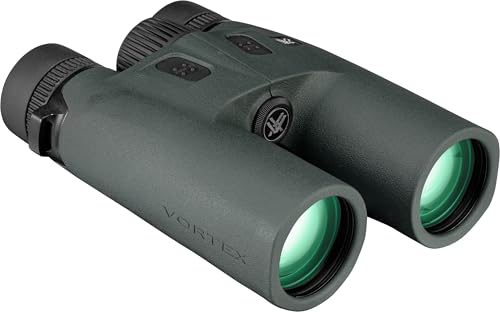
Vortex Ranger HD 3000 10×42 Rangefinder

Vortex Diamondback HD 10×42 Binoculars

Vortex Triumph HD 10×42 Binoculars

M MIXIO 10×25 Compact Binoculars

Fujinon Techno-Stabi TS-X 14×40 Black

Sony DEV-3 Digital Recording Binoculars

Fujifilm Fujinon Techno-Stabi 16X28
A Breakdown Of The Leading Choices
Angle-compensated laser ranging gives this Vortex model a practical edge beyond ordinary glassing. That calculation adjusts the displayed distance for the observation angle, which can matter when estimating target position from uneven ground. The 10x magnification remains familiar enough for field use, although the extra electronics naturally distinguish it from the lighter Diamondback.
A red OLED display helps preserve dark-adaptation during dawn hunts, while the HD optical system and multicoated lenses support detail and color perception. The included GlassPak harness supports quick access and protective storage. For most hunters and archers, the added ranging data is worth the more specialized design.
Features That Help
- Angle compensation can produce more useful field distance estimates.
- The red OLED display remains easier to read in dim conditions.
- 10x magnification offers a balanced view without extreme enlargement.
- GlassPak harness storage helps protect the optic during transport.
Things To Consider
- Rangefinding controls add complexity for basic sightseeing.
- Electronics require sensible battery management during remote trips.
Key Specs
Built With In Mind
Hunters, archers, and anglers who need distance information benefit most from the integrated rangefinder.
Where Another Pick Suits Better
Casual hikers and birders get a simpler experience with the Vortex Diamondback HD 10×42 Binoculars.
The Diamondback HD 10×42 fits the broadest role in this group because it avoids stabilization hardware, recording controls, and ranging displays. Its 10x magnification gathers more light than a compact 10×25 model, a meaningful distinction during early-morning birding or shaded wildlife viewing. I favor that conventional balance for long days in the field.
Select glass elements support resolution and reduce color fringing, while fully multicoated lenses improve light transmission. Chromatic aberration is the colored edge distortion that can appear around high-contrast subjects; controlling it keeps branches and distant birds more visually defined. The catch is simple: hand movement still reaches the image, so a stabilized model has the advantage at long distances.
Useful Strengths
- 42mm objective lenses gather useful light for outdoor viewing.
- Multicoating supports clear images without electronic complexity.
- 10x power serves birding, hiking, events, and general wildlife work.
- The uncomplicated design suits first-time optical users.
Practical Considerations
- There is no optical stabilization for shaky platforms.
- Cleaning and lens care remain important during dusty trips.
At A Glance
Made For
Birders, hikers, and casual wildlife observers benefit from its simple, light-gathering configuration.
Consider Something Else When
Astronomy from an unstable platform favors the Fujifilm Fujinon Techno-Stabi 16X28 and its vibration control.
Where the Diamondback emphasizes optical capability, the Triumph HD puts a little more emphasis on adaptable handling. Adjustable eyecups and a diopter, which fine-tunes one barrel for differences between the eyes, can reduce neck strain during long wildlife or sporting events. That makes it a comfortable general-purpose carry for a truck, backpack, or travel bag.
Multicoated optics and an HD system prioritize edge-to-edge clarity, while water, fog, and shock resistance suit changing outdoor conditions. It remains a conventional stabilized-category alternative rather than an electronically stabilized optic. Compared with the M MIXIO compact model, the 42mm lens size offers a stronger case for dim outdoor use, provided the larger frame fits the intended storage space.
Positive Points
- Adjustable eyecups support comfortable repeated viewing sessions.
- The diopter accommodates common differences in visual focus.
- 42mm objective lenses favor light gathering during outdoor activities.
- Water, fog, and shock resistance support variable conditions.
Worth Noting
- It does not mechanically stabilize the image.
- Its larger 10×42 format may occupy more bag space than a 10×25 design.
- Lens caps and a padded case help protect it from routine bumps.
Quick Facts
The Right Fit
Regular birders, travelers, and outdoor spectators get a comfortable and adaptable general-purpose optic.
Another Choice May Suit
Travelers prioritizing minimum size may prefer the M MIXIO 10×25 Compact Binoculars despite their smaller objective lenses.
Small objectives make this M MIXIO model easier to carry than the three Vortex 10×42 options, which matters in a daypack, carry-on, or children’s outdoor kit. A BAK4 prism and fully multicoated green lenses support contrast and color in a modest optical package. The 10x format still offers enough enlargement for birds, distant events, and broad outdoor scenery.
Owners commonly value the armored housing and nonslip grip for handling on walks or around active children. In practice, I see it as a casual, grab-and-go option rather than a dedicated astronomical or long-range spotting instrument. The small 25mm lenses gather less light than a 40mm or 42mm objective, so dawn viewing may be less forgiving.
Where It Excels
- The compact format fits easily into smaller travel bags.
- The nonslip grip improves control during walks and family outings.
- BAK4 prism glass and multicoated lenses support everyday clarity.
- Its broad use cases span wildlife, travel, sports, and performances.
Points To Note
- No stabilization is included, so distant subjects remain sensitive to hand movement.
- The 25mm objective lenses collect less light than larger stabilized models.
- Armored construction helps, but a padded case remains sensible around hard gear.
Who Will Love This
Families, casual birders, and cruise travelers benefit from a compact, easy-to-carry binocular.
Look Elsewhere When
Dawn wildlife observers benefit more from the larger light-gathering lenses of the Vortex Diamondback HD 10×42 Binoculars.
The TS-X reaches 14x magnification, a level at which small hand tremors become much more visible on conventional binoculars. Its vibration correction is specified at up to plus or minus 6 degrees, helping wildlife, celestial, and spectator views remain more composed from a standing position. Compared with the Ranger HD, it prioritizes image steadiness rather than distance measurement.
The 40mm objective lenses provide a reasonable light-gathering balance for the magnification, and the black body suits field use without adding visual bulk. It may be overkill for broad daylight sightseeing, but it makes sense on an observation deck, at a distant shoreline, or during extended astronomical viewing. Keeping the case in a padded bag is still sensible because powered stabilization adds an internal mechanism to protect.
What Stands Out
- Vibration correction supports useful viewing at 14x.
- A stated plus-or-minus 6-degree correction addresses meaningful hand movement.
- 40mm objective lenses balance magnification and light collection.
- The optical system supports wildlife, astronomy, and spectator use.
Trade Offs
- 14x is narrower than 10x and requires steadier deliberate aiming.
- Powered stabilization adds bulk and electronics to maintain.
Feature Snapshot
Best Suited To
Astronomy enthusiasts and serious distant wildlife observers benefit from the substantial correction and magnification.
Swap It Out When
Hunters needing distance data benefit more from the Vortex Ranger HD 3000 10×42 Rangefinder.
Recording is the Sony DEV-3’s defining distinction, turning the viewing experience into a way to capture 3D or 2D footage directly through the binocular optics. It records 1920×1080 video at 60p or 24p and captures still images at 7MP. That makes it useful for documenting wildlife, school nature projects, distant performances, and family outings without a separate camera.
Optical SteadyShot reduces movement blur, while autofocus and up to 10x digital zoom add framing flexibility. The honest catch is that digital zoom crops and enlarges the captured image, so detail depends heavily on the starting resolution. Compared with the Techno-Stabi models, the DEV-3 is about documentation, while storage requirements and electronic controls make it less convenient for passive observation.
Bright Spots
- Full HD video creates a direct path to recording distant scenes.
- 7MP still capture complements wildlife and event documentation.
- SteadyShot helps reduce blur from hand movement.
- Autofocus supports changing wildlife and sporting subjects.
Small Caveats
- Video files require more storage than still images alone.
- Digital zoom may show less fine detail than optical magnification.
- Menu controls and batteries reduce the simplicity of passive viewing.
Who Should Grab It
Nature documentarians, students, and event spectators benefit most from the integrated recording system.
A Better Fit Elsewhere
Birders focused on a distraction-free view benefit more from the Vortex Triumph HD 10×42 Binoculars.
Sixteen-power magnification gives this Fujinon model the narrowest field of view in the group, concentrating attention on distant targets. Its vibration canceler corrects up to 3 degrees of hand movement, making it practical for astronomy, wildlife observation, sports, and concerts without a tripod. The smaller 28mm objective lenses also keep the package lighter than the 40mm TS-X, subject to handling preferences.
Fully multicoated optics and phase-coated prisms support a bright, high-contrast image. Phase coating is a reflective treatment on prism surfaces that helps manage light loss and contrast inside the optical system. Battery operation can last up to 12 hours, though cold weather may shorten that duration. I favor it for focused distant viewing, while casual users may find 10x models easier to scan comfortably.
Strengths Worth Knowing
- 16x magnification supports focused distant viewing.
- The stabilization system corrects movement across the magnification range.
- Multicoated lenses and phase-coated prisms support contrast.
- The compact 16×28 format avoids the bulk of a 40mm stabilized optic.
Honest Caveats
- The narrow field makes locating moving subjects more demanding.
- Cold conditions may reduce stated battery operating time.
- The mechanism deserves a padded case during frequent travel.
Technical Reference
Whose Shelf It Belongs On
Astronomy enthusiasts and birders working from vehicles benefit from 16x power without a tripod.
Reach For A Different Pick When
General hikers benefit more from the broader, easier-to-scan view of the Vortex Diamondback HD 10×42 Binoculars.
What Matters Before Choosing Stabilized Binoculars
Magnification and field of view
Magnification determines apparent size, while field of view shows how much surrounds the subject. A 10x configuration is easier to scan and often more comfortable for hiking, whereas 14x and 16x suit distant wildlife, astronomy, and spectator events. High power also magnifies hand movement, so stabilization becomes more valuable as magnification rises.
Stabilization and correction
Optical stabilization compensates for hand movement electronically or mechanically, while digital stabilization mainly reduces image blur during recording. The Fujinon Techno-Stabi models and Sony DEV-3 use different systems, and the Vortex Ranger HD prioritizes ranging instead. Checking the stabilization type helps prevent confusion between smooth viewing and video processing.
Light gathering and portability
Objective lens diameter affects light collection: larger lenses generally support dimmer outdoor scenes, while smaller ones are easier to carry. The 40mm Fujinon TS-X favors distant observation, while the 28mm Techno-Stabi 16X28 emphasizes high power in a compact format. A 42mm 10x model remains a practical middle ground for birding and hiking.
Controls, recording, and ranging
Rangefinders add distance data, recording binoculars add a camera, and conventional models preserve simpler controls. Specialized features are useful when the use case demands them, but batteries, storage, and menu systems increase ownership complexity. I favor those additions only when recording or measurement is central to the activity.
Avoiding Common Category Mistakes
Mistakes Worth Dodging
Choosing the highest magnification first can make a binocular tiring to use. Magnification narrows the field of view and makes subtle shake easier to notice, so 10x remains more adaptable for general viewing. Comparing objective diameter, stabilization, and intended use gives a more complete picture than focusing on a single number.
When Paying More Pays Off
A higher-tier model may justify additional cost through optical stabilization, specialized coatings, larger lenses, or built-in ranging. Those features matter most for long-distance observation, video capture, or moving-platform use. For casual sightseeing, a simpler 10×42 optic can provide a more practical ownership experience.
Frequently Asked Questions
Are stabilized binoculars better than ordinary binoculars?
They are steadier at long distances or from moving platforms. Ordinary binoculars remain simpler, lighter, and less dependent on batteries for casual viewing.
Which magnification is best for birdwatching?
Ten-power magnification offers a balanced view for finding and identifying many birds. Fourteen or sixteen power provides more distant detail but requires steadier handling and a narrower field.
Do I need stabilization for wildlife viewing?
Stabilization helps most with distant animals, boats, or viewing from a vehicle. Nearby wildlife is often easier to track with conventional 10x binoculars.
Are recording binoculars useful for nature studies?
Integrated video and still capture can document behavior without carrying a separate camera. Storage management and electronic controls add complexity for casual use.
How long should stabilized binoculars run on batteries?
Operating time varies by model, magnification, and temperature. The Fujifilm Fujinon Techno-Stabi 16X28 is listed for up to 12 hours, with reduced performance possible in extreme cold.
Final Verdict
I favor the Fujifilm Fujinon Techno-Stabi 16X28 for high-power distant viewing, while the Fujinon TS-X 14×40 suits wildlife and astronomy with a larger light-gathering format. The Vortex models cover simpler general-purpose viewing and rangefinding, while the M MIXIO prioritizes portability and the Sony DEV-3 serves recording. The right choice depends on whether steadiness, magnification, or specialized functions matter most.
